James II and VII: The Last Catholic Monarch of the Stuart Dynasty
James II (and VII in Scotland) remains one of the most controversial figures in British history. As the last Catholic monarch to rule England, Scotland, and Ireland, his reign was a flashpoint for conflicts regarding religion, the divine right of kings (the belief that a monarch derives their right to rule directly from God), and the limits of royal power. His eventual deposition in the Glorious Revolution of 1688 marked a pivotal shift in governance, establishing the primacy of Parliament over the Crown.
Key Facts
- Reign: 6 February 1685 – 23 December 1688.
- Titles: King of England and Ireland (James II); King of Scotland (James VII).
- Religion: Born Protestant; converted to Roman Catholicism in the late 1660s.
- Successors: Mary II and William III & II.
- Legacy: His deposition ended a century of political strife by confirming Parliamentary authority.
Early Life and Education
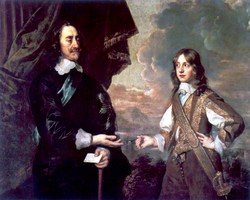
Born on 14 October 1633 at St James's Palace in London, James was the second surviving son of King Charles I and Henrietta Maria of France. He was educated by private tutors alongside his older brother, the future Charles II. From a young age, James was granted significant titles, including being designated Duke of York at birth and being appointed Lord High Admiral at age three, though the latter was initially an honorary role.
Exile and Military Experience
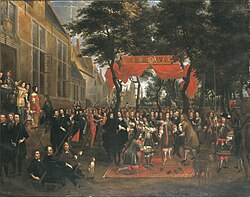
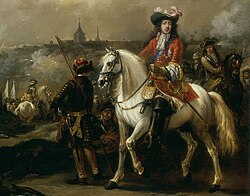
The political instability of the mid-17th century forced James into exile. In 1657, due to shifting alliances between France and the Commonwealth of England, James was expelled from France. He subsequently joined Spanish forces in Flanders, where he commanded six regiments of British volunteers and fought at the Battle of the Dunes.
The Restoration and Personal Life
With the collapse of the Commonwealth in 1660, Charles II was restored to the throne. James, as the heir presumptive, returned to England and immediately sparked a court scandal by announcing his engagement to Anne Hyde, the daughter of Edward Hyde. Despite opposition from the court and his future father-in-law—who believed a prince should not marry a commoner—the couple married in September 1660.
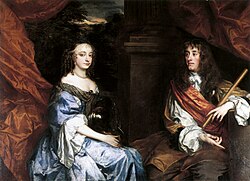
James was noted by contemporaries, including Samuel Pepys, for being a devoted father who played with his children in a manner more typical of a private citizen than a royal. However, tragedy struck the family frequently; of their many children, only two daughters, Mary and Anne, survived into adulthood.
Conversion and the Exclusion Crisis
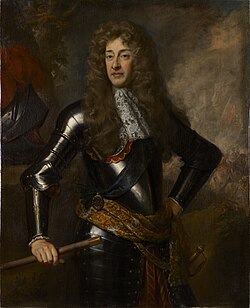
During his time in France, James was exposed to Roman Catholicism. He and Anne Hyde were drawn to the faith, and James took the Catholic Eucharist around 1668 or 1669. For nearly a decade, he kept this conversion secret, continuing to attend Anglican services until 1676.
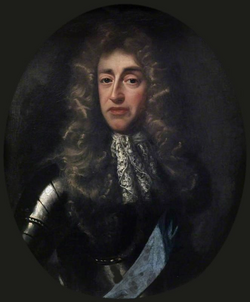
This conversion triggered the Exclusion Crisis, a political struggle led by the Earl of Shaftesbury to prevent James from inheriting the throne. This period saw the emergence of the two-party system: the Whigs, who supported the Exclusion Bill, and the Tories, who opposed it. While Charles II dissolved several Parliaments to prevent the bill from passing, James was forced to withdraw from active policy-making to appease the public.
Reign and Deposition
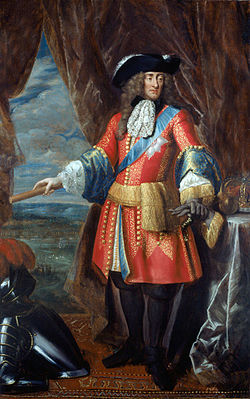
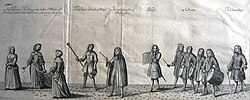
James ascended the throne on 6 February 1685 following the death of Charles II. While his coronation on 23 April 1685 was initially met with public rejoicing, his reign soon became defined by his attempts to promote religious liberty for Catholics and his use of the dispensing power (the royal prerogative to exempt individuals from certain laws).
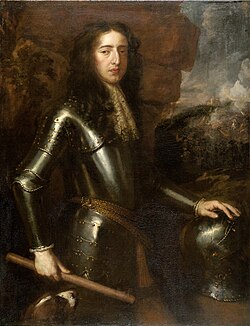
His insistence on absolutism and the promotion of Catholicism alienated the English establishment. In 1688, James was deposed during the Glorious Revolution. He was replaced by his daughter Mary II and her husband, William of Orange, who had been invited to intervene and "save the Protestant religion."
Final Years and Exile
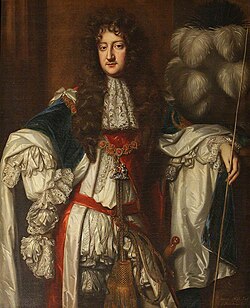
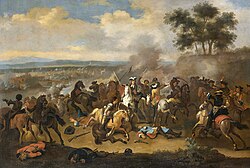
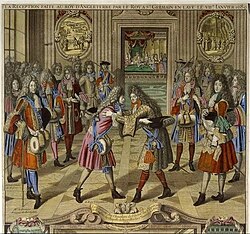
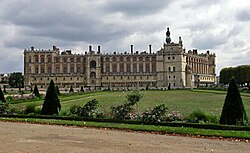
Following his deposition, James fled to France, where he was welcomed by Louis XIV at the Château de Saint-Germain-en-Laye. He spent his final years attempting to regain his throne, most notably during the War in Ireland, which culminated in the Battle of the Boyne in 1690.
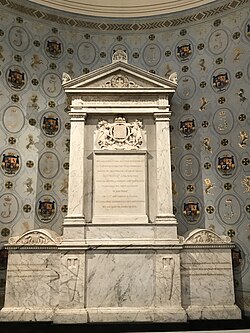
James died on 16 September 1701 at the age of 67. He was buried in the Church of the English Benedictines in Paris, though a tomb was later commissioned for him in the parish church of Saint-Germain-en-Laye.
Summary of James II's Life
| Category | Details |
|---|---|
| Full Titles | King of England and Ireland (James II), King of Scotland (James VII) |
| House | Stuart |
| Spouses | Anne Hyde (m. 1660), Mary of Modena (m. 1673) |
| Key Conflict | The Glorious Revolution (1688) |
| Death Date | 16 September 1701 |
Frequently Asked Questions
Why was James II deposed from the throne?
James II was deposed primarily due to his conversion to Catholicism and his attempts to implement policies that favored Catholics and asserted the absolute power of the monarchy over Parliament.
What was the Exclusion Crisis?
The Exclusion Crisis was a political attempt by the Whig faction in Parliament to change the line of succession to prevent the Catholic James from becoming king.
Who succeeded James II?
He was succeeded by his daughter, Mary II, and her husband, William III (William of Orange), in a joint monarchy.
Where did James II spend his final years?
He spent his final years in exile in France, residing primarily at the Château de Saint-Germain-en-Laye under the protection of Louis XIV.
What was the significance of the Glorious Revolution?
The Glorious Revolution is significant because it ended the conflict between the Crown and Parliament, establishing that the monarch cannot rule without the consent of Parliament.