Christianity: History, Beliefs, and Global Traditions
Christianity: History, Beliefs, and Global Traditions Christianity is a major Abrahamic monotheistic religion that originated in the 1st century AD in Jerusalem, Judaea, within the Roman ...
Christianity: History, Beliefs, and Global Traditions
Christianity is a major Abrahamic monotheistic religion that originated in the 1st century AD in Jerusalem, Judaea, within the Roman Empire. Founded on the life and teachings of Jesus, it has grown from a small movement separated from Judaism into the world's largest religious group, with an estimated 2.3 billion adherents as of 2020.
Throughout its long history, Christianity has shaped Western culture, influenced global politics, and branched into numerous diverse traditions, including Catholicism, Protestantism, and various Orthodox churches. This article examines the foundational beliefs, historical evolution, and modern demographics of the faith.
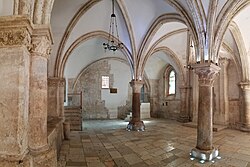
The Cenacle on Mount Zion in Jerusalem, claimed to be the location of the Last Supper and Pentecost: The Cenacle on Mount Zion in Jerusalem, claimed to be the location of the Last Supper and Pentecost
Key Facts
The Monastery of St. Matthew, located atop Mount Alfaf in northern Iraq, is recognized as one of the oldest Christian monasteries in existence.[31]
Founder: Jesus
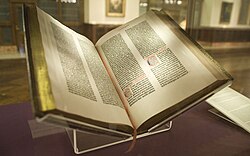
Sacred Scripture: The Bible (Old and New Testaments)
Core Belief: Monotheism, specifically the Trinity (Father, Son, and Holy Spirit)
Global Adherents: Approximately 2.3 billion
Major Branches: Catholic (48.6%), Protestant (39.8%), and Orthodox (11.1%)
Foundational Beliefs and Theology
The 7th-century Khor Virap monastery in the shadow of Mount Ararat; Armenia was the first state to adopt Christianity as the state religion in the early 4th century AD.[36][37]
At the heart of Christian theology is the belief in one God expressed through the Trinity. This concept holds that God is one essence existing in three persons: the Father, the Son (Jesus Christ), and the Holy Spirit.
The Trinity is the belief that God is one God in three persons: the Father, the Son (Jesus), and the Holy Spirit.[162]: The Trinity is the belief that God is one God in three persons: the Father, the Son (Jesus), and the Holy Spirit.[162]
The Life and Mission of Jesus
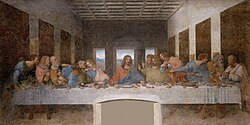
Christians believe in the divinity of Jesus Christ and the significance of his death, descent into hell, resurrection, and ascension. Central to the faith is the concept of salvation—the belief that through Christ, humanity can achieve reconciliation with God. Key events include the Last Supper, the Crucifixion, and the Resurrection.
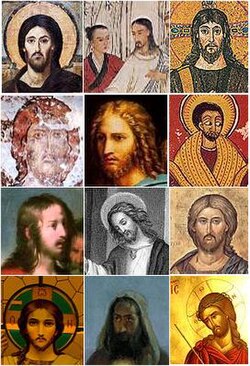
Various depictions of Jesus: Various depictions of Jesus
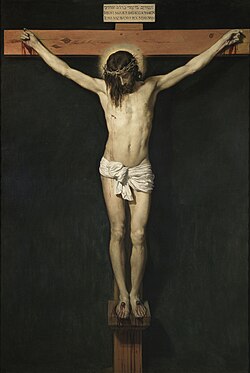
Crucifixion, representing the death of Jesus on the Cross, painting by Diego Velázquez, c. 1632: Crucifixion, representing the death of Jesus on the Cross, painting by Diego Velázquez, c. 1632
The Last Supper in the Santa Maria delle Grazie Church in Milan, Italy, a late 1490s mural painting by Leonardo da Vinci, depicting the Last Supper of Jesus and his twelve apostles, depicts the final meal of Jesus before his crucifixion and death.: The Last Supper in the Santa Maria delle Grazie Church in Milan, Italy, a late 1490s mural painting by Leonardo da Vinci, depicting the Last Supper of Jesus and his twelve apostles, depicts the final meal of Jesus before his crucifixion and death.
Sacred Scripture and Interpretation
The Bible serves as the primary sacred text. Interpretation of these scriptures often varies by tradition:
Catholic Interpretation: Emphasizes that all senses of scripture are based on the literal meaning, the historicity of the Gospels, and the "living Tradition of the whole Church."
Protestant Interpretation: Often focuses on the original intended meaning of the text and specific qualities of the scripture itself.
The Bible is the sacred book in Christianity.: The Bible is the sacred book in Christianity.
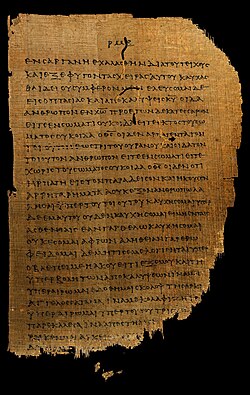
A folio from Papyrus 46, an early-3rd-century collection of Pauline epistles: A folio from Papyrus 46, an early-3rd-century collection of Pauline epistles
Historical Evolution
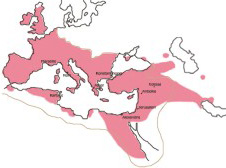
Christendom by AD 600 after its spread to Africa and Europe from the Middle East
Christianity's journey from a persecuted minority in the Roman Empire to a global religion is marked by significant eras, including the Apostolic Age, the spread through the Roman Empire, and the Middle Ages.
The Early Church and Councils
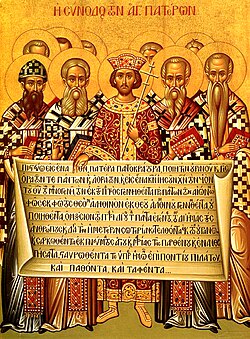
Early Christianity was shaped by significant theological developments and ecumenical councils. For example, the Council of Nicaea in 325 AD was a pivotal moment in defining core doctrines.
An Eastern Christian icon depicting Emperor Constantine and the Fathers of the First Council of Nicaea (325) as holding the Niceno–Constantinopolitan Creed of 381: An Eastern Christian icon depicting Emperor Constantine and the Fathers of the First Council of Nicaea (325) as holding the Niceno–Constantinopolitan Creed of 381
The Reformation and Denominational Shifts
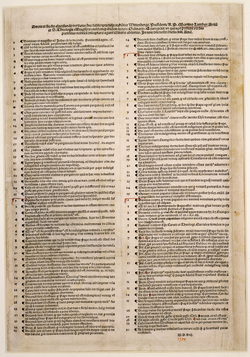
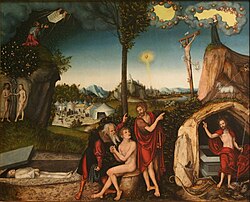
The 16th century saw a major turning point with the Protestant Reformation. Initiated by figures like Martin Luther, this movement led to the establishment of various Protestant denominations and a significant restructuring of Western Christianity.
Martin Luther initiated the Reformation with his Ninety-five Theses in 1517.: Martin Luther initiated the Reformation with his Ninety-five Theses in 1517.
The Law and the Gospel by Lucas Cranach the Elder (1529); Moses and Elijah point the sinner to Jesus for salvation.: The Law and the Gospel by Lucas Cranach the Elder (1529); Moses and Elijah point the sinner to Jesus for salvation.
Global Demographics and Traditions
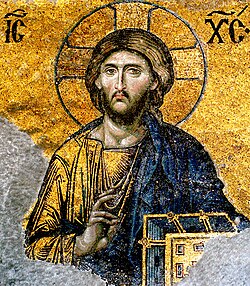
An example of Byzantine pictorial art, the Deësis mosaic at the Hagia Sophia in Constantinople
Today, Christianity is a diverse global phenomenon. While it has deep roots in Europe and the Middle East, it has seen massive growth in Africa, Latin America, and parts of Asia.
Distribution of Christian Traditions (2024)
Tradition
Approximate Percentage
Catholic
48.6%
Protestant
39.8%
Orthodox
11.1%
Other
0.50%
Major Branches
The three largest branches are:
Catholicism: Led by the Pope, with its sovereign center in Vatican City.
Protestantism: A broad group of denominations including Lutheran, Baptist, Methodist, and others.
Orthodoxy: Including Eastern Orthodox and Oriental Orthodox churches, which maintain distinct liturgical and theological traditions.
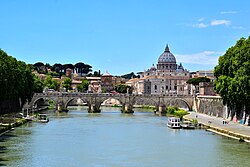
St. Peter's Basilica viewed from the Tiber; the Vatican Hill in the back and Castel Sant'Angelo in Rome to the right. Both the basilica and the hill are part of the sovereign state of Vatican City, the Holy See of the Catholic Church.: St. Peter's Basilica viewed from the Tiber; the Vatican Hill in the back and Castel Sant'Angelo in Rome to the right. Both the basilica and the hill are part of the sovereign state of Vatican City, the Holy See of the Catholic Church.
St. George's Cathedral in Istanbul: It has been the seat of the Ecumenical Patriarchate of Constantinople whose leader is regarded as the primus inter pares in the Eastern Orthodox Church.[406]: St. George's Cathedral in Istanbul: It has been the seat of the Ecumenical Patriarchate of Constantinople whose leader is regarded as the primus inter pares in the Eastern Orthodox Church.
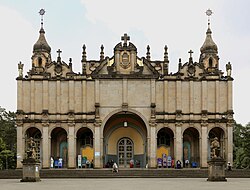
Holy Trinity Cathedral in Addis Ababa, the seat of the Ethiopian Orthodox; the largest of the Oriental Orthodox Churches: Holy Trinity Cathedral in Addis Ababa, the seat of the Ethiopian Orthodox; the largest of the Oriental Orthodox Churches
Global Presence
Christianity's presence is truly worldwide. Brazil, for instance, holds the largest Catholic population in the world, while regions like Sub-Saharan Africa have seen rapid growth in various denominations.
Global percentage of adherents by religion. Christians are the world's largest religious group, with about 2.3 billion adherents in 2020, with about 28.8% of the world's population.[293]: Global percentage of adherents by religion. Christians are the world's largest religious group, with about 2.3 billion adherents in 2020, with about 28.8% of the world's population.
A Christian procession in Brazil, the country with the largest Catholic population in the world[296]: A Christian procession in Brazil, the country with the largest Catholic population in the world
The global distribution of Christians: Countries colored a darker shade have a higher proportion of Christians.[372]: The global distribution of Christians: Countries colored a darker shade have a higher proportion of Christians.
Frequently Asked Questions
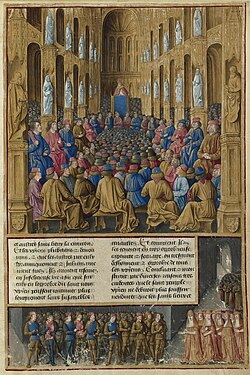
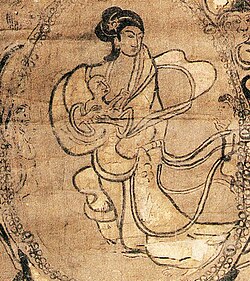
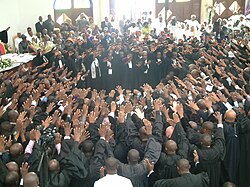
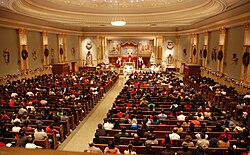
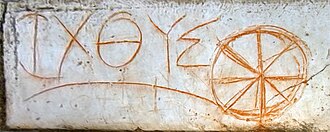
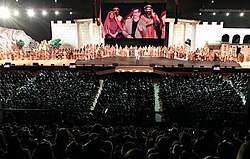
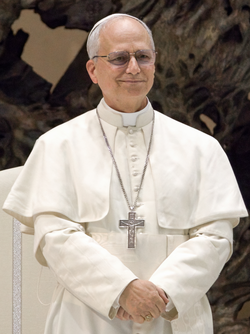
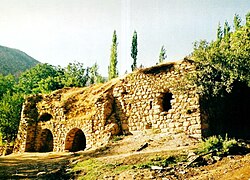
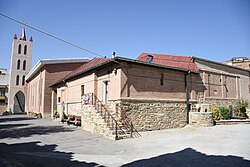
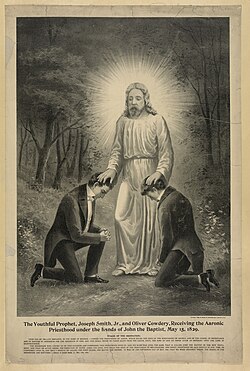
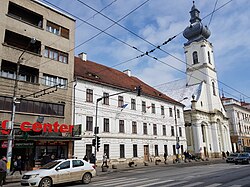
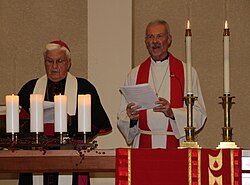
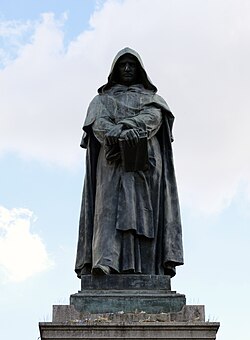
Pope Urban II at the Council of Clermont, where he preached the First Crusade. Illustration by Jean Colombe from the Passages d'outremer, c. 1490.Michelangelo's 1498–99 Pietà in St. Peter's Basilica; the Catholic Church was among the patronages of the Renaissance.[86][87][88]A depiction of Madonna and Child in a 19th-century Kakure Kirishitan Japanese woodcutOrdination of new pastors in Cameroon, 2014Christmas Eve Midnight Mass at a Catholic parish church in Woodside, New York City, U.S.Old Order Anabaptist and Conservative Anabaptist women, for modesty, wear cape dresses and head coverings, the latter of which is taught as a church ordinance.[194]An early circular ichthys symbol, created by combining the Greek letters ΙΧΘΥΣ into a wheel, Ephesus, Asia MinorTrinity Sunday in Russia; the Russian Orthodox Church has experienced a great revival since the dissolution of the Soviet Union, a country that had a policy of state atheism.[301]Show on the life of Jesus at City Church in São José dos Campos, affiliated with the Brazilian Baptist ConventionPope Leo XIV, the leader of the Catholic Church since 2025A 6th-century Nestorian church, St. John the Arab, in the Assyrian village of Geramon in Hakkari, southeastern Turkey.Saint Mary Church; an ancient Assyrian church located in the city of Urmia, IranA 19th-century drawing of Joseph Smith and Oliver Cowdery receiving the Aaronic priesthood from John the Baptist. Latter Day Saints believe that the Priesthood ceased to exist after the death of the apostles and therefore needed to be restored.Unitarian Church of Transylvania in Cluj-NapocaThomas Aquinas, an Italian Dominican friar and priest, the foremost Scholastic thinker,[516] as well as one of the most influential philosophers and theologians in the Western tradition.[517]Bishop John M. Quinn of the Roman Catholic Diocese of Winona and Bishop Steven Delzer of Evangelical Lutheran Southeastern Minnesota Synod leading a Reformation Day service (2017)The monument to Giordano Bruno in the place he was executed in RomeChristians fleeing their homes in the Ottoman Empire, c. 1922. Many Christians were persecuted and killed during the Armenian genocide, Greek genocide, and Assyrian genocide.[578]A copy of the Summa Theologica by Thomas Aquinas
What is the core belief of Christianity?
The core belief is monotheism centered on the Trinity: belief in God the Father, Jesus Christ as the Son of God, and the Holy Spirit, alongside the significance of Christ's death and resurrection for salvation.
How many Christians are there in the world?
As of 2020, there are approximately 2.3 billion Christian adherents, representing about 28.8% of the global population.
What are the main branches of Christianity?
The three primary branches are the Catholic Church, Protestantism, and the Orthodox churches (which include both Eastern and Oriental Orthodox traditions).
What is the role of the Bible in Christianity?
The Bible is the sacred scripture of Christianity, consisting of the Old and New Testaments, which provides the foundational teachings, history, and spiritual guidance for the faith.
What does the term "Trinity" mean?
The Trinity is the theological belief that there is one God who exists in three distinct persons: the Father, the Son (Jesus), and the Holy Spirit.
![The Monastery of St. Matthew, located atop Mount Alfaf in northern Iraq, is recognized as one of the oldest Christian monasteries in existence.[31]](/images/29/30/2930936ecd5329d20d5854fd3f2af0cb1ff2566d89fd69002ed6493f4986b6d5.png)
![The 7th-century Khor Virap monastery in the shadow of Mount Ararat; Armenia was the first state to adopt Christianity as the state religion in the early 4th century AD.[36][37]](/images/6f/6b/6f6b50b5fda6cdfee242c57c7ed0fc9d6af77ac14bf765df1e7d4a8383892c24.jpg)
![The Trinity is the belief that God is one God in three persons: the Father, the Son (Jesus), and the Holy Spirit.[162]](/images/5a/08/5a083188d0b7a8abfbeffcb8beb9e32daf1d14d555e86b4139fedd9834fd560a.webp)
![St. George's Cathedral in Istanbul: It has been the seat of the Ecumenical Patriarchate of Constantinople whose leader is regarded as the primus inter pares in the Eastern Orthodox Church.[406]](/images/05/ca/05ca55fa44c6bff05c3fb7ad546d1735967c405fbb286079816b56e16c385dff.jpg)
![Global percentage of adherents by religion. Christians are the world's largest religious group, with about 2.3 billion adherents in 2020, with about 28.8% of the world's population.[293]](/images/5d/71/5d7122e074df8a579571a5a5fd6474ca7a683a1a87856336636483ac44cea2bd.webp)
![A Christian procession in Brazil, the country with the largest Catholic population in the world[296]](/images/58/b4/58b42500284cc8a987d53023456d0d8e267eccc5c213bad3d8a06cec2d7d176e.jpg)
![The global distribution of Christians: Countries colored a darker shade have a higher proportion of Christians.[372]](/images/d5/e1/d5e1148e73b68b15e04de874b1caec13bac5ca95c9b80c09a03418cec9bfe0db.webp)
![Michelangelo's 1498–99 Pietà in St. Peter's Basilica; the Catholic Church was among the patronages of the Renaissance.[86][87][88]](/images/ae/a6/aea60a6ead0218bc433335b6774d734f1c809c9bd8bd2f18e5a477f588d8bd37.jpg)
![Old Order Anabaptist and Conservative Anabaptist women, for modesty, wear cape dresses and head coverings, the latter of which is taught as a church ordinance.[194]](/images/84/7f/847f74755b0b9f57f56a1ad87cc76ca32dbff7d19f6d63ebdb7a59c9c1f19296.jpg)
![Trinity Sunday in Russia; the Russian Orthodox Church has experienced a great revival since the dissolution of the Soviet Union, a country that had a policy of state atheism.[301]](/images/9c/cc/9ccce702152d752d5c7a5b4aabf7811ccf738ddf4e34b84eaa4fcca8ec59d393.jpg)
![Thomas Aquinas, an Italian Dominican friar and priest, the foremost Scholastic thinker,[516] as well as one of the most influential philosophers and theologians in the Western tradition.[517]](/images/87/ec/87eceecfd91b2901f90fa94d4c3baadab4add4fd959056ae3aa3bf46c44bb8ce.jpg)
![Christians fleeing their homes in the Ottoman Empire, c. 1922. Many Christians were persecuted and killed during the Armenian genocide, Greek genocide, and Assyrian genocide.[578]](/images/a2/f4/a2f486ab5288ddfde008af5b323c917a7b4a49caf83d2a6b23ff0e894d3b4c25.jpg)