J. Robert Oppenheimer: The Architect of the Atomic Age
J. Robert Oppenheimer was a towering figure in 20th-century science, a theoretical physicist whose leadership during World War II fundamentally altered the course of human history. Best known as the "father of the atomic bomb," Oppenheimer's journey took him from the elite halls of Harvard and Cambridge to the secretive deserts of New Mexico, and eventually to the center of a political storm during the Cold War.
His legacy is a complex tapestry of scientific brilliance, administrative mastery, and profound moral conflict. From his early contributions to quantum mechanics to his role in the Manhattan Project, Oppenheimer embodied the intersection of scientific discovery and geopolitical power.
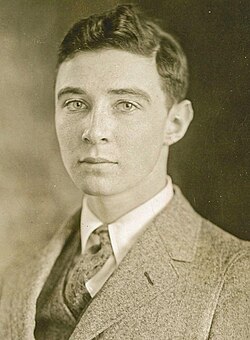
Early Life and Academic Foundation
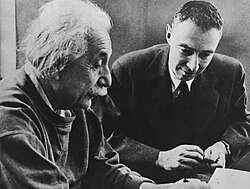
Oppenheimer's intellectual curiosity was evident from a young age. He pursued his undergraduate studies at Harvard University, earning a BA before continuing his education at Christ's College, Cambridge. He eventually moved to the University of Göttingen, where he earned his PhD under the guidance of the renowned physicist Max Born.
His doctoral thesis, Zur Quantentheorie kontinuierlicher Spektren (1927), focused on the quantum theory of continuous spectra. This period in Europe established him as a rising star in theoretical physics—the branch of physics that uses mathematical models and abstractions of physical objects to rationalize, explain, and predict natural phenomena.
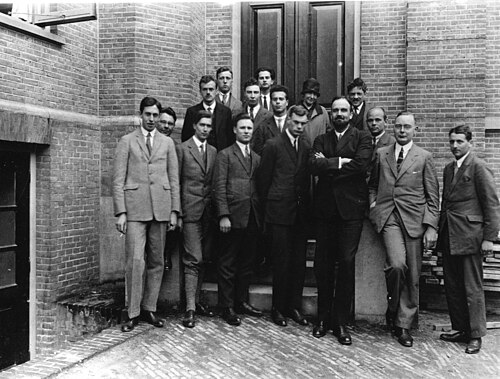
Academic Career and Contributions
Upon returning to the United States, Oppenheimer held teaching and research positions at the University of California, Berkeley, and the California Institute of Technology. He became a prolific researcher, contributing to several foundational concepts in physics and astronomy, including:
- Born–Oppenheimer approximation: A method used to simplify the quantum mechanical treatment of molecular systems.
- Tolman–Oppenheimer–Volkoff (TOV) limit: The upper limit to the mass of a cold, non-rotating neutron star.
- Oppenheimer–Snyder model: A theoretical model describing the gravitational collapse of a star into a black hole.
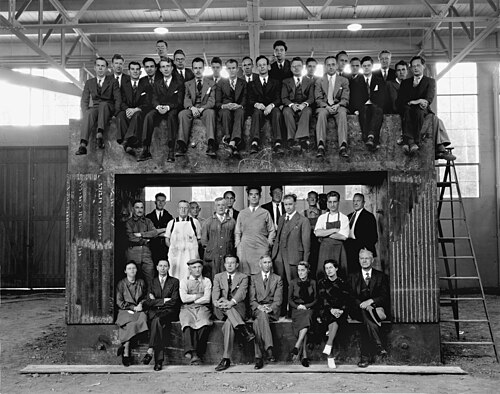
The Manhattan Project and Los Alamos
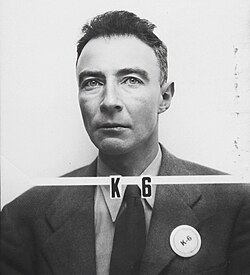
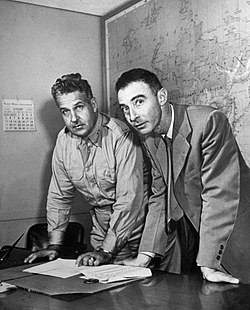
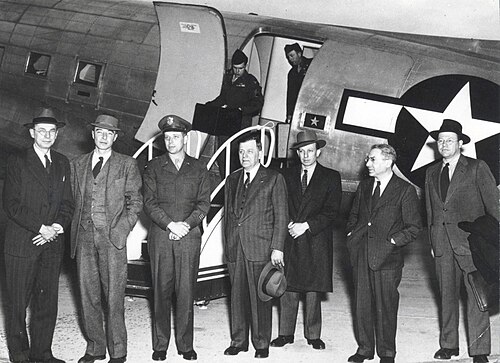
In 1942, Oppenheimer was recruited by General Leslie Groves to lead the scientific effort of the Manhattan Project, the top-secret U.S. government program to develop the first nuclear weapons. He was appointed as the director of the Los Alamos Laboratory in New Mexico.
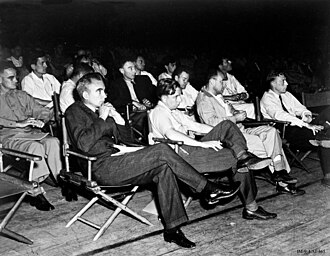
Oppenheimer's genius lay not only in his physics knowledge but in his ability to manage a diverse group of world-class scientists, including Nobel laureates and young researchers. He oversaw the design and assembly of the first atomic devices, coordinating the immense technical challenges of nuclear fission.
The Trinity Test
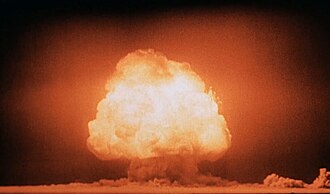
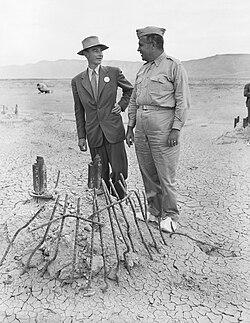
The culmination of the Los Alamos effort was the Trinity test, the first detonation of a nuclear device. On July 16, 1945, the world witnessed the first man-made nuclear explosion. While Brigadier General Thomas Farrell recalled the tension in the control bunker, Oppenheimer's brother, Frank, noted that Robert's first words after the blast were, "I guess it worked."
Postwar Influence and Political Turmoil
Following the war, Oppenheimer became a prominent public figure and a key advisor to the U.S. government. He served as the chairman of the General Advisory Committee (GAC) of the Atomic Energy Commission (AEC), where he advocated for international control of nuclear energy and expressed reservations about the development of the hydrogen bomb (the "Super").
The Security Hearing
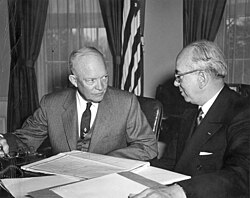
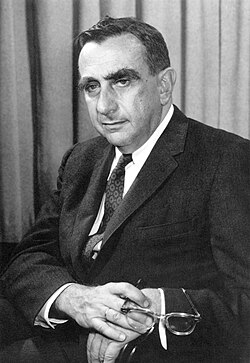
Oppenheimer's political leanings and his opposition to the hydrogen bomb made him a target during the Red Scare. In 1954, he underwent a grueling security hearing. Lewis L. Strauss, Chairman of the AEC, pressed for the revocation of Oppenheimer's security clearance. Despite the testimony of some colleagues, including Edward Teller—who testified that while he considered Oppenheimer loyal, there were concerns—Oppenheimer's clearance was revoked.
Final Years and Legacy
Despite the loss of his security clearance, Oppenheimer remained a respected intellectual. He spent his final years as the director of the Institute for Advanced Study in Princeton, continuing to mentor scientists and engage in philosophical discourse. In 1963, the U.S. government partially rehabilitated his image by awarding him the Enrico Fermi Award.
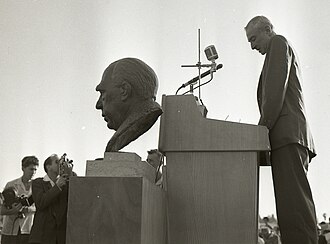
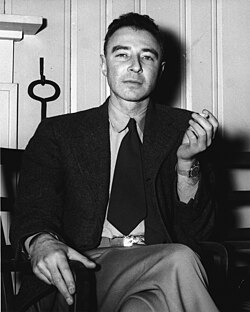
Oppenheimer passed away on February 18, 1967, at the age of 62. His life remains a cautionary tale of the relationship between science and the state, and the ethical burden carried by those who unlock the fundamental secrets of nature.
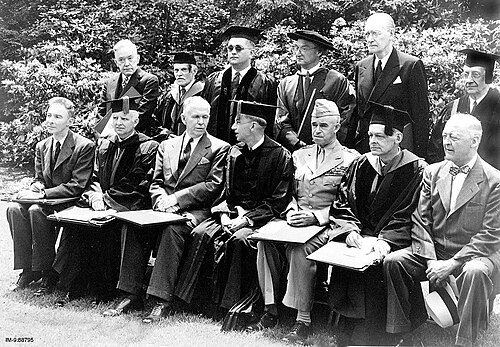
Key Facts
- Primary Achievement: Led the scientific development of the first nuclear weapons at Los Alamos.
- Education: BA from Harvard; PhD from the University of Göttingen.
- Major Awards: Medal for Merit (1946) and Enrico Fermi Award (1963).
- Scientific Contributions: Developed the Born–Oppenheimer approximation and the TOV limit for neutron stars.
- Controversy: Had his security clearance revoked in 1954 during a political security hearing.
| Category | Details |
|---|---|
| Lifespan | 1904 – February 18, 1967 |
| Key Institutions | UC Berkeley, Caltech, Los Alamos, Institute for Advanced Study |
| Major Project | The Manhattan Project (Director of Los Alamos) |
| Spouse | Katherine Puening (m. 1940) |
| Key Scientific Field | Theoretical Physics |
Frequently Asked Questions
What was Oppenheimer's role in the Manhattan Project?
Oppenheimer served as the scientific director of the Los Alamos Laboratory, where he was responsible for coordinating the design and construction of the first atomic bombs.
What is the Born–Oppenheimer approximation?
It is a fundamental method in quantum chemistry and molecular physics that allows the motion of atomic nuclei and electrons in a molecule to be treated separately, simplifying complex calculations.
Why was Oppenheimer's security clearance revoked?
His clearance was revoked in 1954 following a security hearing driven by political tensions of the Cold War, his past associations, and his opposition to the development of the hydrogen bomb.
What was the Trinity test?
The Trinity test was the first successful detonation of a nuclear weapon, conducted in New Mexico in July 1945, proving that the design developed at Los Alamos was viable.
What was the TOV limit?
The Tolman–Oppenheimer–Volkoff limit is the maximum mass a cold, non-rotating neutron star can have before it collapses under its own gravity to become a black hole.