Italian Americans: History, Culture, and Contributions to the United States
The story of Italian Americans is one of resilience, cultural synthesis, and profound influence. From the early arrivals before the 19th century to the massive waves of immigration at the turn of the century, people of Italian descent have shaped the social, political, and scientific landscape of the United States. Today, they represent a significant portion of the American population, blending ancestral traditions with the American experience.
Key Facts
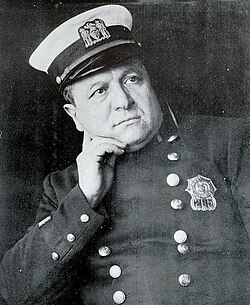
- Population: Approximately 16.8 million people identify as having Italian ancestry (alone or in combination), making up 5.07% of the U.S. population as of the 2020 census.
- Primary Religion: Predominantly Catholicism, with minorities practicing Judaism, Protestantism, and Greek Orthodoxy.
- Languages: While English is primary, Italian and various regional Italian languages persist, alongside unique pidgins like Itanglese and Siculish.
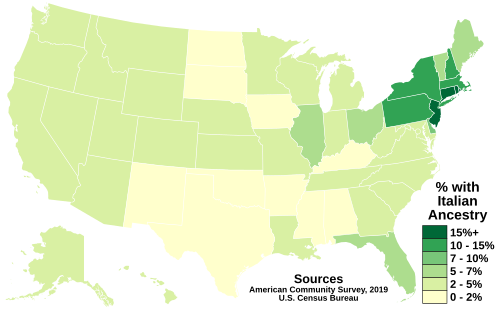
- Geographic Hubs: High concentrations are found in the Northeast, particularly in New Jersey, New York, Connecticut, and Rhode Island.
The Journey to America: A Historical Overview
Early Arrivals and the Civil War
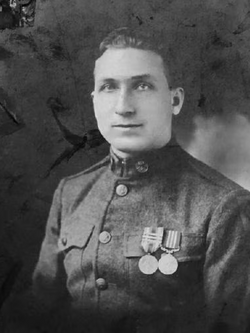
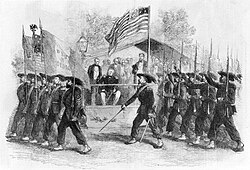
Before the mass migration of the late 1800s, smaller numbers of Italians arrived in the U.S. During the American Civil War, Italian volunteers contributed to the effort, including the Garibaldi Guard.
The Era of Mass Immigration (1880–1914)
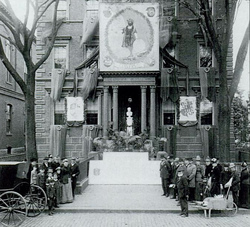
Between 1880 and 1914, the United States saw a surge of Italian immigrants, many arriving through Ellis Island. This period saw the rise of "Little Italies"—ethnic enclaves in cities like New York and Chicago where immigrants could find community, familiar food, and employment.
Integration and Struggle
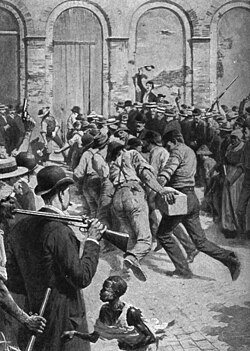
The path to integration was often fraught with hardship. Italian immigrants faced significant discrimination and stereotyping. In 1891, New Orleans witnessed one of the largest mass lynchings in American history, involving eleven Italian immigrants.
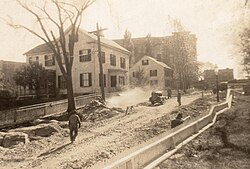
Labor conditions were also grueling. Many Italian women worked in factories, such as the Triangle Shirtwaist Factory, where a tragic fire in 1911 claimed the lives of many immigrant women.
Cultural and Social Influence

Faith and Community
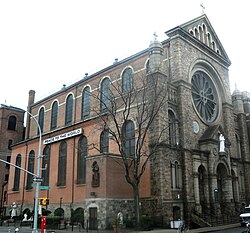
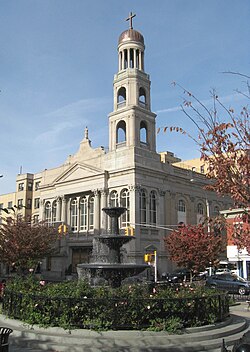
Religion played a central role in maintaining cultural identity. The St. Anthony of Padua Church, established in 1859, was the first parish in the U.S. specifically for the Italian community. Later, Our Lady of Pompeii Church was founded in 1892 to serve immigrants in Greenwich Village.
Science and Intellectual Contributions
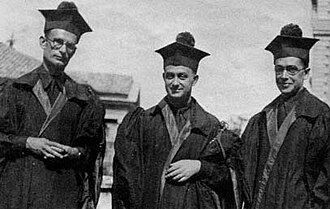
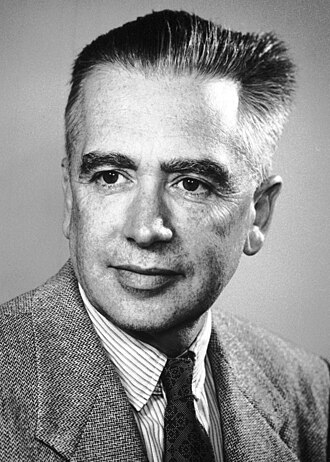
Italian Americans have made monumental strides in science. Enrico Fermi and Emilio Segrè are prime examples; Segrè, who won the Nobel Prize in Physics in 1959, was among the Italian Jews who fled Mussolini's anti-semitic laws to find refuge in the U.S.
Notable Figures in Public Life
From the arts and sports to politics and space exploration, the contributions are vast. Mario Andretti became a legend in motorsports, while Wally Schirra was a pioneer in the NASA Mercury, Gemini, and Apollo programs.
![Mario Andretti, one of the most successful drivers in the history of motorsports[99]](/images/26/20/2620c7d5e8eda3a485ca431cfe64a2db0638b08b97d4f8810d7667b569680d04.jpg)

Demographics and Distribution
Italian ancestry is widely distributed across the U.S., though it remains most concentrated in the Northeast. New York and Pennsylvania hold some of the largest populations in absolute numbers, while states like Rhode Island and Connecticut have some of the highest percentages of their population identifying as Italian American.
| State | Number of Residents | Percentage of Population |
|---|---|---|
| New York | 2,320,549 | 11.89% |
| Pennsylvania | 1,430,006 | 11.18% |
| California | 1,414,190 | 3.59% |
| New Jersey | 1,353,075 | 15.23% |
| Florida | 1,222,217 | 5.76% |
Community and Advocacy
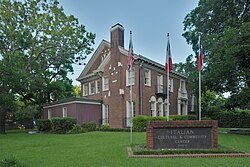
Numerous organizations work to preserve Italian heritage and protect civil rights. These include the Order Sons of Italy in America, the National Organization of Italian American Women, and the Italian-American Civil Rights League.
Frequently Asked Questions
What percentage of the U.S. population is Italian American?
According to the 2020 census, approximately 5.07% of the total U.S. population identifies as Italian American, either alone or in combination with other ancestries.
Which U.S. states have the highest concentration of Italian Americans?
The highest percentages are found in Connecticut (16.54%), Rhode Island (16.34%), and New Jersey (15.23%).
What are some of the most prominent Italian American organizations?
Key organizations include the Order Sons of Italy in America, the Italian-American Civil Rights League, and the National Organization of Italian American Women.
Who are some notable Italian Americans in science and space?
Notable figures include Nobel Prize winner Emilio Segrè, physicist Enrico Fermi, and NASA astronaut Wally Schirra.
What was the significance of "Little Italies"?
Little Italies were ethnic enclaves in major cities that provided essential social support, familiar cultural environments, and economic opportunities for new immigrants during the mass migration period.