Insectivores: The Animals and Plants That Feed on Insects
An insectivore is any carnivorous animal or plant that consumes insects. This biological role is also known as an entomophage, a term that can additionally describe the human practice of eating insects. Because insects represent a massive portion of the Earth's animal biomass, insectivory is a widespread and vital survival strategy across diverse kingdoms of life.
In almost all non-polar and non-marine environments, insects exist in staggering numbers. It is estimated that the global insect population reaches 10 quintillion (10 billion billion) organisms, with a total biomass of approximately 10 billion tons. While many species rely on insects as their primary food source, others use them as a critical protein supplement, particularly during breeding seasons.
Key Facts
- Global Biomass: Insects comprise roughly 10 billion tons of biomass worldwide.
- Evolutionary Roots: The first vertebrate insectivores were amphibians, evolving roughly 400 million years ago.
- Plant Nutrition: Insectivorous plants trap prey primarily to obtain nitrogen and minerals, not for energy.
- Taxonomy: The former mammalian order Insectivora is now abandoned; remaining related species are largely in the order Eulipotyphla.
- Diverse Range: Insectivores range from tiny spiders and flies to large mammals like the sloth bear.
The Evolution and Classification of Animal Insectivores
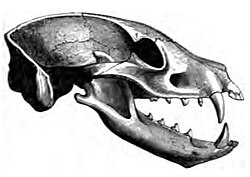
The history of insectivory in vertebrates began with amphibians 400 million years ago. Interestingly, these early creatures were originally piscivores (fish-eaters) with sharp, conical teeth similar to those of modern crocodiles. This specific dental arrangement proved equally effective for piercing the exoskeletons of insects, allowing the transition to insectivory to stem from fish-eating habits.
In the realm of mammals, classification has shifted over time. Scientists previously grouped insectivorous mammals into an order called Insectivora. However, this taxon was abandoned after it was discovered that not all insect-eating mammals are closely related. Those that are truly related remain classified under the order Eulipotyphla.
The physical adaptations of insectivores vary based on their specific prey. For example, the aardwolf has greatly reduced molars and carnassials because they are unnecessary for eating soft termites, though it retains its canine teeth for self-defense.
Diverse Examples of Insectivorous Animals
Insectivory occurs across a vast array of species, including:
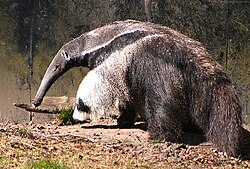
- Mammals: Anteaters, armadillos, aardvarks, pangolins, bats, numbats, echidnas, and the sloth bear (one of the largest insectivores).
- Primates: Tarsiers, galagos, aye-ayes, marmosets, and tamarins. Evidence suggests the earliest primates were nocturnal, arboreal insectivores.
- Reptiles and Amphibians: Frogs, geckos, and chameleons.
- Birds: Swallows and nightingales.
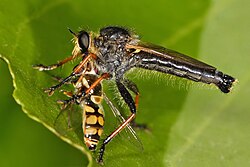
- Invertebrates: Spiders and various insects such as dragonflies, hornets, ladybugs, praying mantises, and robber flies.
Insectivorous Plants
Insectivorous plants, also known as carnivorous plants, derive essential nutrients by trapping and consuming animals or protozoa. Unlike animals, these plants do not use their prey as a primary energy source; instead, they continue to derive energy from photosynthesis. The captured prey provides critical minerals—most notably nitrogen, as well as potassium and trace elements—that are typically missing from the poor, acidic soils of bogs and rock outcroppings where these plants thrive.
To secure their prey, these plants have evolved sophisticated mechanisms, including:
- Pitfalls: Deep cavities that trap insects.
- Sticky Surfaces: Mucilage that glues prey in place.
- Hair-trigger Snaps: Rapid closing mechanisms.
- Bladder-traps: Vacuum-like suction.
- Lobster-pot mechanisms: One-way entry traps.
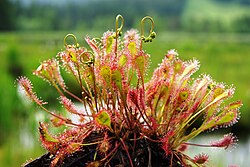
Common examples include the Venus flytrap, sundews, butterworts, bladderworts, and various pitcher plants. Some species, like Roridula, maintain a mutualistic relationship with other organisms to help digest their prey. While they primarily target arthropods, larger pitcher plants have been known to consume small vertebrates, such as lizards and rodents. The first major scientific treatise on these plants was written by Charles Darwin in 1875.
| Feature | Animal Insectivores | Plant Insectivores |
|---|---|---|
| Primary Goal | Energy and Protein | Minerals (Nitrogen/Potassium) |
| Energy Source | Consumption of Prey | Photosynthesis |
| Key Adaptations | Specialized teeth/tongues | Traps (Pitfalls, Sticky surfaces) |
| Habitat | Global (Non-polar/Non-marine) | Nutrient-poor soils/Bogs |
Frequently Asked Questions
Do insectivorous plants get their energy from insects?
No. Insectivorous plants primarily derive their energy from photosynthesis. They consume insects to obtain essential minerals, such as nitrogen and potassium, which are lacking in the nutrient-poor soils where they grow.
What is the difference between an insectivore and an entomophage?
While both terms refer to organisms that eat insects, "entomophage" is a broader term that can also specifically refer to the human practice of consuming insects.
Why was the mammal order Insectivora abandoned?
The order was abandoned because scientific research revealed that not all mammals that eat insects are closely related to one another. Many have since been reclassified, with some remaining in the order Eulipotyphla.
Can insectivorous plants eat animals other than insects?
Yes. While they primarily target arthropods, some larger species, such as certain pitcher plants, are capable of consuming small vertebrates like lizards and rodents.
Which is the largest animal insectivore?
The sloth bear is cited as perhaps the largest insectivore among mammals.