Carnivores: The Biology and Evolution of Meat-Eaters
A carnivore is any organism—be it an animal or a plant—that derives its energy and nutritional requirements from the consumption of animal tissues. This typically includes muscle, fat, and other soft tissues, acquired either through active predation or scavenging. While we often associate meat-eating with large predators, carnivory is a diverse biological strategy spanning from microscopic protists to the largest mammals on Earth.

Key Facts
- Obligate carnivores must eat meat to survive because they cannot synthesize essential nutrients.
- Hypercarnivores have a diet consisting of more than 70% meat.
- The mammal order Carnivora includes animals that are not strictly meat-eaters, such as the giant panda.
- Carnivory exists outside the animal kingdom in certain plants, fungi, and protists.
- Apex predators sit at the top of the food chain and have no natural predators as adults.
Defining the Carnivorous Diet
Not all meat-eaters are the same. Biologists categorize carnivores based on their physiological dependence on meat and the percentage of animal tissue in their diet.
Levels of Carnivory
- Hypercarnivores: Organisms whose diet is more than 70% meat.
- Mesocarnivores: Those whose diet consists of 30% to 70% meat.
- Hypocarnivores: Organisms that consume less than 30% meat, filling the rest of their needs with plants or fungi.
Furthermore, animals are distinguished by their biological necessity. Obligate carnivores (or true carnivores) require nutrients found only in animal flesh to survive. In contrast, facultative carnivores or omnivores can consume animal tissue but can also survive on non-animal food sources.
Specialized Prey Categories
Carnivores are also classified by the specific type of prey they target:
- Insectivores: Primarily eat insects and terrestrial arthropods.
- Vermivores: Primarily eat soft-bodied invertebrates.
- Piscivores: Primarily eat fish.
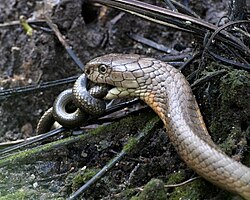
The Order Carnivora vs. Carnivorous Diets
There is often confusion between the biological order Carnivora and the act of being carnivorous. A carnivoran is a member of the mammal order Carnivora, but dietary habits within this group vary wildly.
For example, members of the Felidae family (cats) are obligate carnivores. However, the Ursidae family (bears) shows great diversity: the polar bear is almost exclusively carnivorous (over 90% meat), most other bears are omnivorous, and the giant panda is nearly exclusively herbivorous. Conversely, some animals that are strictly carnivorous, such as cetaceans (whales and dolphins), do not belong to the order Carnivora at all.
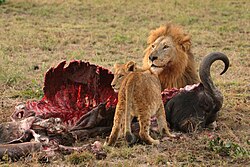
Biological Characteristics of Carnivores
To successfully capture and process prey, carnivores have evolved specific physical and physiological traits. Many possess strength, speed, and keen senses, along with specialized teeth and claws for tearing flesh. Hunting predators often have forward-facing eyes to enable depth perception, though this is less common in reptile and amphibian predators, who typically have sideways-facing eyes.
Physiologically, carnivores generally have shorter digestive systems than herbivores because they do not need to break down tough plant cellulose. Some species have evolved chemical weapons, using powerful venom to immobilize prey.
Interestingly, carnivory is not limited to animals. Certain plants, such as the Venus flytrap, and various fungi and protists also consume other organisms to meet their nutritional needs.

The Evolution of Predation
Predation is an ancient biological process that predates complex animals by hundreds of millions of years. It began with single-celled organisms using phagocytosis—the process of engulfing and digesting other cells.
From the Proterozoic to the Paleozoic
Early predatory behavior likely contributed to the rise of multicellular organisms and eukaryotes. During the Cambrian explosion, radiodont arthropods like Anomalocaris became the first apex predators of the sea. Later, jawed fish such as the armored placoderm Dunkleosteus dominated the Devonian oceans.
Terrestrial Transition and the Mesozoic
As vertebrates moved onto land, early tetrapods became apex predators in wetland habitats. By the Permian period, synapsids like Dimetrodon developed curved, serrated teeth to hunt prey larger than themselves. In the Mesozoic era, theropod dinosaurs, including Tyrannosaurus rex, emerged as dominant obligate carnivores, while early mammals like Repenomamus were capable of attacking dinosaurs.
The Cenozoic Era
Following the dinosaurs, mammals took over the primary predatory roles. This included a diverse array of eutherian carnivores in Africa and the Northern continents, sparassodonts in South America, and marsupial predators in Australia. From the Miocene to the present, carnivoramorphs have remained the dominant carnivorous mammals.
Summary of Carnivore Classifications
| Category | Dietary Composition | Nutritional Requirement |
|---|---|---|
| Hypercarnivore | > 70% Meat | Variable |
| Mesocarnivore | 30% – 70% Meat | Variable |
| Hypocarnivore | < 30% Meat | Variable |
| Obligate Carnivore | Primarily Meat | Must have animal-derived nutrients |
| Facultative Carnivore | Mixed | Can survive on non-animal food |
Frequently Asked Questions
What is the difference between an obligate and a facultative carnivore?
An obligate carnivore must consume animal tissues to obtain essential nutrients that their bodies cannot synthesize. A facultative carnivore can eat meat but is capable of surviving on non-animal food sources.
Are all members of the order Carnivora meat-eaters?
No. While most are, some members of the order Carnivora have different diets; for instance, the giant panda is almost exclusively herbivorous.
Why do some obligate carnivores eat grass?
Some obligate carnivores, such as cats, ingest vegetation as an emetic. Because they cannot digest it, the plant matter acts as an irritant that induces vomiting to clear the stomach of hair or indigestible material.
Can plants be carnivores?
Yes. There are several genera of carnivorous plants, which are predominantly insectivores, meaning they capture and digest insects to supplement their nutrition.
What defines an apex predator?
An apex predator is a carnivore at the top of the food chain whose adult form is not preyed upon by any other animals.