Indian South Africans: A History of Migration, Struggle, and Integration
The Indian community in South Africa is a diverse population with roots stretching back centuries. While some arrived as early as the 18th century, the modern community primarily descends from two distinct groups: indentured labourers brought by the British in the late 1800s and passenger Indians who migrated as free British subjects. Their journey is one of resilience, moving from the hardships of plantation labour and systemic discrimination to playing a pivotal role in the democratic landscape of post-apartheid South Africa.
The Origins of Indian Migration
Indentured Labourers
The systematic arrival of Indians began in 1860 with the ship Truro arriving from Madras, followed by the Belvedere from Calcutta. Over five decades, approximately 200,000 indentured labourers—individuals bound by a contract to work for a specific period—were transported to the Natal Colony. While most worked on sugarcane plantations, others were employed as railway workers and coal miners.
Colonial authorities turned to Indian labour because local black Africans were economically self-sufficient and unwilling to work for colonial farmers. The labourers, primarily Hindu with Muslim and Christian minorities, spoke languages including Tamil, Telugu, Bhojpuri, Awadhi, and Hindi/Hindustani. Life on the plantations was often brutal, characterized by unsanitary conditions and mistreatment. Reports from returning labourers eventually forced the Indian government to implement safeguards for future recruits.
Those who remained in South Africa after their contracts expired became a vital part of the economy, working as industrial labourers, clerks, court interpreters, and market gardeners who provided the majority of vegetables for the white population.
Passenger Indians
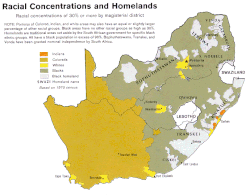
Parallel to the indentured system, "passenger Indians" arrived as free British subjects, paying their own fares. These migrants were largely traders from Gujarat (including Memons and Surtis), later joined by Konkanis and Urdu speakers from Uttar Pradesh. Many were Muslim, contributing significantly to the establishment of Islam in their settlements.
Initially based in Durban, these traders expanded inland toward the Transvaal, establishing communities along the route to Johannesburg. Their commercial success often displaced small white shop owners, fueling racial resentment among white business owners.
Early Discrimination and Resistance (1860–1910)
Indian immigrants faced varying levels of hostility depending on the region:
- Natal: Repressive laws were common, including a 1888 requirement for Indians to carry passes. In 1893, Mohandas K. Gandhi arrived to handle a legal case and soon became a leader in the fight against racial discrimination. He helped form the Natal Indian Congress to resist legislation aimed at restricting Indian voting rights.
- Transvaal: The South African Republic instituted discriminatory laws in 1885, banning Indians from the mining industry and forcing them into designated "coolie locations." Persons of colour were even prohibited from using sidewalks. These tensions were a contributing factor (casus belli) to the Second Boer War.
- Cape Colony: Passenger Indians generally fared better here, enjoying the right to vote, own property, and trade freely. Many Muslim men married Cape Malay women, and their descendants were often classified as "Coloureds."
- Orange Free State: An 1891 statute prohibited Indians from living in this Boer Republic, resulting in a near-total absence of Indians in the region until the end of apartheid.
The Union of South Africa and the Apartheid Era
Between 1910 and 1948, the government attempted to encourage repatriation to India through financial incentives and continued discrimination. Despite a 1926 Round Table conference between South African and Indian authorities, few Indians chose to leave.
The Violence and Legislation of Apartheid
The onset of formal apartheid in 1948 brought severe restrictions. In January 1949, the Durban riots saw Zulus target poor Indians, resulting in 142 deaths and the destruction of hundreds of homes and shops. The Group Areas Act of 1950 forcibly relocated Indians into segregated townships and restricted their movement.
Education for Indians was intentionally kept inferior to that of white South Africans. For a time, Indian students had to attend university on Salisbury Island in an abandoned prison before the University of Durban-Westville was established in the 1970s through joint funding from the government and the Indian community.
Political Maneuvering
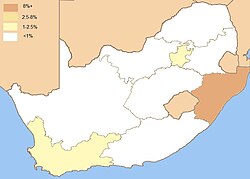
In 1961, Indians were officially recognized as permanent residents. The government later created the South African Indian Council (1968) and the House of Delegates (1983) as part of a Tricameral Parliament. This system gave Indians and Coloureds limited, subordinate representation while continuing to exclude the black majority. These measures saw very low voter turnout and limited support.
Post-Apartheid Integration and Modernity
Following the transition to democracy in 1994, many Indians who had fought against apartheid took prominent roles in the ruling African National Congress (ANC). Under current Employment Equity laws, Indians who were citizens before 1994 are classified as "black" for the purposes of affirmative action and Black Economic Empowerment, acknowledging their status as a disadvantaged group under the previous regime.
Since 1994, a new wave of immigration from India, Pakistan, Bangladesh, and Sri Lanka has occurred. These recent arrivals are generally viewed as distinct from the established Indian South African community, though they often reside in the same areas.
Assimilated Groups and Early Exiles
Beyond the 19th-century migration, some Indians arrived much earlier as slaves or exiles in the Dutch-ruled Cape. Many were victims of kidnapping and were eventually subsumed into the Cape Malay and Cape Coloured communities. Notably, former State President F.W. de Klerk acknowledged an ancestor, Diana of Bengal, who was a slave. Another early arrival was Kalaga Prabhu, a merchant exiled from Cochin to the Cape in 1771.
Key Facts
- First Arrival: The first major group of indentured labourers arrived in 1860 on the ship Truro.
- Population Scale: Approximately 200,000 indentured labourers arrived over 50 years.
- Gandhi's Influence: Mahatma Gandhi helped form the Natal Indian Congress to fight voting restrictions.
- Apartheid Impact: The Group Areas Act (1950) forced Indians into segregated townships.
- Legal Status: Pre-1994 Indian citizens are eligible for affirmative action as "disadvantaged" persons.
| Group | Primary Period | Legal Status | Primary Origins | Key Occupations |
|---|---|---|---|---|
| Indentured Labourers | 1860–1910 | Contract Workers | Madras, Calcutta | Sugarcane, Mining, Railways |
| Passenger Indians | Late 1800s | Free British Subjects | Gujarat, Uttar Pradesh | Trade, Commerce |
| Early Slaves/Exiles | 18th Century | Enslaved/Exiled | India, Bengal, Cochin | Domestic/Merchant |
| Modern Migrants | Post-1994 | Free Immigrants | South Asia | Various |
Frequently Asked Questions
Why were Indians brought to South Africa as indentured labourers?
Colonial authorities found that local black Africans were economically self-sufficient and unwilling to work for colonial farmers. Additionally, some authorities believed African culture was incompatible with the sudden shift to employed labour.
What role did Mahatma Gandhi play in South Africa?
Gandhi arrived in 1893 and, after experiencing racial discrimination, organized resistance against legislation that sought to restrict Indian voting rights in Natal, leading to the creation of the Natal Indian Congress.
How did the Group Areas Act affect the Indian community?
The Act forcibly moved Indians out of their homes and businesses into designated Indian townships, severely restricting their movement and residential choices.
Are recent South Asian immigrants considered part of the "Indian South African" community?
Generally, no. Recent migrants from India, Pakistan, Bangladesh, and Sri Lanka who arrived after 1994 are usually distinguished from the descendants of the indentured and passenger Indians who faced apartheid.
What is the current legal status of pre-1994 Indian citizens regarding employment?
For the purposes of Employment Equity and Black Economic Empowerment, Indians who were citizens before 1994 are classified as black because they were disadvantaged under the apartheid system.