Independent Social Democratic Party of Germany (USPD)
The Independent Social Democratic Party of Germany (Unabhängige Sozialdemokratische Partei Deutschlands, or USPD) was a pivotal left-wing political force during the twilight of the German Empire and the early years of the Weimar Republic. Born out of a deep ideological rift over war and peace, the USPD served as a bridge between traditional social democracy and revolutionary communism.
Founded in 1917, the party was composed of members of the Social Democratic Party of Germany (SPD) who could no longer support the government's war efforts during World War I. While short-lived, the USPD played a critical role in the November Revolution and the subsequent shaping of Germany's first democratic experiment.
Key Facts
- Founded: April 6, 1917, in Gotha, Germany.
- Core Ideology: Centrist Marxism, Democratic Socialism, and Pacifism.
- Peak Membership: Approximately 750,000 members by the spring of 1920.
- Primary Cause: Opposition to Germany's involvement in World War I and the SPD's support of war bonds.
- Fate: Split in 1920; the majority joined the KPD, and most remaining members rejoined the SPD by 1922.
The Great Schism: From SPD to USPD
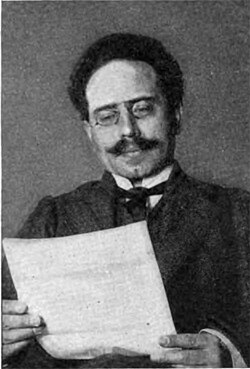
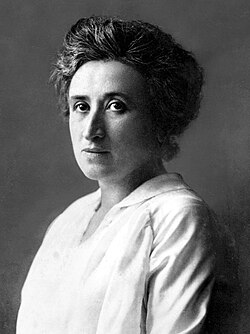
The seeds of the USPD were sown in 1914 when the SPD officially supported Germany's entry into World War I. This created a profound divide within the party. A small group of dissenters, led by Karl Liebknecht and Rosa Luxemburg, formed the International Group to fight for a change in course.
The conflict peaked over the issue of war bonds—government loans used to fund the military. In December 1915, Liebknecht and 18 other members voted against these bonds. The SPD leadership responded with administrative purges, expelling Liebknecht in January 1916 and the other dissenters in March. These ousted members initially formed the Social Democratic Working Group (SAG) before officially establishing the USPD in April 1917.
A Heterogeneous Coalition
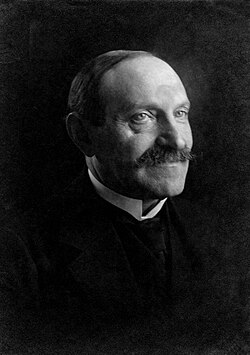
The USPD was not a monolithic entity but a broad tent of left-wing thought. It brought together diverse figures, including:
- Social Democratic Traditionalists: Such as Hugo Haase.
- Revisionists: Such as Eduard Bernstein and Kurt Eisner.
- Marxist Revolutionaries: Specifically the Spartacus League, a radical faction that sought a total overthrow of the capitalist system.
The USPD in the November Revolution
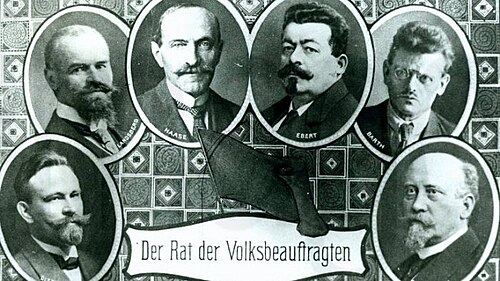
As the German Empire collapsed in 1918, the USPD found itself at the center of the November Revolution. The party participated in the Council of the People's Deputies, the provisional government that managed the transition from the monarchy to a republic.
However, the party was plagued by internal tension regarding the goal of a council republic (a system of government based on workers' and soldiers' councils) versus a parliamentary democracy. This tension led to the first major fracture in January 1919, when the Spartacus League split from the USPD to co-found the Communist Party of Germany (KPD).
The Weimar Republic and Political Volatility
The USPD's performance in the January 1919 elections for the Weimar National Assembly was a disappointment, securing only 7.6% of the vote. The party struggled to differentiate itself from the Majority Social Democrats (MSPD) in the eyes of the electorate.
Despite this, the party saw a massive resurgence in the June 1920 elections. As voters grew disillusioned with the MSPD and the German Democratic Party (DDP), the USPD surged to 17.6% of the vote, becoming the second-strongest party in the Reichstag with 84 seats.
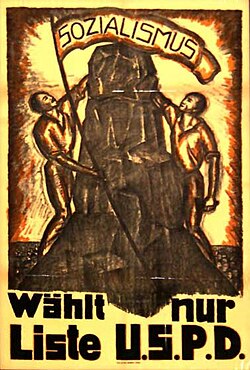
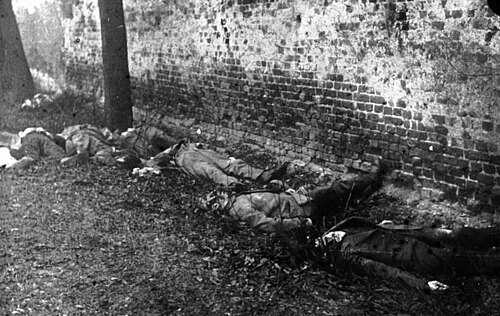
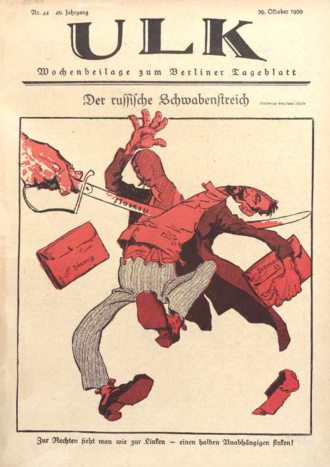
This success was short-lived. The party's internal divide between revolutionaries and democrats reached a breaking point over the proposal to join the Comintern (the Communist International). This led to a definitive split in October 1920.
The Final Splits
The party divided into two factions:
- Left USPD: Led by Ernst Däumig, this group (approximately 400,000 members) merged into the KPD in December 1920.
- Right USPD: Led by Georg Ledebour and Arthur Crispien, this group (approximately 340,000 members) remained committed to parliamentary democracy.
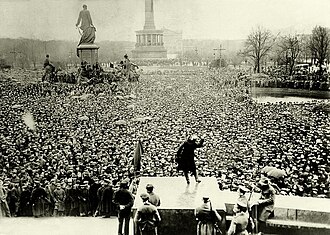
By 1922, the remaining Right USPD members found themselves isolated and underfunded. The assassination of Foreign Minister Walther Rathenau by ultra-nationalists highlighted the growing threat of the far right, prompting the USPD to reunite with the SPD on September 24, 1922.
USPD Electoral Performance Summary
| Year | Leader | Votes | Percentage | Seats |
|---|---|---|---|---|
| 1919 | Hugo Haase | 2,317,290 | 7.62% | 22 |
| 1920 | Arthur Crispien | 5,046,813 | 17.90% | 84 |
| 1924 (May) | G. Ledebour / T. Liebknecht | 235,145 | 0.79% | 0 |
| 1928 | Minority Faction | 20,815 | 0.06% | 0 |
Frequently Asked Questions
Why did the USPD split from the SPD?
The USPD was formed by members of the SPD who opposed Germany's involvement in World War I and the party leadership's decision to support government war bonds.
What was the role of the Spartacus League within the USPD?
The Spartacus League was the far-left, revolutionary wing of the USPD. They pushed for a council republic and eventually split from the party in 1919 to help found the Communist Party of Germany (KPD).
Why did the USPD eventually merge back into the SPD?
After losing a majority of its members to the KPD in 1920, the remaining USPD lacked the funds and influence to maintain a "special path." The threat of far-right violence, exemplified by the assassination of Walther Rathenau, pushed the two parties toward reunification in 1922.
Did any part of the USPD survive after 1922?
Yes, a small minority faction led by Georg Ledebour and Theodor Liebknecht refused the merger. This remnant continued to contest elections with dwindling success until it merged into the Socialist Workers' Party of Germany (SAPD) in 1931.