Hydrogen Sulfide: Properties, Hazards, and Industrial Applications
Hydrogen sulfide (H2S) is a colorless, highly toxic, and flammable gas best known for its pungent odor, which closely resembles that of rotten eggs. Often referred to in industrial contexts as sour gas or in domestic settings as sewer gas, this compound plays a diverse role in nature, ranging from a biological signaling molecule in the human body to a critical component of planetary atmospheres and industrial chemical synthesis.
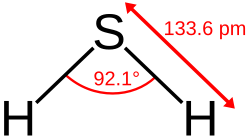
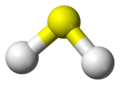
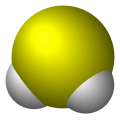
From a chemical perspective, hydrogen sulfide is a hydrogen chalcogenide—a compound formed by hydrogen and a chalcogen atom (in this case, sulfur). Its molecular structure is bent, with a dipole moment of 0.97 D, making it soluble in water and reactive with various metals and oxidizing agents.
Key Facts
- Chemical Formula: H2S
- Distinctive Odor: Foul, pungent smell of rotten eggs.
- Toxicity: Highly toxic; can be lethal at high concentrations.
- Physical State: Colorless gas at standard temperature and pressure.
- Industrial Use: Used in the production of sulfur and thioorganic compounds.
- Natural Occurrence: Produced by bacteria in organic-rich sediments and found in volcanic gases.
Chemical and Physical Properties
Hydrogen sulfide has a molar mass of 34.08 g/mol and a boiling point of −59.55 °C. It is characterized by its acidity (pKa of 7.0), with its conjugate base being the bisulfide ion. In its pure form, it is a colorless gas, but its presence in the environment often leads to the formation of metal sulfides, which can manifest as black sludge in drained ponds.
Superconductivity at Extreme Pressures
One of the most remarkable scientific properties of hydrogen sulfide emerges under extreme pressure. At pressures exceeding 90 gigapascals (GPa), H2S transforms into a metallic conductor of electricity. When cooled, this phase exhibits superconductivity—the ability to conduct electricity with zero resistance. Depending on the pressure and cooling method, critical temperatures have been recorded up to 203 K (−70 °C), making it a subject of intense study for achieving room-temperature superconductivity.
Industrial Production and Uses
In laboratory settings, hydrogen sulfide is commonly produced by treating ferrous sulfide (FeS) with a strong acid, such as hydrochloric acid (HCl), often using a Kipp generator. Industrially, it is synthesized through the direct reaction of sulfur and hydrogen.
The gas is essential for several industrial processes:
- Sulfur Production: Reacting H2S with sulfur dioxide (SO2) produces elemental sulfur.
- Thioorganic Compounds: It serves as a precursor for various sulfur-containing organic chemicals.
- Metal Sulfides: It is used to create metal sulfides through reactions with bases like sodium hydroxide.
Environmental Occurrence and the Sulfur Cycle
Hydrogen sulfide is a natural byproduct of the sulfur cycle. It is produced by anaerobic bacteria in organic-matter-rich sediments. In marine environments, this can lead to "blooms" of H2S that are toxic to fish, particularly when oxygen-poor water reaches coastal areas.


Planetary and Geological Impact
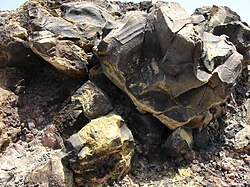
Beyond Earth, hydrogen sulfide has been detected in the atmosphere of Uranus. Geologically, massive releases of H2S from the ocean into the atmosphere are linked to intervals of oceanic anoxia and have been theorized to contribute to mass extinctions, such as the Permian-Triassic boundary ozone collapse.
Safety, Toxicity, and Exposure
Hydrogen sulfide is classified as both flammable and highly toxic. It is a potent respiratory irritant and can be fatal if inhaled in sufficient quantities.

Exposure Thresholds
The human nose can detect H2S at extremely low levels, but high concentrations can lead to olfactory fatigue, where the sense of smell is lost, making the gas undetectable even as it reaches lethal levels.
| Metric | Value/Limit | Note |
|---|---|---|
| Odor Threshold | 0.00047 ppm | Point of detection for 50% of humans |
| Recognition Threshold | 0.0047 ppm | Point of identification for 50% of humans |
| OSHA PEL-Peak | 50 ppm | Permissible exposure peak |
| NIOSH IDLH | 100 ppm | Immediately dangerous to life and health |
| Flash Point | −82.4 °C | Highly flammable |
| Autoignition Temp | 232 °C | Temperature for spontaneous ignition |
Biological Role and Metabolism
Interestingly, H2S occurs naturally within the human body and gut, where it acts as a signaling molecule. The body possesses oxidative enzymes that metabolize low levels of H2S into harmless sulfate. However, when exposure exceeds a threshold (approximately 300–350 ppm), these enzymes become overwhelmed, leading to acute toxicity.
Frequently Asked Questions
What does hydrogen sulfide smell like?
Hydrogen sulfide is famous for its foul, pungent odor, which is commonly described as smelling like rotten eggs.
Why is hydrogen sulfide dangerous to breathe?
It is highly toxic and can interfere with cellular respiration. At high concentrations, it can cause rapid unconsciousness and death. Furthermore, it can cause olfactory fatigue, meaning you may stop smelling the gas even as the concentration increases to dangerous levels.
How is hydrogen sulfide removed from water or fuel?
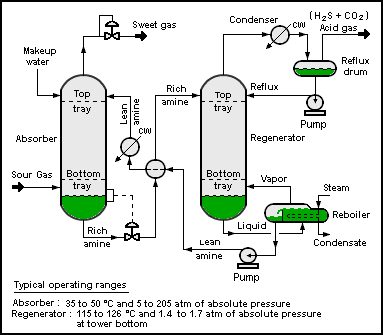
In water treatment, it can be removed through continuous chlorination or aeration. In fuel gases, it is often removed using amine treating processes, where amines react with H2S to strip it from the gas stream.
Can hydrogen sulfide be used for anything beneficial?
Yes, it is used industrially to produce elemental sulfur and various thioorganic compounds. In medicine, research is ongoing regarding its role as a gasotransmitter and its potential therapeutic applications in treating cardiovascular disease.