Horb am Neckar: A Journey Through History, Faith, and Heritage
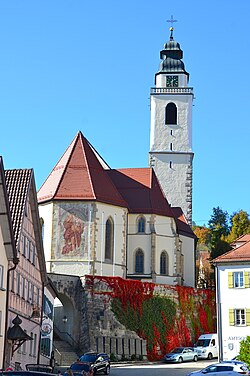
Perched atop a hill overlooking the Neckar valley, Horb am Neckar is a town where geography and history intertwine. Its distinctive townscape, visible from all directions, was born of necessity; the swampy terrain along the river forced early settlers to build among the foothills of the Schütteberg mountain. From its origins as a small settlement to its current status as a major district town, Horb offers a fascinating glimpse into the shifting political and religious landscapes of southwestern Germany.
Key Facts
- First Documentation: Mentioned as horv or horva (meaning "swamp") in 1090.
- Town Status: Officially documented as a town in 1228.
- Administrative Status: Designated as a Große Kreisstadt (major district town) on January 1, 1981.
- Political Shifts: Transitioned from the counts palatine of Tübingen to the counts of Hohenberg, then to Austria, and finally to the Kingdom of Württemberg.
- Geography: Located in the Northern Black Forest Region within the Regierungsbezirk of Karlsruhe.
The Evolution of Horb: From Swamp to City
The earliest records of Horb date back to 1090, though historians believe the settlement is even older, as Old High German was already nearly extinct by the time it was first documented. The town's growth was marked by the establishment of a mayor (Schultheiß) in 1244 and a market in 1277.
Throughout the Middle Ages, Horb changed hands several times. It initially belonged to the counts palatine of Tübingen until 1305, after which it passed to the counts of Hohenberg. By 1381, the town became part of Further Austria, serving as an administrative seat for the local Vogt (a steward or advocate). In 1806, Horb was integrated into the Kingdom of Württemberg and became the center of the Oberamt Horb.
Administrative Reforms and Modern Growth
The 20th century brought significant structural changes. Between 1971 and 1975, 18 surrounding municipalities were merged into the district. During the 1973 local government reforms of Baden-Württemberg, the districts of Horb and Hechingen were dissolved. Consequently, Horb was transferred to the administration of Freudenstadt, effectively placing a former Württemberg town under the administration of the former capital of Baden.
The town's growth continued steadily, and upon exceeding 20,000 residents in 1979, it successfully petitioned to become a Große Kreisstadt in 1981.
Religious Diversity and Institutions
Religion in Horb has been shaped by the region's political allegiances. During the Protestant Reformation, Horb remained overwhelmingly Catholic because it was then part of Further Austria. Following its transfer to Württemberg, it became part of the Diocese of Rottenburg (now Rottenburg-Stuttgart).
Today, Catholic administration is divided into two pastoral units (Seelsorgeeinheiten): Steinachtal and Horb. Interestingly, the communities of Betra, Dettensee, Dettingen, Dettlingen, and Dießen belong to the Archdiocese of Freiburg due to their historical ties to the Principality of Hohenzollern-Sigmaringen.
Protestantism and Other Faiths
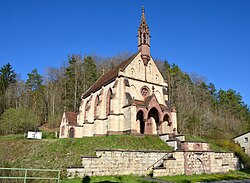
Lutheran settlers began arriving in the 19th century, establishing their first congregation in 1866 and later building the Johanneskirche (St. John's). Protestant communities are now spread across several districts, including the Sulz am Neckar district of the Evangelical-Lutheran Church in Württemberg.
Beyond the main denominations, Horb hosts "free churches," including a Pentecostal congregation (BFD) and the New Apostolic Church. The town also has a somber history regarding its Jewish communities in Rexingen, Nordstetten, and Baisingen, which were devastated by forced emigration and deportation during the Nazi era.
Heraldry and the Coat of Arms
The coat of arms of Horb am Neckar is a visual record of its ownership. The shield is divided horizontally, with silver on the top and red on the bottom. While the oldest town seal from 1261 reflects the arms of the counts palatine of Tübingen, the town adopted the arms of the counts of Hohenberg after 1305, which it continues to bear today.
| Period/Year | Ruling Power / Administration | Key Milestone |
|---|---|---|
| 1090 | Early Settlement | First documented as horv |
| 1228 | Counts Palatine of Tübingen | First documented as a town |
| 1305 | Counts of Hohenberg | Acquired via marriage; arms adopted |
| 1381 | Further Austria | Administrative seat for the Vogt |
| 1806 | Kingdom of Württemberg | Became Oberamt Horb |
| 1981 | Baden-Württemberg | Became a Große Kreisstadt |
Frequently Asked Questions
What does the name "Horb" mean?
The name is derived from the Old High German words horv or horva, which translate to "swamp."
Why is the town built on a hill?
The builders laid the town out among the foothills of the Schütteberg mountain because the land along the Neckar river was too swampy for construction.
How did Horb become a Große Kreisstadt?
After the population exceeded 20,000 residents in 1979, the town petitioned the state government of Baden-Württemberg, and the request was granted effective January 1, 1981.
Why are some parts of Horb under the Archdiocese of Freiburg?
The communities of Betra, Dettensee, Dettingen, Dettlingen, and Dießen were previously part of the Principality of Hohenzollern-Sigmaringen, leading to their inclusion in the Archdiocese of Freiburg since 1827.
What is the significance of the town's coat of arms?
The silver and red shield represents the arms of the counts of Hohenberg, who acquired the town in 1305.