Histoire Naturelle: The Monumental Encyclopedia of the Comte de Buffon
In the mid-18th century, the world of science was transformed by a massive undertaking known as the Histoire Naturelle, générale et particulière, avec la description du Cabinet du Roi. This encyclopedic collection, spanning 36 original quarto volumes, sought to catalog the entirety of human knowledge regarding the natural world. Written primarily by the Comte de Buffon between 1749 and 1804, the work became a cornerstone of the Enlightenment, blending rigorous observation with a narrative style that captivated the European elite.
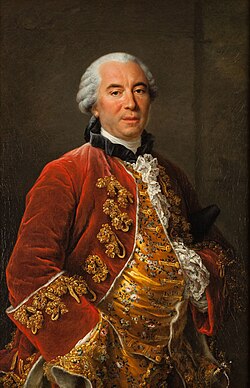
The project was a lifelong passion for Georges-Louis Leclerc, comte de Buffon (1707–1788), who spent nearly 50 years refining the text in his offices at Montbard and his library at Petit Fontenet. The work was so highly anticipated that the first edition sold out within just six weeks, rivaling the success of Diderot's famous Encyclopédie.
Key Facts
- Author: Primarily the Comte de Buffon, continued by Bernard Germain de Lacépède.
- Scope: Covered natural history, minerals, quadrupeds, birds, fish, and cetaceans.
- Timeline: Published between 1749 and 1804.
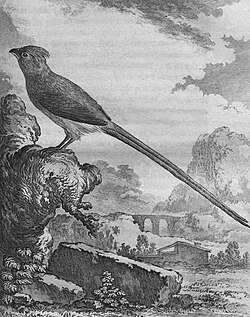
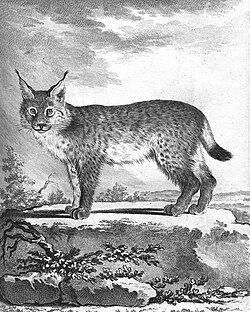
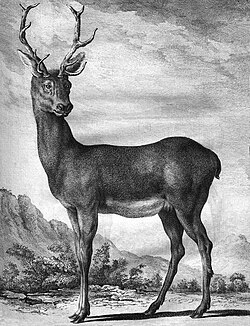
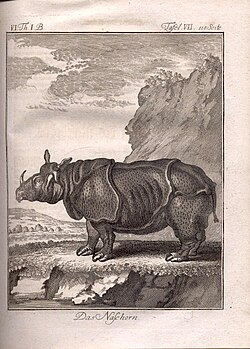
- Illustrations: Approximately 2,000 plates produced mainly by Jacques de Sève.
- Controversy: Criticized by clergy for claiming the Earth was older than 6,000 years.
- Legacy: Early contributions to comparative anatomy and geological time.
The Scope of Natural Science
At the time of its publication, the term "natural sciences" was far broader than it is today. Buffon's work encompassed disciplines we now categorize as material science, physics, chemistry, and technology, alongside the biological study of animals. Buffon was particularly interested in internal anatomy, believing that the interior of living beings served as the foundation of nature's design. This approach established him as an early pioneer of comparative anatomy—the study of similarities and differences in the anatomy of different species.
Buffon also explored the relationship between humans and other primates. While he noted the morphological (structural) similarities between men and apes, he maintained a sharp distinction between the two, asserting that apes lacked the capacity for thought.
Structure and Content
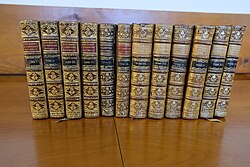
The Histoire Naturelle was organized into thematic series, each beginning with a general essay followed by detailed articles on specific subjects. The original 36 volumes were later expanded to 44 after Buffon's death, as his colleague Bernard Germain de Lacépède added volumes on reptiles, fish, and cetaceans.
| Section | Volumes | Key Topics |
|---|---|---|
| General Natural History | I–III | Theory of the Earth, Human Nature, King's Cabinet |
| Quadrupèdes | IV–XV | Domestic and wild animals, carnivores, primates |
| Oiseaux (Birds) | XVI–XXIV | Comprehensive avian descriptions |
| Minéraux (Minerals) | XXV–XXIX | Mineralogy and the study of magnets |
| Suppléments | XXX–XXXVI | Additional theories on Earth and animals |
| Reptiles & Fish | XXXVII–XXXXIII | Egg-laying quadrupeds, snakes, and fish |
| Cétacés (Cetaceans) | XXXXIV | Whales and dolphins |
The Detail of the Articles
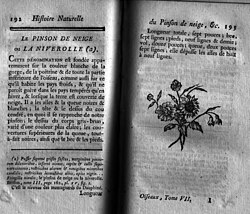
Buffon's approach to individual species was exhaustive. For example, his 32-page account of the wolf included its name in eight different languages and cited zoological descriptions from predecessors like Linnaeus and Gessner. Rather than using a rigid identification checklist, Buffon wrote in a continuous essay style, blending physical measurements (using pre-revolutionary French feet and inches) with observations on behavior and human perceptions of the animal.
Artistry and Illustration
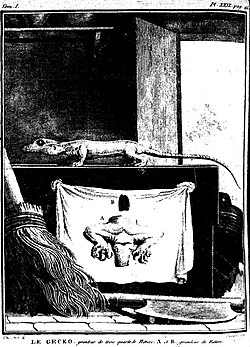
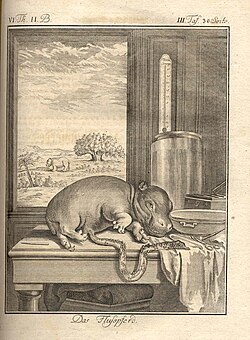
The visual impact of the Histoire Naturelle was largely due to the work of Jacques de Sève, who created roughly 2,000 plates. These illustrations covered mammals and reptiles, while François-Nicolas Martinet provided specialized plates for the birds. For the high-end "de luxe" edition of the bird volumes, Edme-Louis Daubenton supervised 1,008 hand-colored engravings.
Reception and Controversy
Despite its commercial success, the work sparked significant intellectual and religious conflict. Buffon challenged the biblical timeline of creation by suggesting the Earth was significantly older than 6,000 years, citing the presence of fossil sea-shells on mountaintops as evidence of geological change over time.
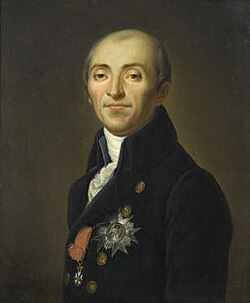
Furthermore, Buffon clashed with Carl Linnaeus over the system of biological classification. Buffon argued that the concept of "species" was artificial and that the only true entity in nature was the individual. He dismissed taxonomy based on counting flower parts (stamens or pistils) as irrelevant to the actual nature of the organism.
Global Influence and Translations
The influence of the Histoire Naturelle extended far beyond France. It was translated into English, German, Swedish, Russian, and Italian. In England, various editions appeared throughout the late 18th and early 19th centuries, including abridged versions for children and specialized translations of specific volumes, such as the study of the horse.
Frequently Asked Questions
Who completed the Histoire Naturelle after Buffon's death?
Bernard Germain de Lacépède led the effort to continue the work, adding eight volumes that covered egg-laying quadrupeds, snakes, fish, and cetaceans between 1788 and 1804.
Why was the work controversial among the clergy?
Buffon asserted that the Earth was older than 6,000 years, which contradicted the biblical account found in the Book of Genesis.
How did Buffon's view of species differ from Linnaeus'?
While Linnaeus used a structured system of classification, Buffon believed that species were artificial constructs and that the individual was the only real entity in nature.
What was the role of Jacques de Sève in the project?
Jacques de Sève was the principal illustrator, responsible for creating approximately 2,000 plates depicting the animals described in the encyclopedia.
What disciplines were included in Buffon's definition of "natural sciences"?
His work was broad, encompassing what we now call physics, chemistry, material science, technology, and the natural history of animals and minerals.