Louis Pierre Vieillot: Pioneer of Modern Ornithology
Louis Pierre Vieillot was a distinguished French ornithologist whose work laid critical foundations for the scientific study of birds. Operating during a transformative era of natural history, Vieillot combined field collection with rigorous analysis, becoming one of the first scientists to study live birds and the complex changes in their plumage.
His legacy is cemented by his prolific contributions to taxonomy—the science of naming and classifying organisms. Using the Linnaean system (a formal system of binomial nomenclature), Vieillot provided the first scientific descriptions for hundreds of species, many of which he encountered during his travels in the Americas.
Key Facts
- Scientific Authority: Recognized as the authority for 88 genera and 402 bird species.
- Major Work: Published Analyse d'une nouvelle Ornithologie Elémentaire in 1816.
- Innovation: One of the first ornithologists to study live birds and plumage variation.
- Global Reach: Collected specimens in Saint-Domingue (Haiti) and described species from North and South America.
- Legacy: Three bird species (Vieillot's barbet, Puerto Rican lizard cuckoo, and Australasian figbird) are named in his honor.
Life and Career
Early Years and American Expeditions
Born on May 10, 1748, in Yvetot, France, Vieillot initially pursued his family's business interests in Saint-Domingue (modern-day Haiti) on the island of Hispaniola. However, the turmoil of the French Revolution and subsequent Haitian rebellions forced him to flee to the United States.
During this period, acting on the advice of the naturalist Buffon, Vieillot collected extensive biological material. This work culminated in the Histoire naturelle des oiseaux de l'Amérique Septentrionale, the first two volumes of which were published in France starting in 1807.
Return to France and Academic Contributions
Vieillot returned to France in 1798. He secured a position at the Bulletin des Lois, a role that provided him with the financial stability and leisure time necessary to dedicate himself to natural history. He stepped in to complete the "Oiseaux dorés" in 1802 following the death of Jean Baptiste Audebert and published his own work on the singing birds of the torrid zone in 1806.
In 1816, he published his seminal work, Analyse d'une nouvelle Ornithologie Elémentaire, which proposed a new system of ornithological classification. While influential, this system sparked bitter rivalries, most notably drawing strong criticism from Coenraad Temminck in 1817.
Scientific Impact and Legacy
Vieillot's impact on zoology is immense. He is among the top authorities in bird naming, surpassed only by Carl Linnaeus, Philip Sclater, and John Gould. His work extended beyond his own collections; he formally named species discovered by Félix de Azara and Sonnini de Manoncourt that had previously lacked scientific designations.
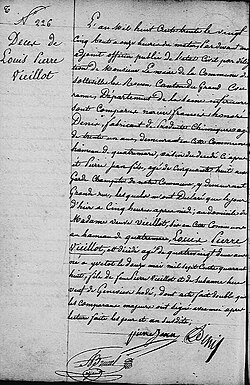
Despite his scientific success, Vieillot's final years were marked by hardship. He became blind toward the end of his life and, despite receiving a government pension in his final year, he died in relative poverty on August 24, 1830, in Sotteville-lès-Rouen.
| Category | Details |
|---|---|
| Lifespan | May 10, 1748 – August 24, 1830 |
| Primary Field | Ornithology |
| Key Publication | Analyse d'une nouvelle Ornithologie Elémentaire (1816) |
| Taxonomic Record | 88 genera and 402 species |
| Notable Locations | France, Saint-Domingue (Haiti), United States |
Frequently Asked Questions
How many bird species did Louis Pierre Vieillot name?
Vieillot is considered the scientific authority for 402 species and 88 genera. He is one of the most prolific namers of birds in history, trailing only Linnaeus, Sclater, and Gould.
What was Vieillot's contribution to bird classification?
He introduced a new system of ornithological classification in his 1816 work, Analyse d'une nouvelle Ornithologie Elémentaire, and was a pioneer in studying live birds and plumage changes.
Which birds are named after him?
Three birds bear his name: the Vieillot's barbet (Lybius vieilloti), the Puerto Rican lizard cuckoo (Coccyzus vieilloti), and the Australasian figbird (Sphecotheres vieilloti).
Why is there a dispute regarding Leach's storm petrel?
Some researchers argue the bird should be called "Vieillot's storm petrel" because he was the first to obtain a specimen and describe it in the 1817 New Dictionary of Natural History, noting its location on the shores of Picardy.
When and where did Louis Pierre Vieillot die?
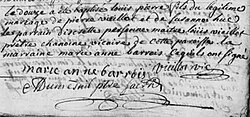
Although some older sources incorrectly cite 1831 in Rouen, official records confirm he died on August 24, 1830, at 5:00 PM in Sotteville-lès-Rouen.