Henry VII Chapel: A Masterpiece of Perpendicular Gothic Architecture
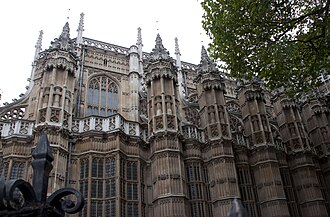
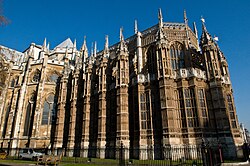
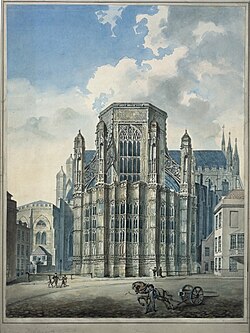
Located at the far eastern end of Westminster Abbey in England, the Henry VII Chapel (originally the Henry VII Lady Chapel) stands as one of the most magnificent examples of late English Gothic architecture. Commissioned by King Henry VII, this opulent space is separated from the main body of the abbey by a flight of stairs and ornate brass gates, serving as both a place of devotion and a grand royal mausoleum.
The chapel is renowned for its breathtaking scale and intricate detail, leading the 16th-century writer John Leland to describe it as the orbis miraculum, or the "wonder of the world."
Key Facts
- Founder: King Henry VII, who allocated approximately £20,000 for its completion.
- Architectural Style: Late Perpendicular Gothic.
- Defining Feature: The first ceiling to combine pendant stones with fan vaulting.
- Royal Burials: Final resting place for monarchs including Henry VII, Elizabeth I, and Mary, Queen of Scots.
- Institutional Role: Mother church of the Order of the Bath since 1725.
The History and Purpose of the Chapel
The construction of the chapel began on January 24, 1503, following the demolition of an older Lady Chapel. Henry VII was driven by three primary motivations. First, he intended to create a shrine for Henry VI in hopes of his canonization; however, when this did not occur, the tomb was used for Henry VII and his wife, Elizabeth of York. Second, he sought to replace the existing simple structure with a more elaborate chapel dedicated to the Virgin Mary.
Finally, the King desired a royal mausoleum that would secure his family's legacy and reinforce his legitimacy as the monarch. This ambition is reflected in the chapel's immense cost and the high quality of its craftsmanship.
Architectural Brilliance: The Pendant Fan Vault
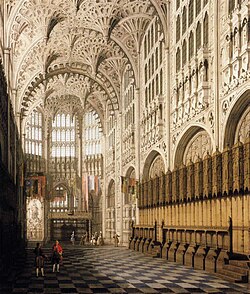
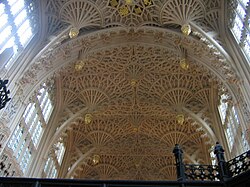
The chapel's most celebrated feature is its pendant fan vault. This architectural marvel is considered the most perfect example of its kind from the Perpendicular period. A fan vault is created by dividing the ceiling into compartments—nearly square in this instance—which are then ribbed and paneled to form conoid shapes.
While most fan vaults use spandrels to provide the necessary compressive force to maintain the ceiling's shape, the Henry VII Chapel utilizes hanging pendants. These pendants are cut from single stones and inserted as wedge stones into the transverse arches, providing structural support while adding a complex, floating aesthetic to the interior.
Interior Design and Royal Features
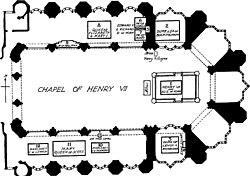
The chapel's layout consists of a three-aisled nave with four bays leading to an apse. The interior is characterized by its verticality, emphasized by mahogany stalls that house the heraldic banners of the Knights of the Order of the Bath. Above these stalls, the triforium level features sculptures of saints and Apostles, reflecting Henry VII's belief in the power of intercessory prayer to aid his journey through purgatory.
The lighting is provided by a clerestory with three rows of smaller windows. While much of the original glass was lost during the English Commonwealth, new stained glass windows were installed in 1995 and 2000, with additional works by Hughie O'Donoghue added in 2013.
The Royal Tombs and Altar
The altar and the tomb of Henry VII were both designed by the Italian Renaissance artist Pietro Torrigiano. The tomb, begun in 1512, features putti (small winged infants), a style atypical of English art at the time. The altar, started in 1517 and finished by Benedetto da Rovezzano in 1526, was destroyed during the Commonwealth and later reconstructed based on historical images.
The RAF Chapel and Historical Burials
At the easternmost end lies the RAF Chapel, dedicated to the personnel of the Royal Air Force and allied forces who perished during the Battle of Britain (July–October 1940). A poignant reminder of World War II remains in the wall: a small hole caused by a German bomb during a 1941 air raid.
Historically, the chapel has served as a burial site for numerous figures of high status. While intended for those of royal blood, others were interred here over the centuries. Notably, Oliver Cromwell was buried in the RAF Chapel area in 1658, only to be disinterred in 1661 during the Stuart Restoration.
| Feature | Description |
|---|---|
| Construction Period | 1503–1509 |
| Estimated Cost | £20,000 |
| Key Artists | Pietro Torrigiano, Benedetto da Rovezzano |
| Vault Type | Pendant Fan Vault |
| Primary Purpose | Lady Chapel and Royal Mausoleum |
Frequently Asked Questions
Who is buried in the Henry VII Chapel?
The chapel houses the remains of many English monarchs, including Henry VII, Elizabeth I, Mary I, Edward VI, James I, and Charles II, as well as Mary, Queen of Scots.
What makes the ceiling of the chapel unique?
It is the first ceiling to combine fan vaulting with pendants. These hanging stone pendants provide the necessary compression to support the conoid shapes of the vault while creating a visually stunning effect.
What is the significance of the Order of the Bath in the chapel?
Since 1725, the chapel has been the mother church of the Order of the Bath. The mahogany stalls are designated for the knights, and their heraldic banners hang above the stalls as a permanent tribute.
Why was the chapel built?
King Henry VII built the chapel to honor the Virgin Mary, create a shrine for the expected canonization of Henry VI, and establish a grand royal mausoleum to secure his family's legacy.
What happened to Oliver Cromwell's burial site?
Cromwell was originally buried in the area now known as the RAF Chapel in 1658. However, following the Restoration of the monarchy in 1661, his body was disinterred and posthumously executed.