Trinity Church: A Legacy of Faith and Architecture in Princeton
Located at 33 Mercer Street in Princeton, New Jersey, Trinity Church stands as the largest Episcopal congregation in the state. As a contributing property of the Princeton Historic District, this High Church parish has evolved from a modest meeting hall into a landmark of Gothic architecture and a center for inclusive spiritual life.
Key Facts
- Founded: 1833
- Denomination: Episcopal (High Church)
- Architectural Styles: Greek Revival (original), Gothic Revival (current)
- NRHP Status: Added to the National Register of Historic Places on June 27, 1975
- Key Architects: Charles Steadman, Richard Upjohn, and Ralph Adams Cram
- Current Leadership: Rector Paul Jeanes III and Bishop Sally French
Architectural Evolution
Trinity Church began in 1833 as a modest Greek Revival meeting hall designed by local architect-builder Charles Steadman. This style was common in the area at the time, as seen in the nearby Miller Chapel on the Princeton Theological Seminary campus.
By 1870, the congregation transitioned to a more assertive Episcopalian identity, replacing the original structure with a Gothic Revival building designed by Richard Upjohn and his son.
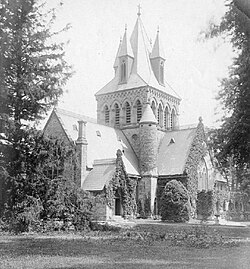
The early 20th century brought significant expansions under the direction of architect Ralph Adams Cram. In 1914, Cram doubled the length of the nave and added several key features: a French Gothic chancel, a small chapel in the north transept known as the Lady Chapel, and a heightened tower featuring a ten-bell Meneely carillon. A notable historical detail is the stone over the chancel door, which originated from the 13th-century St. Oswald's Church near Malpas, the ancestral home of the Stockton family.
A History of Community and Growth
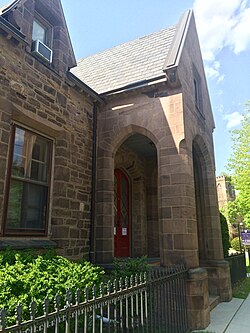
From its inception, Trinity sought to serve the broader community. In 1850, the church established a Gothic schoolhouse. While it served as a Sunday school for parish children, it also functioned as a school for African-American children who were excluded from local public schools.
The mid-20th century marked a period of explosive growth. During the baby boom of the 1940s and 1950s, the Sunday school grew to approximately five hundred members. To accommodate this surge, the parish constructed Pierce Hall, a large hall including a kitchen and meeting rooms.
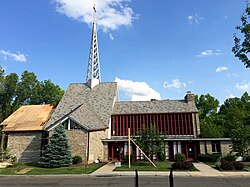
The 1960s were a time of both crisis and expansion. Following a devastating fire in 1963, the church underwent reconstruction. Simultaneously, the parish launched two enduring outreach initiatives: the Trinity Counseling Service and All Saints' Church. Planted in 1960 by the Rev. Dr. John Vernon Butler, All Saints' was designed to serve the growing eastern end of Princeton Township and eventually became an independent parish.
Modernization and Inclusion
Under the leadership of the Rev. James Whittemore (1967–1977), Trinity shifted toward its modern form, embracing liturgical renewal and expanded lay leadership. A milestone in this era was the ordination of the Rev. Daphne Hawkes, the first woman priest in the Diocese of New Jersey.
In the 21st century, under Rector Paul Jeanes III (serving since 2008), the church has focused on becoming more culturally, socially, and liturgically inclusive, with a strong emphasis on adult formation and the spiritual pilgrimage of the laity.
Musical Tradition
Trinity has a deep commitment to the Choral Revival, a movement in the Anglican church that emphasizes professional training and high-quality sacred music. Originally featuring choirs of men and boys, the program has expanded to include women and girls.
Following a period of transition in 2022 and 2023, Dr. Margaret "Meg" Harper assumed the role of Director of Music. The current program offers regular services, including biweekly Evensong and Compline services on Sunday evenings.
Summary of Parish Details
| Category | Details |
|---|---|
| Location | 33 Mercer Street, Princeton, NJ |
| Diocese | Diocese of New Jersey (Province II) |
| Architects | C. Steadman, R. Upjohn, R.A. Cram |
| Key Facilities | Lady Chapel, Pierce Hall, Meneely Carillon |
| Affiliated Sites | Trinity-All Saints' Cemetery |
Frequently Asked Questions
What is the architectural style of Trinity Church?
The church was originally built in the Greek Revival style in 1833, but it was replaced in 1870 by a Gothic Revival structure, which was further expanded in 1914 by Ralph Adams Cram.
Who was the first woman priest ordained at Trinity?
The Rev. Daphne Hawkes was the first woman priest ordained at Trinity and the first in the Diocese of New Jersey.
What is the relationship between Trinity Church and All Saints' Church?
All Saints' Church was planted by Trinity in 1960 to serve the eastern end of Princeton Township. While it quickly became independent, the two parishes continue to share the Trinity-All Saints' Cemetery.
What musical services are currently offered at the church?
Under the direction of Dr. Margaret Harper, the music program includes regular programming such as biweekly Evensong and Compline services held on Sunday nights at 5:00 PM.
Is Trinity Church listed on any historic registers?
Yes, Trinity Church is a contributing property of the Princeton Historic District and was added to the National Register of Historic Places on June 27, 1975.