Hellenization: The Global Spread of Greek Culture and Identity
Hellenization, also known as Hellenification, is the process by which non-Greek populations adopted Greek culture, language, religion, and identity. This cultural diffusion occurred in waves, beginning with early colonization and accelerating dramatically during the Hellenistic period following the conquests of Alexander the Great. By blending indigenous traditions with Greek influence, Hellenization reshaped the social and political landscapes of three continents.
The process was not merely about language; it involved the adoption of Greek philosophy, art, and administrative structures, creating a shared cultural currency that persisted long after the fall of the Macedonian Empire.
Key Facts
- Definition: The adoption of Greek culture, language, and identity by non-Greeks.
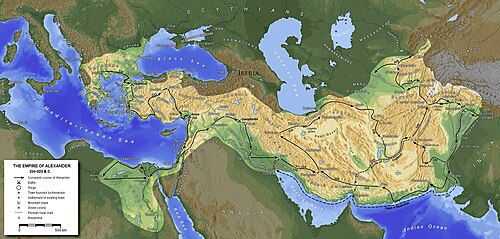
- Primary Catalyst: The military conquests of Alexander the Great (334–323 BC) spread Greek influence across Asia and Egypt.
- Geographic Reach: Extended from Magna Grecia in Italy to Bactria and India in the East.
- Religious Impact: Influenced the development of Early Christianity and the Hellenization of Judaism in the Levant.
- Modern Legacy: Seen in the assimilation of the Arvanites in southern Greece.
The Historical Reach of Hellenism
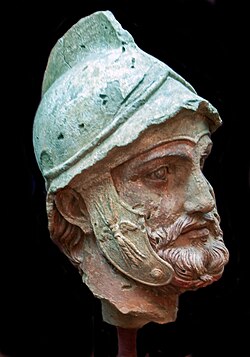
Hellenization manifested differently across various regions, often blending with local customs to create unique hybrid identities. In the East, the influence of the Macedonian Empire led to the rise of Greco-Bactrian and Indo-Greek kingdoms, where Greek art and coinage merged with local styles.
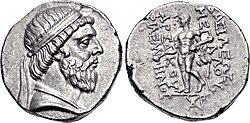
In the Near East, the Parthian Empire continued to exhibit Hellenistic influences. This is evident in the coinage of Mithridates I, which featured Greek inscriptions and imagery, such as Heracles, while maintaining Persian royal traditions.
Roman Arabia and the Nabataeans
By 106 CE, the Roman Empire conquered the northwest Arabian Nabataean Kingdom, establishing the province of Arabia Petraea. Roman rule brought Greek administrative and military structures to Arabic-speaking populations in Syria, Palestine, and the Hejaz. Archaeological evidence, such as the second-century Greek-Arabic bilingual Ruwafa inscriptions, confirms this cultural overlap. Over time, Arabic-speaking tribes integrated further into the Roman world, with some converting to Christianity or becoming foederati (allied tribes) of the emperor. A notable example is the Ghassanids, a Hellenized Christian Arab kingdom allied with Justinian I in the mid-sixth century.
Hellenization and Early Christianity
The extent to which Hellenism influenced the Levant, particularly ancient Judaism, has been a subject of intense scholarly debate. Early 20th-century scholars, such as Rudolf Bultmann, argued that Judaism remained largely unaffected by Greek influence, suggesting that Christianity emerged primarily from a Hellenistic background.
However, later research by Martin Hengel in the 1970s and 80s challenged this view. Hengel argued that virtually all of Judaism was highly Hellenized before the Christian era, and that the Greek language was widely used in cities and towns throughout Jewish Palestine. Most modern scholars now agree that strong Hellenistic influences permeated the Levant, reaching even the most conservative and nationalistic Jewish communities.
Modern Manifestations and Assimilation
The legacy of Hellenization continues into the modern era through the process of national assimilation within the Greek state.
The Arvanites
The Arvanites are descendants of Albanian settlers who arrived in southern Greece during the late 13th and early 14th centuries. Over centuries, they underwent significant assimilation into the Greek national identity. This was driven by a shared Orthodox Christian faith, internal migration to urban centers, and participation in the Greek War of Independence and the Greek Civil War.
Today, most Arvanites identify ethnically and nationally as Greeks. This identity has occasionally led to friction with other Albanian-speaking populations, as Arvanites often view the label "Albanian" as offensive, distinguishing themselves from the Albanian nation-state.
The Ionian Islands
In 1870, the Greek government abolished Italian schools in the Ionian islands following their annexation six years prior. This policy led to the rapid decline of the Corfiot Italian community, which had existed since the Middle Ages, shrinking to only 400 members by the 1940s.
Summary of Hellenization Influence
| Period/Region | Primary Driver | Key Outcome |
|---|---|---|
| Hellenistic Period | Alexander the Great | Spread of Greek language and art to Asia and Egypt |
| Roman Arabia | Roman Conquest (106 CE) | Bilingualism and integration of Nabataeans into Roman world |
| The Levant | Cultural Diffusion | Hellenization of Judaism and influence on Early Christianity |
| Modern Greece | Nationalism/Religion | Assimilation of Arvanites into Greek identity |

Frequently Asked Questions
What is the difference between Hellenism and Hellenization?
Hellenism generally refers to the culture and civilization of Greece, particularly during the period after Alexander the Great. Hellenization is the active process of non-Greeks adopting that culture, language, and identity.
How did Alexander the Great contribute to Hellenization?
Through his military conquests between 334 and 323 BC, Alexander established a vast empire that exported Greek language, administration, and urban planning to diverse regions, creating a cultural bridge between the Mediterranean and Central Asia.
Was ancient Judaism affected by Greek culture?
Yes. While once debated, modern scholarship (notably by Martin Hengel) indicates that Judaism was highly Hellenized prior to the Christian era, with the Greek language being common even in smaller towns in Palestine.
Who are the Arvanites?
The Arvanites are descendants of Albanian settlers in southern Greece from the 13th and 14th centuries who have since been assimilated into the Greek ethnic and national identity, largely through shared religion and political participation.
What was the role of the Greek language in the Roman Empire?
Greek remained a prestigious language of culture and administration, as seen in the bilingual inscriptions of Roman Arabia and its continued use in the Eastern Roman (Byzantine) Empire.