Helicoverpa zea: Managing the Impact of the Corn Earworm
The Helicoverpa zea, commonly known as the corn earworm or cotton bollworm, is one of the most significant agricultural pests in North America. As a highly mobile and prolific insect, it poses a substantial threat to a wide variety of crops, including corn, cotton, and soybeans. Understanding its complex lifecycle, migratory patterns, and reproductive biology is essential for effective agricultural management.
Key Facts
- Economic Impact: Causes over US$100 million in annual crop damage.
- High Fecundity: A single female can lay between 500 and 3,000 eggs.
- Dietary Range: A polyphagous pest, meaning it feeds on many different plant species.
- Migration: Capable of long-range flights of 400 km or more via upper wind systems.
- Control Methods: Managed through Integrated Pest Management (IPM), including biological, chemical, and mechanical controls.
Biological Lifecycle
The lifecycle of H. zea progresses through several distinct stages: egg, larva, pupa, and adult. Each stage is influenced by environmental factors such as temperature and moisture.
Eggs
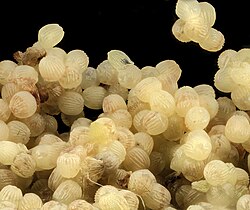
Females deposit eggs individually on plant structures, such as leaf hairs or corn silks. Initially pale green, the eggs transition to yellowish and eventually grey. They measure approximately 0.5 mm in height and 0.55 mm in diameter. After 66 to 72 hours of development, the larvae hatch. Upon breaching the chorion (the outer shell of the egg), the larvae spend a significant portion of their eclosion period creating a silk meshwork around the exit hole. This silk helps them escape and provides a way to locate the shell for their first meal.
![Corn earworm larva[13]](/images/aa/a0/aaa08635a8b808c2b1915c030f8b8c121f60e9ab99a558650f4fce1d2dd60a84.jpg)
Larvae
The larval stage is the primary period of crop consumption. These caterpillars are highly active feeders, moving across various host plants to satisfy their nutritional needs. Their feeding habits are a major driver of the economic damage attributed to the species.
![Helicoverpa zea larva feeding on corn[35]](/images/ef/be/efbe7d89d533fd0c81d69432464544fcf02baf5d1befe814b33f9df7ea5aa6d1.jpg)
Pupae
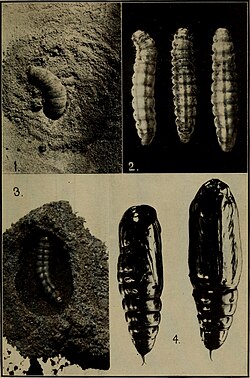
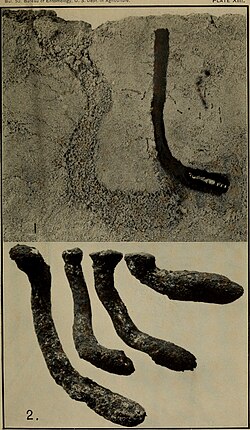
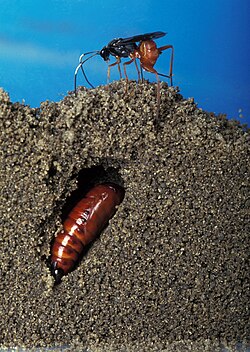
Once fully grown, the larvae descend to the soil, pupating between 5 and 10 cm below the surface. The pupae are brown, measuring 5.5 mm in width and 17 to 22 mm in length. Development is heavily dependent on soil temperature; temperatures below 0 degrees Celsius can lead to high mortality. Soil moisture is equally critical: moisture levels between 18% and 25% can cause high mortality in wet soil, while extreme dehydration (1% to 2% moisture) is also lethal.
Adults
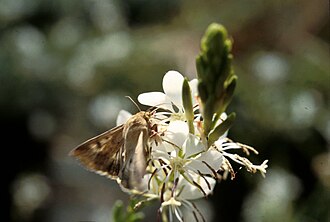
The adult moths are nocturnal, hiding in vegetation during the day and emerging at night to feed on nectar or plant exudates. They possess yellowish-brown forewings with a distinct dark central spot and a wingspan of 32 to 45 mm. While they can live over 30 days under optimal conditions, their average lifespan is typically between 5 and 15 days.
![Helicoverpa zea adult[45]](/images/8f/c0/8fc08c67eb103508e875e39f50372918cba4475723791c08b57dab8c7c8db04d.jpg)
Reproduction and Pheromone Signaling
The reproductive success of H. zea is driven by a sophisticated chemical signaling system. Female moths produce sex pheromones, regulated by the pheromone biosynthesis-activating neuropeptide (PBAN). Interestingly, this production is influenced by the host plant; for example, the presence of corn silk volatiles can induce pheromone production, ensuring reproductive activity coincides with food availability.
To ensure reproductive fitness, males possess a pheromonostatic peptide (PSP) in their accessory glands. After mating, this protein is transferred to the female, causing her to stop producing pheromones for approximately two hours. This prevents other males from being attracted to her, ensuring the first male's offspring are prioritized.
Economic Impact and Control Strategies
As the second-most important economic pest in North America, the cost of managing H. zea is immense. While direct crop damage exceeds $100 million annually, the expenditure on insecticides can reach up to $250 million.
Integrated Pest Management (IPM)
Modern agriculture relies on Integrated Pest Management (IPM), which combines various techniques to control populations sustainably:
- Mechanical and Cultural Controls: Deep ploughing, mechanical destruction, and the use of trap crops.
- Chemical Control: The use of pesticides is common, though resistance is a growing concern. A specific method involves applying mineral oil into corn ear tips to suffocate young larvae.
- Biological Control: Utilizing the bacterium Bacillus thuringiensis (Bt) or various nematodes. Some maize strains are genetically modified to produce Bt toxins, known as Bt-corn.
Summary of H. zea Characteristics
| Feature | Description |
|---|---|
| Primary Hosts | Corn, Cotton, Soybeans, and various other crops |
| Egg Hatch Time | 66 to 72 hours |
| Pupation Depth | 5 to 10 cm below soil surface |
| Adult Lifespan | Average 5–15 days (up to 30+ in optimal conditions) |
| Migration Style | Nocturnal; short-range and long-range (up to 400 km) |
Frequently Asked Questions
How does the corn earworm migrate?
H. zea exhibits different levels of movement. Short-range dispersal occurs within crops and low over foliage, largely independent of wind. Long-range dispersal involves flying up to 10 meters above ground, while migratory flights can reach 1–2 km in altitude, allowing moths to travel 400 km or more via wind currents.
What environmental factors affect pupal survival?
Soil temperature and moisture are the primary factors. Temperatures below 0°C increase mortality, and extreme moisture levels—either too high (18–25%) or too low (1–2%)—can also be fatal to pupae.
What is Bt-corn?
Bt-corn refers to maize strains that have been genetically modified to produce the same toxin found in the bacterium Bacillus thuringiensis, providing an internal defense against certain pests.
How do males influence female mating behavior?
Males transfer a pheromonostatic peptide (PSP) during mating. This protein causes the female to stop producing sex pheromones for a short period, which prevents other males from attempting to mate with her.
Why is the corn earworm considered a major economic pest?
Its high fecundity (up to 3,000 eggs), ability to eat many different crops (polyphagous), high mobility, and resistance to some pesticides make it a highly successful and damaging pest, costing hundreds of millions of dollars annually.