Brown Marmorated Stink Bug: An Invasive Agricultural Threat
The brown marmorated stink bug (Halyomorpha halys) is a highly invasive insect that has transformed from a regional resident in Asia to a global agricultural menace. Belonging to the family Pentatomidae, this insect is known for its ability to feed on a vast array of plant life, causing significant economic damage to orchards and nut production worldwide.
Key Facts
- Scientific Name: Halyomorpha halys
- Native Region: China, Japan, Korea, and other parts of Asia.
- Primary Diet: Over 100 plant species, including apples, stone fruits, and hazelnuts.
- Economic Impact: Caused $37 million in apple crop losses in the Mid-Atlantic U.S. in 2010 alone.
- Global Spread: Established in North America, Europe, and South America.
Origins and Global Spread
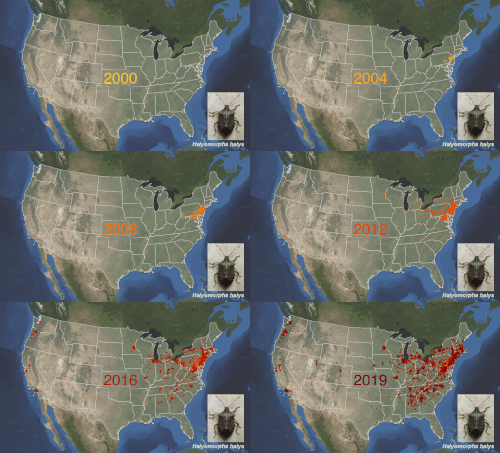
While native to East Asia, the brown marmorated stink bug was accidentally introduced to the United States in the late 1990s. The first documented specimen was collected in Allentown, Pennsylvania, in September 1998. It is believed the insects arrived as stowaways in packing crates or on industrial machinery.
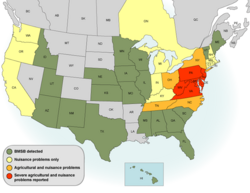
Because these bugs can survive for long periods in both extreme heat and cold, they have successfully established themselves across much of North America. Their expansion has not been limited to the Americas; the species has also spread to Europe and South America, posing a continuous threat to new ecosystems.
The Invasion of Europe and the Caucasus
The spread into the Greater Caucasus area is believed to have occurred during the construction of the 2014 Winter Olympics in Sochi, Russia, likely via decorative building elements imported from Italy. From Russia, the bug moved into Georgia, where it has devastated local agriculture. Between 2016 and 2018, the insect destroyed an estimated one-third of Georgia's hazelnut harvest, resulting in yearly damages of up to €60 million.
Impact on Turkey's Hazelnut Industry
As the world's largest producer of hazelnuts, Turkey has faced severe consequences from the invasion. In 2017 and 2018, damages to the hazelnut industry were estimated at US$200 million and US$300 million, respectively. Experts have noted significant drops in both yield and quality, with potential future damages estimated to reach US$1 billion.
Agricultural and Economic Impact
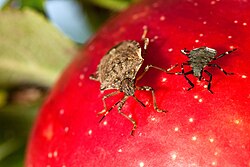
The feeding habits of both nymphs and adults make them a versatile and destructive pest. By piercing plant tissues to feed, they damage a wide variety of crops. In the United States, the impact on the fruit industry was immediate and severe; by the 2010–2011 season, they had become a major pest in Eastern orchards, with some stone fruit growers losing more than 90% of their entire crop.
| Region/Crop | Estimated Impact/Loss | Context |
|---|---|---|
| Mid-Atlantic U.S. (Apples) | $37 million | Losses recorded in 2010 |
| Georgia (Hazelnuts) | €60 million (~$179M lari) | Annual damages (2016–2018) |
| Turkey (Hazelnuts) | $300 million | Estimated damage in 2018 |
| Stone Fruit (U.S.) | >90% crop loss | Reported by some growers |
Biological Control and Management
To combat this pest, scientists are focusing on biological control—the use of natural enemies to manage pest populations. A primary focus in the United States, Europe, and New Zealand is the parasitoid wasp Trissolcus japonicus. This wasp lays its eggs inside the stink bug eggs, effectively reducing the population.
While researchers have been studying the biosafety of introducing this wasp since 2007, wild populations were discovered in the United States in 2014. Since then, agricultural authorities have moved toward augmenting these wild populations with laboratory-reared wasps to bolster natural defense mechanisms.
Frequently Asked Questions
How did the brown marmorated stink bug enter the United States?
It is believed to have been accidentally introduced via shipping containers, packing crates, or machinery originating from China or Japan.
What do brown marmorated stink bugs eat?
They are generalist feeders that consume over 100 different species of plants, including many significant agricultural crops like apples and hazelnuts.
Are these bugs a threat to homes?
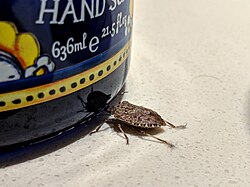
Yes, they are known to enter houses and structures, often appearing in washrooms or living spaces.
What is being done to control their population?
Efforts include biological control programs using the parasitoid wasp Trissolcus japonicus to target their eggs.
How can I identify them?
They are characterized by their distinct brown, marbled appearance, which is typical of the Pentatomidae family.