Understanding Lantana: The Vibrant Yet Complex Flowering Shrub
With its explosion of vivid colors and aromatic scent, Lantana is one of the most recognizable flowering plants in tropical and subtropical gardens worldwide. Known for its ability to attract butterflies and its hardy nature, this genus of perennial plants offers a fascinating study in the balance between ornamental beauty and ecological challenge.
Lantana belongs to the verbena family, Verbenaceae, and comprises approximately 150 species. While these plants are native to the tropical regions of the Americas, they have been introduced to many other parts of the world, becoming particularly established in the Australian-Pacific region and across South and Northeastern India.
Physical Characteristics and Varieties
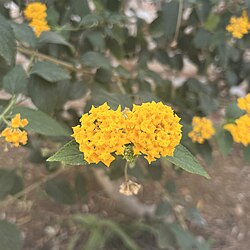
Lantanas can manifest as either herbaceous plants or woody shrubs, typically reaching heights between 0.5 and 2 meters (1.6 to 6.6 feet). Their most striking feature is their aromatic flower clusters, known as umbels (small, umbrella-like clusters of flowers). These florets appear in a stunning array of red, orange, yellow, blue, and white.
One of the most unique aspects of the Lantana flower is its ability to change color as it matures. This process often results in multi-colored inflorescences, where a single cluster may display two or three different hues simultaneously.
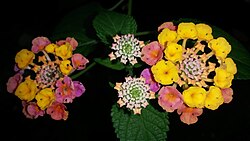
In the commercial market, most lantanas fall into two main categories:
- Spanish Flag (Lantana camara): This group includes various hybrids and species such as L. depressa, L. hirsuta, and L. splendens. Cultivars like 'Irene', 'Christine', and 'Dallas Red' are popular, with shorter varieties often flowering more prolifically than taller ones.
- Trailing Lantana (Lantana montevidensis): Known for its dark green, fragrant foliage and blue or white flowers that bloom year-round.
Ecological Impact and Invasive Nature
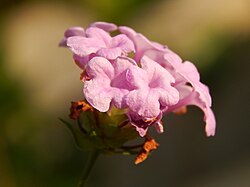
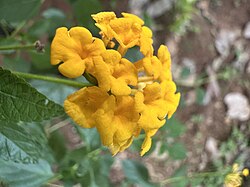
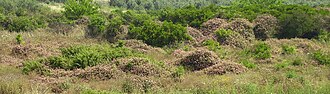
Despite their beauty, several Lantana species are classified as invasive and considered noxious weeds. This is particularly true in South Asia, Southern Africa, Australia, and the southeastern United States—including Florida, Georgia, and the coastal Carolinas.
The plant's spread is driven by a clever evolutionary strategy: its leaves are poisonous to most herbivores, meaning animals generally avoid eating them. However, the fruit is a delicacy for various bird species, such as the superb fairy-wren in Australia and the Mauritius bulbul in the Mascarenes. As these birds consume the fruit, they distribute the seeds across the ecosystem.
Attempts at Biological Control
Efforts to control the spread of invasive lantanas through biological means have seen limited success. In Australia, roughly 30 different insects were introduced to manage the population. Some of these attempts created new problems; for example, the lantana bug (Aconophora compressa) failed to reduce the lantana population and instead became a horticultural pest, attacking related fiddlewoods (Citharexylum).
Other insects, such as the lantana scrub-hairstreak butterfly (Strymon bazochii) in Hawaii and various moths like Epinotia lantana, have also failed to significantly stem the weed's growth.
Wildlife and Environmental Interactions
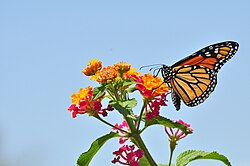
Lantana plays a complex role in local wildlife habitats. While it can be an invasive weed, it also serves as a vital resource for pollinators. It is frequently used in butterfly gardening to attract various species, most notably the Papilioninae (swallowtails and birdwings), as well as skippers and brush-footed butterflies.
Birds also interact with the plant in unique ways. Certain weaverbirds, including the streaked weaver and black-throated weaver, use Lantana flowers to decorate their nests. For these birds, the ability of the male to find spectacular decorations is often seen by females as an indicator of fitness.
Interestingly, in some Australian urban greenspaces, removing Lantana can actually decrease local bird diversity. In the absence of native plant equivalents, species like the silvereye and superb fairy use Lantana as a necessary refuge, provided the plant does not become so dense that it eliminates other vegetation.
Toxicity and Human Use
Lantana is not without its dangers. Species like L. camara contain pentacyclic triterpenoids, which can cause hepatotoxicity (liver damage) and photosensitivity in grazing livestock, including horses, bovines, sheep, and goats. This has led to significant livestock losses in Mexico, India, South Africa, and the United States.
The edibility of the berries is a subject of scientific debate. Some experts suggest that ripe berries are edible, while others argue that experimental research shows both ripe and unripe berries can be potentially lethal.
Practical Applications
- Agriculture: Extracts from Lantana camara are used to protect cabbage crops from the aphid Lipaphis erysimi.
- Craftsmanship: In the MM Hills of southern Karnataka, India, tribal communities use lantana to create approximately 50 different types of furniture. The material is valued as a durable, termite-resistant alternative to cane and bamboo.
- Honey Production: Species such as L. camara, L. lilacina, and L. trifolia are often planted as honey plants.
Key Facts
- Genus size: Approximately 150 species of perennial flowering plants.
- Native origin: Tropical regions of the Americas.
- Growth habit: Herbaceous plants or shrubs ranging from 0.5 to 2 meters.
- Toxicity: Contains triterpenoids that cause liver damage in livestock.
- Ecological status: Highly invasive in parts of Australia, Africa, Asia, and the USA.
- Wildlife value: Highly attractive to butterflies and used by weaverbirds for nest decoration.
Lantana Comparison Summary
The following table summarizes the differences between the two most commonly cultivated types of Lantana.
| Feature | Spanish Flag (L. camara & hybrids) | Trailing Lantana (L. montevidensis) |
|---|---|---|
| Growth Habit | Tall-growing shrubs (some shorter cultivars) | Trailing/Low-growing |
| Flower Colors | Multi-colored (Red, Orange, Yellow, etc.) | Primarily Blue or White |
| Blooming Period | Seasonal/Prolific in shorter cultivars | Year-round |
| Foliage | Standard green | Dark green with distinct odor |
Frequently Asked Questions
Are Lantana berries safe to eat?
The edibility of Lantana berries is contested. While some claim ripe berries are edible, other experimental research suggests that both ripe and unripe berries may be potentially lethal.
Why is Lantana considered an invasive species?
Lantana is invasive because its leaves are poisonous to most herbivores, protecting it from being eaten, while its fruit is spread widely by birds. This allows it to overgrow native vegetation and dominate ecosystems.
Can Lantana be used in a home garden?
Yes, Lantanas are widely cultivated for their beautiful flowers and are excellent for attracting butterflies. However, gardeners should be aware of their potential to spread and their toxicity to some animals.
How does Lantana affect livestock?
When ingested by animals such as sheep, goats, and horses, the pentacyclic triterpenoids in the plant can cause liver damage (hepatotoxicity) and photosensitivity, which can lead to widespread livestock loss.
What is the "Spanish Flag" Lantana?
The "Spanish Flag" refers to Lantana camara and its hybrids. It is characterized by its vibrant, often multi-colored flower clusters and is one of the most common species sold for ornamental use.