Understanding the Genus Hedera: A Guide to Ivy
The genus Hedera, commonly known as ivy, comprises between 12 and 15 species of evergreen woody plants. These plants are remarkable for their ability to either creep along the ground or climb vertically using specialized roots. Belonging to the family Araliaceae, these species are native to a wide range of regions, including Western, Central, and Southern Europe, Macaronesia, northwestern Africa, and across central-southern Asia, extending as far east as Japan and Taiwan.
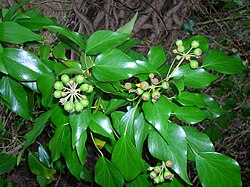
One of the most fascinating aspects of ivy is its leaf dimorphism, a biological term meaning the plant exhibits two distinct forms. On level ground, ivies remain creeping plants, typically not exceeding 5–20 cm in height. However, when they find a surface to climb—such as trees, rock outcrops, or man-made structures—they can reach heights of at least 30 meters. In these climbing stages, the plants produce juvenile leaves, which are palmately lobed (shaped like a hand with lobes). As the plant matures and reaches the sunlight at the top of a canopy or rock face, it produces adult leaves, which are unlobed and cordate (heart-shaped).
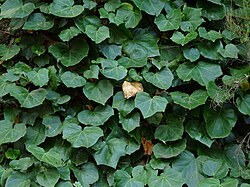
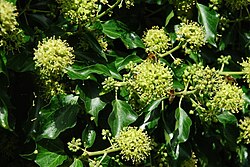
The growth habits of the shoots also change with maturity. Juvenile shoots are slender and flexible, using small aerial roots to attach themselves to substrates like bark or stone. In contrast, adult shoots are thicker, self-supporting, and do not produce roots. In the autumn or early winter, ivy produces greenish-yellow flowers in clusters called umbels. These flowers are highly nectar-rich, providing a vital food source when other plants are dormant. Following the flowers, the plant produces berries ranging from 5–10 mm in diameter, colored greenish-black, dark purple, or occasionally yellow. These berries, containing one to five seeds, are eaten by birds, which then disperse the seeds throughout the environment.
Taxonomy and Biological Diversity
Botanists classify ivy species into two main groups based on their trichomes—tiny, hair-like structures found on the underside of the leaves. One group possesses scale-like trichomes, while the other features stellate (star-shaped) trichomes. This distinction is a key factor in their scientific classification.
The genetic complexity of the genus is also notable. While the basic diploid number (the number of chromosomes in a normal body cell) is 48, some species are tetraploid (96), hexaploid (144), or even octaploid (192). This variation contributes to the diversity of leaf shapes, sizes, and flower colors seen across the genus.
Summary of Ivy Species Groups
| Trichome Type | Characteristics | Example Species |
|---|---|---|
| Scale-like | Microscopic structures resemble scales | H. algeriensis (Algerian ivy), H. canariensis (Canaries ivy) |
| Stellate | Microscopic structures are star-shaped | H. helix (Common ivy), H. hibernica (Atlantic ivy) |
Ecological Importance and Environmental Impact
Ivies are essential components of many ecosystems. They provide nectar and fruit during seasons when food sources are scarce, supporting a variety of wildlife. For example, the ivy bee (Colletes hederae) is entirely dependent on ivy flowers for its life cycle. Additionally, the berries support birds such as thrushes, blackcaps, and woodpigeons, while the foliage serves as a host for various moth larvae, including the swallow-tailed moth and the willow beauty. The dense, woody structure of mature ivy also provides vital shelter and nesting sites for invertebrates, birds, and small mammals.
However, the plant's vigorous growth can present challenges. In North America and Australia, certain species have become invasive exotics. This means they are non-native species that spread aggressively, often outcompeting local vegetation in forests and riparian (riverbank) areas. In some parts of the United States, such as California, the use of certain ivies for landscaping is discouraged or even banned due to their ability to smother native plant communities.
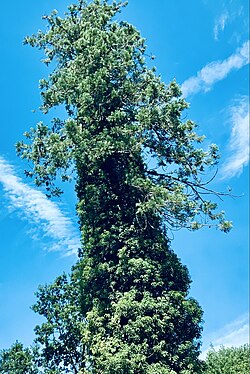
There is also ongoing discussion regarding ivy's relationship with trees. In Europe, the impact is generally considered minor, though very old or weak trees may face risks from the weight of the ivy or competition for nutrients. In North America, however, the lack of natural pests can allow ivy to grow so aggressively that it overwhelms a tree's structural strength or ability to photosynthesize.
Cultivation and Human Use
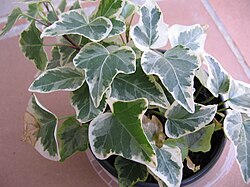
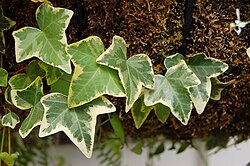
Because of their evergreen foliage and adaptability, ivies are widely used in horticulture. They are excellent for covering unsightly walls, fences, or tree stumps, and they thrive in narrow planting spaces. The American Ivy Society recognizes over 400 registered cultivars, many of which feature variegated foliage (leaves with multiple colors) or unique leaf shapes.
Beyond gardening, ivy holds significant cultural weight. In Ancient Rome, it was associated with Bacchus, the god of intoxication. In medieval Christianity, its ability to remain green while clinging to dead trees made it a symbol of eternal life. It has even influenced modern terminology, such as the "Ivy League" universities in the United States, named for the ivy-covered historic buildings on their campuses.
Key Facts
- Species Count: The genus contains between 12 and 15 recognized species.
- Growth Potential: Climbing varieties can reach heights of 30 meters or more.
- Nectar Source: Ivy flowers are highly nectar-rich and bloom in autumn and winter.
- Seed Dispersal: Berries are primarily spread by birds.
- Toxicity: Ivy berries are moderately toxic to humans, and foliage contains compounds that can cause skin irritation.
- Global Presence: While native to Eurasia and North Africa, it has been introduced to North America and Australia.
Frequently Asked Questions
Does ivy harm the trees it climbs?
The impact varies by region. In Europe, the harm is generally minor, though it can compete for light and nutrients. In North America, where the plant lacks natural predators, it can grow more aggressively and potentially overwhelm a tree's structural strength or photosynthesis.
Is ivy poisonous to humans?
Yes, the berries are considered moderately toxic. Additionally, the foliage contains falcarinol and triterpenoid saponins; falcarinol can cause contact dermatitis, which is a skin irritation upon contact.
Why do ivy leaves look different on the ground versus on a wall?
This is due to leaf dimorphism. Juvenile leaves on creeping or climbing stems are palmately lobed to help the plant navigate surfaces, while adult leaves on flowering stems are unlobed and heart-shaped to maximize sun exposure.
How is ivy used in landscaping?
Ivies are popular for their evergreen leaves and ability to hide structures like brick walls, fences, or tree stumps. Many gardeners also use specific cultivars with variegated colors for aesthetic variety.
Can ivy be an invasive species?
Yes. In certain environments, particularly in North America and parts of Australia, some ivy species can become invasive, spreading rapidly through underground rhizomes and runners to outcompete native plants.