Thrips: The Tiny, Diverse World of Thysanoptera
Thrips, belonging to the order Thysanoptera, are a highly diverse group of small insects that have existed for hundreds of millions of years. With a temporal range dating back to approximately 299 million years ago, these insects have evolved into a wide variety of forms, ranging from winged to wingless, and occupying nearly every ecological niche imaginable.
While many people encounter thrips as nuisance pests in gardens or agricultural settings, they play complex roles in our ecosystems, acting as pollinators, predators, and even social organisms. Understanding their biology requires looking closely at their unique anatomy, specialized flight mechanisms, and varied life cycles.
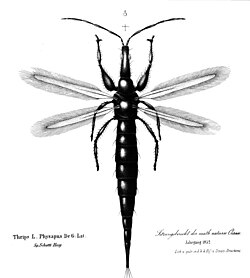
Typical Tubulifera thrips: the feathery wings are unsuitable for the leading edge vortex flight of most other insects, but support clap and fling flight.
Key Facts
- Temporal Range: Thrips have been present on Earth since the Permian period (approx. 299 Ma).
- Classification: They are divided into two main suborders: Terebrantia and Tubulifera.
- Ecological Roles: They function as pollinators, fungal feeders, predators, and plant pests.
- Flight Mechanism: Many species utilize a unique "clap and fling" method to achieve lift.
- Diversity: The order includes hundreds of genera, with the Phlaeothripidae family alone containing 447 genera.
Taxonomy and Classification
The order Thysanoptera is scientifically organized into two primary suborders, each containing distinct families with specialized lifestyles.
Suborder Terebrantia
This suborder includes many of the most common thrips found on flowers. Notable families include:
- Thripidae: The most common thrips, consisting of 292 genera that primarily live on flowers.
- Aeolothripidae: Known as banded or broad-winged thrips.
- Melanthripidae: A group of specialized flower feeders.
- Heterothripidae: A group restricted to the New World.
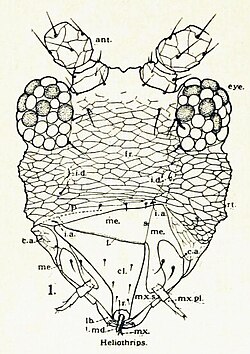
Asymmetric mouthparts of Heliothrips
Suborder Tubulifera
The Tubulifera suborder is characterized by different morphological traits and often includes different feeding habits. The most prominent family is:
- Phlaeothripidae: A massive group containing 447 genera, many of which feed on fungal hyphae and spores.
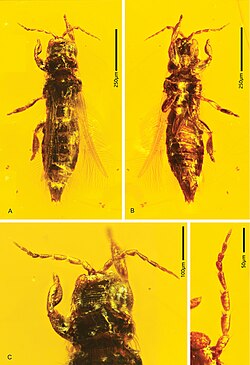
Parallelothrips separatus, Myanmar amber
Biology and Unique Adaptations
Thrips possess remarkable biological adaptations that allow them to thrive in specialized environments.
Flight Mechanics: Clap and Fling
Unlike many larger insects that rely on a leading edge vortex, many thrips utilize a clap and fling mechanism to fly. This process involves several stages:
- Clap: The wings close over the back; the leading edges touch, and the wings rotate, forming vortices.
- Fling: The wings rotate around the trailing edge to fling apart. As the leading edge moves away, air rushes in, which significantly increases lift.
- Thrust: The trailing edges close, shedding vortices and providing the necessary thrust for movement.
Feeding and Ecological Impact
Thrips exhibit a wide range of feeding behaviors. While many are phytophagous (plant-eating), others are mycophagous (fungus-eating) or even predatory. This diversity means they can be both beneficial and destructive.
In agriculture, certain species are significant pests. They can cause direct physical damage to plant tissue or act as vectors for diseases, such as the Tospovirus (tomato spotted wilt virus).
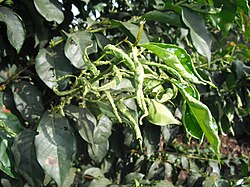
Coffee tree leaves rolled up by Hoplandrothrips (Phlaeothripidae) damage
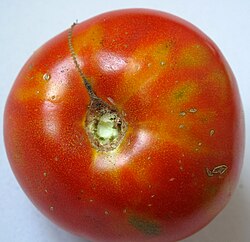
A tomato infected with the thrips-borne Tospovirus, tomato spotted wilt virus
Conversely, thrips are vital pollinators for various plant species, including certain rainforest shrubs and gymnosperms. Some species even exhibit complex social behaviors, such as the eusocial colonies of Kladothrips, which live in galls induced on Acacia trees.
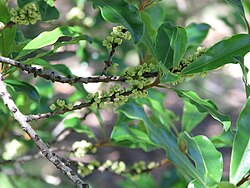
The Australian rainforest shrub Myrsine (Rapanea) howittiana is pollinated by Thrips setipennis.
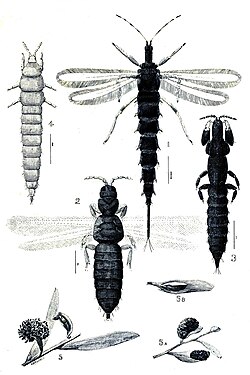
Eusocial colonies of Kladothrips live in galls induced on Acacia trees.
Summary of Thysanoptera Suborders
| Feature | Terebrantia | Tubulifera |
|---|---|---|
| Primary Feeding | Often flower-living | Often fungal hyphae/spores |
| Key Family | Thripidae | Phlaeothripidae |
| Diversity Example | 292 genera in Thripidae | 447 genera in Phlaeothripidae |
Frequently Asked Questions
How do thrips damage plants?
Thrips can cause damage through direct feeding on plant tissues and by acting as vectors that transmit viruses, such as the tomato spotted wilt virus, to crops.
Are all thrips pests?
No. While many are agricultural pests, others are essential pollinators for various plants, and some species are even predatory, helping to control other insect populations.
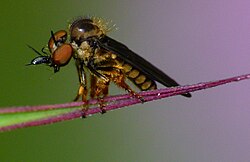
A robberfly preying on thrips
What is the life cycle of a thrips?
Thrips undergo a life cycle that includes nymph stages. For example, a thrips nymph can be observed under microscopic scales to study its development.
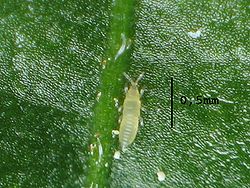
Thrips nymph.Scale bar is 0.5 mm
Can thrips bite humans?
Yes, there are recorded instances of certain thrips species biting humans, particularly in specific geographic regions like Florida and Georgia.
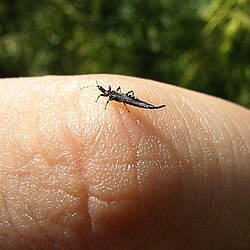
Ponticulothrips diospyrosi on finger
What makes thrips flight unique?
Many thrips use a "clap and fling" mechanism. This involves the wings clapping together and then flinging apart to create air movement that generates lift, which is different from the flight patterns of most other insects.
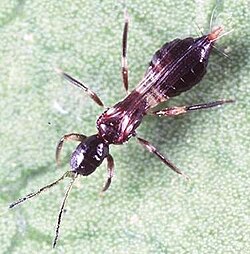
Adult Franklinothrips vespiformis (Aeolothripidae), a widely distributed tropical species