Heilbronn: A Hub of Industry, History, and Culture in Baden-Württemberg
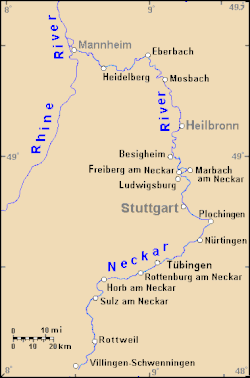
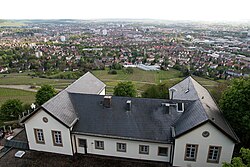
Nestled along the banks of the Neckar River in southwest Germany, Heilbronn is a city that seamlessly blends a rich medieval heritage with modern industrial prowess. As the economic heart of the Heilbronn-Franken region, it has evolved from a fortified medieval settlement into a dynamic "University City" known for its logistical importance and vibrant academic scene.
From its days as an Imperial Free City to its role as a pioneer in early industrialization, Heilbronn has consistently reinvented itself. Despite the devastation of World War II, the city rose from the ruins to become a critical junction for transport and commerce in southern Germany.
Key Facts
- Location: Situated in the state of Baden-Württemberg, Germany, on the Neckar River.
- Population: 131,986 (as of December 31, 2024).
- Status: An independent urban district and the seat of the Heilbronn-Franken region.
- Economy: A major logistical hub and a center for viticulture (wine growing).
- Education: Designated as a University City, home to the Hochschule Heilbronn.
Geography and Administration
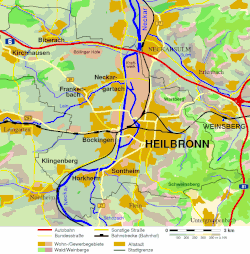
Heilbronn covers a total area of 99.89 square kilometers and sits at an elevation of 157 meters. The city is organized into nine distinct boroughs (Stadtteile), which include the central city of Heilbronn as well as Böckingen, Neckargartach, Sontheim, Klingenberg, Frankenbach, Kirchhausen, Biberach, and Horkheim.
Climate Overview
The city experiences a temperate climate with an average annual temperature of 10.9°C. Precipitation is distributed throughout the year, totaling approximately 711.9 mm annually, with the warmest months occurring in July and August.
| Month | Mean Temp (°C) | Precipitation (mm) | Sunshine Hours |
|---|---|---|---|
| January | 2.2 | 52.2 | 51.5 |
| April | 11.0 | 39.0 | 173.3 |
| July | 20.2 | 77.6 | 209.0 |
| October | 10.0 | 62.1 | 102.0 |
A Journey Through History
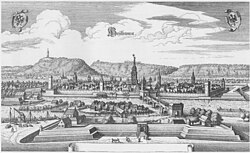
Medieval Foundations and Imperial Freedom
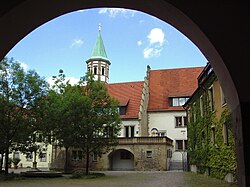
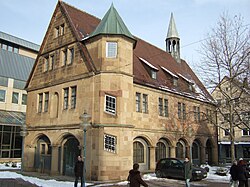
By 1225, Heilbronn was established as an oppidum (a city fortified by parapets and trenches) within the Hohenstaufen Empire. In the 13th century, the Teutonic Knights acquired significant land south of the city, constructing the Deutschhof as one of their residences starting in 1268.
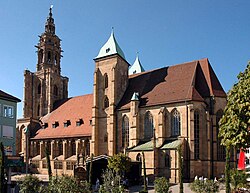
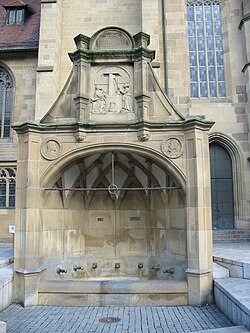
As an Imperial Free City, Heilbronn maintained a strategic balance of power through treaties with the Electorate of the Palatinate and the Holy Roman Emperor, allowing it to resist the influence of the House of Württemberg. This stability fostered the construction of landmarks like the Kilianskirche between 1455 and 1460.
Conflict and Transition (1500–1900)
The city suffered heavily during the Thirty Years' War, facing successive occupations by Imperial, Swedish, French, and Palatine troops. Its status as an Imperial Free City finally ended on September 9, 1802, when it was annexed by Duke Friedrich I of Württemberg. By 1806, it became part of the Kingdom of Württemberg.
The 19th century marked a turning point as Heilbronn embraced early industrialization. The expansion of the railway network in the 1860s connected the city to Heidelberg, Würzburg, and Crailsheim, transforming it into the second-largest industrial center in Württemberg after Stuttgart.
The World Wars and Reconstruction
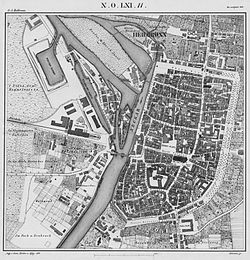
In the early 20th century, infrastructure boomed with the opening of the canal port in 1935 and the completion of the Autobahn to Stuttgart in 1936. However, World War II brought darkness; salt mines were used to hide art and house war industries, often utilizing forced labor from concentration camp branches.
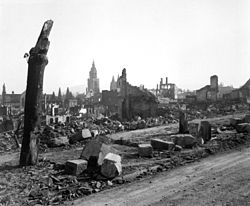
On December 4, 1944, an air raid completely destroyed the old town. The subsequent decades were defined by a massive reconstruction effort led by mayors Emil Beutinger, Paul Metz, and Paul Meyle, resulting in the rededication of the City Hall in 1953.
Modern Heilbronn: Economy and Education
Logistics and Industry
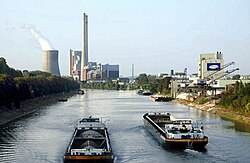
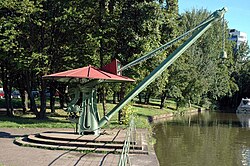
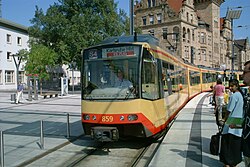
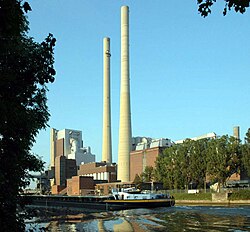
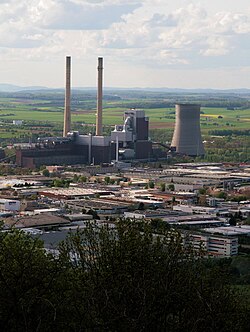
Today, Heilbronn is a critical logistical node in southern Germany, served by the A 6 and A 81 Autobahns. The canal port remains one of the most significant interior ports in the country, facilitating the movement of goods across the region.
Viticulture Tradition
Wine growing remains a cornerstone of the local economy. With 514 hectares of vineyards—two-thirds of which are red grapes—Heilbronn possesses the third-largest vineyard area in Württemberg. This tradition is supported by both independent vintners and large cooperatives.

The University City
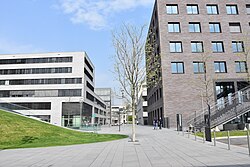
Heilbronn has seen a surge in higher education, officially designated as a "University City" in 2020. The Hochschule Heilbronn (Heilbronn University), founded in 1961, serves as the primary academic anchor, complemented by a variety of private specialized schools and the Bildungscampus.
Culture and Sightseeing
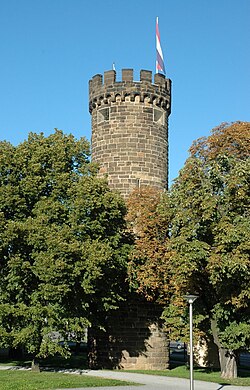
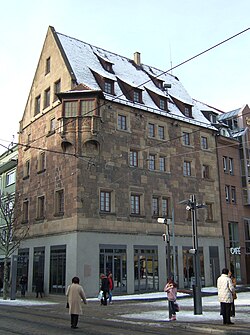
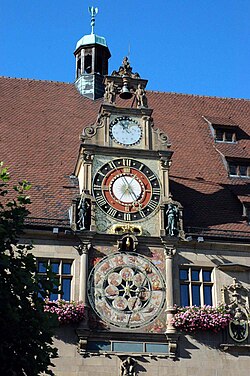
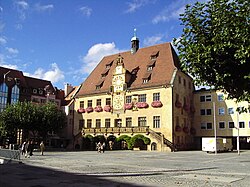
Visitors to Heilbronn can explore a mix of reconstructed history and modern art. Key architectural highlights include the Bollwerksturm, the Käthchenhaus, and the City Hall, which features a historic astronomical clock.
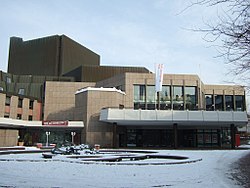
For art and science enthusiasts, the city offers the Museum of Natural History, the City Gallery Deutschhof, and the South-German Train Museum. The municipal theatre, rebuilt between 1979 and 1982, continues to provide high-quality opera and drama performances.
Frequently Asked Questions
What happened to the old town of Heilbronn?
The old town was completely destroyed during an air raid on December 4, 1944. It was subsequently rebuilt during the 1950s.
What is the significance of the "Phantom of Heilbronn"?
The "Phantom" was believed to be a serial killer after the 2007 murder of officer Michèle Kiesewetter. However, in 2009, it was revealed that the "Phantom" did not exist and the DNA evidence was the result of police procedural errors. The murder was later attributed to the National Socialist Underground (NSU).
Is Heilbronn known for any specific products?
Yes, viticulture is a major part of the city's identity and economy, with a long tradition of producing red wines.
What is the status of the Hochschule Heilbronn?
Founded in 1961 as an engineering school, it became a Fachhochschule in 1971 and was awarded the status of a Hochschule in 2005. It now operates campuses in Heilbronn, Künzelsau, and Schwäbisch Hall.
Why was Heilbronn unique regarding NATO missiles?
Following the 1979 Double-Track Decision, Pershing II nuclear missiles were stationed in the Waldheide, making Heilbronn the only major German city with atomic missiles within its city limits until their removal in 1987.