Heidenheim an der Brenz: A Hub of Industry, History, and Culture in Baden-Württemberg
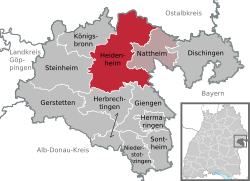
Located in the southern German state of Baden-Württemberg, Heidenheim an der Brenz (often simply called Heidenheim) is a vibrant town that blends deep historical roots with modern industrial prowess. Situated near the Bavarian border, approximately 17 km south of Aalen and 33 km north of Ulm, it serves as the administrative seat and economic center of the Heidenheim district.
As the third-largest town in the East Württemberg region, Heidenheim is widely recognized as the headquarters of the global industrial giant Voith. With a population of 50,618 as of late 2024, the town offers a high quality of life, characterized by its scenic geography and a rich cultural calendar.
Key Facts
- State: Baden-Württemberg, Germany.
- Population: 50,618 (as of December 31, 2024).
- Economic Driver: Headquarters of the Voith industrial company.
- Historical Significance: Site of the Roman city Aquileia and the medieval Hellenstein Castle.
- Sports Highlights: Home to FC Heidenheim 1846 (Bundesliga) and Heidenheim Heideköpfe (Baseball Bundesliga).
- Cultural Landmark: Host of the internationally acclaimed Opernfestspiele Heidenheim.
Geography and Administration
Heidenheim an der Brenz covers a total area of 107.09 km² and sits at an elevation of 504 meters. The town is composed of the central Heidenheim area and four distinct boroughs annexed between 1910 and 1974: Schnaitheim, Mergelstetten, Oggenhausen, and Großkuchen.
Oggenhausen, located about 5 km east, is separated from the center by the European route E43. Großkuchen, situated 8 km northeast, is a popular destination for hiking, cross-country skiing, and is known for its local charcoal industry.
Climate Overview
The town experiences a temperate climate with an average annual temperature of 8.4°C and annual precipitation of 836.6 mm. Summers are mild to warm, with July being the warmest month (average 17.7°C), while winters are cool, with January averaging -0.6°C.
| Month | Mean Temp (°C) | Precipitation (mm) | Sunshine Hours |
|---|---|---|---|
| January | -0.6 | 69.6 | 46 |
| April | 8.3 | 50.1 | 170.3 |
| July | 17.7 | 89.8 | 232.9 |
| October | 8.4 | 64.3 | 91.5 |
| Yearly Avg | 8.4 | 836.6 | 1,594.9 |
A Journey Through History
Human activity in Heidenheim dates back 8,000 years, with permanent settlements established around 1300 BC. However, the town's most significant early era was during the Roman Empire. Starting around 85 AD, the Castle Aquileia housed a cavalry unit of over 1,000 soldiers. This site grew into the largest Roman city in modern-day Baden-Württemberg, serving as a strategic intersection for five Roman roads and likely acting as a regional administrative capital (Civitas) before falling to the Alamanni in 260 AD.
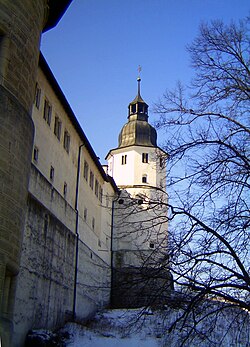
In the Middle Ages, the town grew alongside the construction of Hellenstein Castle. It was granted market town status by Emperor Charles IV in 1356. Over the centuries, Heidenheim shifted between the rule of the von Helfenstein family, the Duchy of Teck, the dukes of Bavaria, and eventually the dukes of Württemberg.
Following World War II, the town played a humanitarian role by hosting a displaced persons camp from 1945 to 1949, which provided refuge for up to 2,300 Jewish displaced persons.
Culture, Arts, and Religion
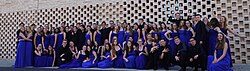
Heidenheim is a center for musical excellence. The Neuer Kammerchor Heidenheim, founded in 2005, is one of Germany's premier youth choirs and a recognized cultural ambassador. The town also hosts the Opernfestspiele Heidenheim (Opera Festival) at Hellenstein Castle, which has gained international acclaim for its romantic opera cycles.
The town's religious landscape is diverse. While Protestantism became dominant in the 16th century—centered around Michael's Church and later Paul's Protestant Church—Catholicism saw a resurgence in the 19th century with the construction of the Church of St. Mary in 1882. Various parishes across the boroughs, such as the Catholic Church of Saint Peter and Paul in Großkuchen, reflect the region's eclectic spiritual history.
Economy and Modern Infrastructure
The economy is heavily anchored by the Voith group. In 2006, the town opened the world's first Paper Technology Centre, a 75-million-euro facility regarded as the most important center for paper research globally.
Transport is highly efficient, with the town located near the A7 Autobahn and served by federal highways B19 and B466, facilitating the movement of goods and people throughout southern Germany.
Sports and Notable Residents
Heidenheim has seen a meteoric rise in sports. FC Heidenheim 1846 has climbed the German football league system, reaching the Bundesliga for the 2023–24 season. Additionally, the Heidenheim Heideköpfe baseball team competes at the highest level of the Baseball Bundesliga, winning the championship in 2009.
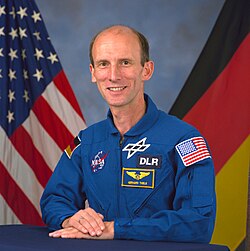
The town has been home to several distinguished figures, including physicist and astronaut Gerhard Thiele, inventor and balloonist Vera Simons, and Roman Catholic Cardinal Walter Kasper.

Frequently Asked Questions
What is the main industry in Heidenheim?
The town is the economic center of its district and is most notably the headquarters of the Voith industrial company, including the world's leading Paper Technology Centre.
Which professional sports teams are based in Heidenheim?
The town is home to FC Heidenheim 1846, which competes in the Bundesliga (football), and the Heidenheim Heideköpfe, who play in the Baseball Bundesliga.
What is the significance of Aquileia?
Aquileia was a major Roman settlement and cavalry castle (Castrum) that became the largest Roman city in the current state of Baden-Württemberg.
What cultural events take place at Hellenstein Castle?
The castle hosts the Opernfestspiele Heidenheim, an internationally recognized opera festival known for its high-quality productions and romantic themes.
How is the town governed?
Heidenheim is led by a Lord Mayor (currently Michael Salomo) and a city council consisting of 33 members elected every five years.