Hawks: Biology, Classification, and Behavior of Nature's Apex Predators
Hawks are formidable birds of prey belonging to the family Accipitridae. These raptors are widely distributed across the globe, inhabiting every continent except Antarctica. Known for their precision, power, and keen senses, hawks play a critical role in their ecosystems as apex predators.
While the term "hawk" is commonly used, it often covers a diverse range of birds. In a strict taxonomic sense, hawks are part of a larger family that includes eagles, kites, and harriers. However, in common parlance, the term is frequently applied to any small to medium-sized member of the Accipitridae family that is not an eagle.
Key Facts
- Distribution: Found worldwide on all continents except Antarctica.
- Vision: Tetrachromats with high visual acuity and dual foveae in each eye.
- Intelligence: Ranked among the most intelligent birds based on feeding innovation.
- Hunting Style: Varies by group, from sudden dashes (Accipiters) to pouncing from heights (Buteos).
- Migration: Seasonal movements influenced by body fat reserves and wind patterns.
Classification and Groups
To understand hawks, it is essential to distinguish between the two primary groups often referred to by the name: the accipitrine hawks and the buteonine hawks.
Accipitrine Hawks (True Hawks)
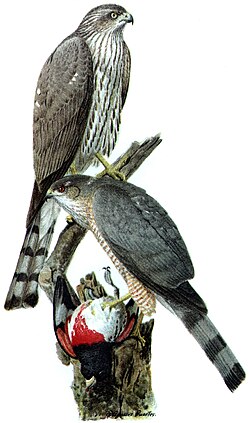
Members of the subfamily Accipitrinae, including goshawks and sparrowhawks, are primarily woodland birds. They are characterized by short, broad wings and long tails, which allow them to maneuver through dense foliage. These birds hunt by dashing suddenly from concealed perches, often targeting other birds—a trait that has earned them the nickname "hen-hawks."
Buteonine Hawks (Buzzards)
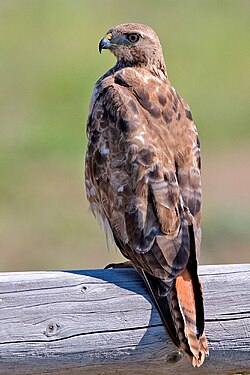
The Buteo group consists of birds with sturdy builds, broader wings, and shorter tails compared to accipiters. While called hawks in the United States, they are known as buzzards in many other parts of the world. Unlike the horizontal pursuit of accipiters, buteos typically fly longer distances over open areas and pounce or descend upon their prey.
| Feature | Accipitrine Hawks | Buteonine Hawks |
|---|---|---|
| Common Names | True Hawks, Goshawks, Sparrowhawks | Buteos, Buzzards |
| Wing Shape | Short and broad | Broad and large |
| Tail Length | Long | Relatively short |
| Habitat | Woodlands/Forests | Open areas/Fields/Deserts |
| Hunting Method | Sudden dash from perch | Pouncing or descending |
Biological Characteristics
Exceptional Eyesight
Hawks possess some of the most advanced vision in the animal kingdom. They are tetrachromats, meaning they have four types of color receptors. While they are violet-sensitive, they cannot perceive ultraviolet light. Their high visual acuity is driven by a massive density of photoreceptors—up to 1,000,000 per square mm in the genus Buteo, compared to 200,000 in humans.
Their eyes feature an elongated eyeball for a long focal length and two foveae (areas of high photoreceptor density) in each eye, which magnifies the central visual field and allows for extreme precision during a hunt.
Intelligence and Behavior
Research by Canadian ornithologist Louis Lefebvre in 2005 suggests that hawks are among the most intelligent birds, measured by their ability to innovate in their feeding habits. In the wild, hawks exhibit complex social and survival behaviors. During migration, they often form flocks known as "kettles" to increase their survival rates.
Migration and Habitat
Hawks migrate during autumn (August to mid-December) and spring. The timing and distance of migration vary by species; those traveling the longest distances typically depart earliest to secure the best mates, territories, and food sources upon arrival.
Migration success depends heavily on body fat reserves and flight paths. Hawks generally avoid crossing large bodies of water due to unpredictable air conditions, preferring to detour around lakes or follow coastlines. This predictable movement makes hawkwatching a popular citizen science activity.
While adaptable to many environments, hawks prefer open habitats like deserts and fields where prey is easier to spot. However, they are also found in mountainous plains and tropical regions, including Jamaica and the West Indies.
Reproduction and Diet
Many hawk species are monogamous, pairing for life. Their mating ritual is particularly striking: a male and female fly in a circular motion, after which the male dives toward the female. Eventually, the male latches onto the female, and the pair enters a dramatic free-fall toward the ground.
Females typically lay about five eggs per year, which both parents guard for approximately one month. Young hawks may leave the nest as early as six weeks old, though they rely on their parents for food until they are old enough to hunt.
Their diet is diverse, consisting of small game such as snakes, lizards, fish, mice, rabbits, squirrels, and other birds. For example, the red-shouldered hawk consumes both small birds like doves and insects such as crickets and grasshoppers.
Cultural Significance
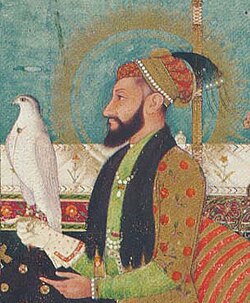
Throughout history, hawks have been symbols of power and precision. In ancient Greece, Aristotle listed eleven types of hawks, while Pliny the Elder identified sixteen. The practice of falconry, once called "hawking," utilized these birds for hunting.
In modern culture, the term "hawk" (or "war hawk") describes a political figure who favors war, a term originating from 1810s U.S. Congressional debates. In the Sikh community, the Northern Goshawk is associated with Guru Gobind Singh and is the official state bird of Punjab, India. In Korea, hawks have historically symbolized courage and justice, often depicted in royal art.

Frequently Asked Questions
What is the difference between a hawk and a buzzard?
In the United States, both are often called hawks. However, in other parts of the world, "buzzard" refers to the Buteo group, which are characterized by broader wings and a tendency to pounce on prey from the air, whereas "true hawks" (accipiters) are woodland birds that dash from perches.
How do hawks see so much better than humans?
Hawks have a much higher density of photoreceptors in their retinas (up to 1 million per square mm) and possess two foveae per eye, which magnifies their vision. Their elongated eyeballs also provide a longer focal length for better distance resolution.
What is a "kettle" of hawks?
A "kettle" is a term used primarily in the United States to describe a flock of hawks circling together, typically seen during migration.
Are all hawks monogamous?
Some species of hawk are monogamous and maintain a single partner for their entire lives, working together to build and maintain their nests.
What do hawks eat?
Hawks are carnivorous and eat a wide variety of small animals, including rodents, rabbits, lizards, snakes, fish, and other birds, as well as large insects like grasshoppers.