Red Kite: Biology, Distribution, and Conservation of Milvus milvus
The Red Kite (Milvus milvus) is a medium-large bird of prey known for its distinctive forked tail and graceful soaring flight. First described by the Swedish naturalist Carl Linnaeus in 1758, this raptor has a complex history of decline and recovery across its range in Europe, Northwest Africa, and the Middle East.
While once persecuted and driven to extinction in several regions, the Red Kite has become a symbol of successful wildlife conservation, particularly through ambitious reintroduction programs in the United Kingdom and Ireland.
Key Facts
- Scientific Name: Milvus milvus
- Conservation Status: Least Concern (IUCN 3.1)
- Maximum Recorded Age: 29 years
- Primary Range: Europe, Northwest Africa, and the Middle East
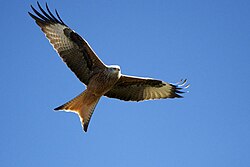
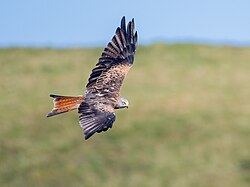
- Distinctive Feature: Deeply forked tail and rufous plumage in adults
- Major Threats: Poisoning (direct and indirect), electrocution, and habitat loss
Taxonomy and Classification
The Red Kite belongs to the family Accipitridae. Originally classified by Linnaeus as Falco milvus, it was moved to the genus Milvus in 1799 by Bernard Germain de Lacépède. Today, scientists recognize two distinct subspecies:
- M. m. milvus: Found across Europe, Northwest Africa, and the Middle East.
- M. m. fasciicauda: Endemic to the Cape Verde Islands.
Physical Characteristics
Identifying a Red Kite often depends on the age of the bird, as adults and juveniles exhibit significant differences in appearance.
Adults vs. Juveniles
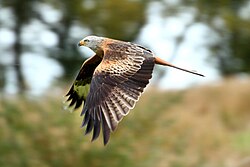
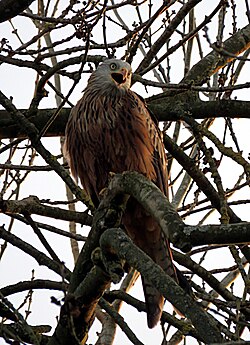
- Coloration: Adults possess a deep rufous (reddish-brown) plumage, whereas juveniles have a more washed-out, pale appearance.
- Markings: Adults feature distinct black streaks on the breast; in juveniles, these streaks are pale.
- Tail Shape: The signature deeply forked tail is more pronounced in adults. Juveniles have a less deeply forked tail characterized by a dark subterminal band.
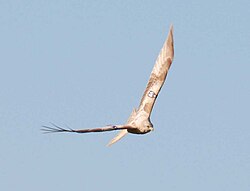
In rare instances, leucistic forms occur, where a genetic mutation results in a partial loss of pigmentation, creating a white or pale appearance.
Distribution and Population Trends
The global population of Red Kites has seen significant fluctuations. Between 1990 and 2000, populations in Germany, France, and Spain declined by nearly 20%. However, recent trends show a stabilization in Central Europe and rapid growth in Northern Europe.
Continental Europe
Germany remains a critical stronghold, hosting nearly half of the world's breeding pairs. While populations in Spain saw a sharp decline between 1994 and 2002, countries like Sweden have seen a dramatic recovery, growing from just 30–50 pairs in the 1970s to approximately 1,200 pairs by 2003.

The United Kingdom and Ireland
In the UK, the Red Kite was once extinct but has made a triumphant return. Reintroduction efforts between 1989 and 1992 helped establish populations in England and Scotland. In Wales, the population recovered from a low of just two pairs in the 1930s to approximately 1,000 pairs by 2009.
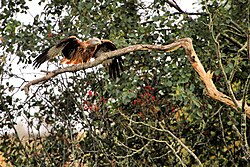
Ireland followed a similar path. After becoming extinct by the mid-19th century, a reintroduction program began in 2007, bringing birds from Wales to the Wicklow Mountains. The first successful native hatchings were reported in 2010.
Conservation and Threats
Despite their current status as "Least Concern," Red Kites face several anthropogenic threats. The most severe is poisoning, which occurs both through illegal direct baiting and indirect exposure to pesticides, particularly in France and Spain.
Other risks include:
- Electrocution: Collisions with power lines.
- Agricultural Changes: Shifts in farming practices that reduce available food resources.
- Human Interference: Hunting, trapping, and local-scale egg collection.
- Competition: Potential competition with the Black Kite (M. migrans).
Population Summary by Region
| Country/Region | Year | Estimated Pairs | Trend/Status |
|---|---|---|---|
| Germany | 2018 | 14,000–16,000 | Stabilized after decline |
| Sweden | 2021 | 4,000–5,000 | Increasing |
| France | 2018 | 3,000–3,900 | Stable/Increasing locally |
| Switzerland | 2013–2016 | 2,800–3,500 | Recovering |
| Spain | 2018 | 2,312–2,440 | Significant decline from 1977 |
| England | 2011 | ~2,000 | Recovering (Reintroduced) |
| Poland | 2012 | 1,500–1,800 | Increasing |
| Wales | 2009 | ~1,000 | Recovering |

Frequently Asked Questions
How long do Red Kites live?
The maximum recorded age for a ringed Red Kite in Germany and Britain is 25 years and 8 months, though one reintroduced bird in Oxfordshire lived to be 29 years old.
What is the difference between a Red Kite and a Black Kite?
While closely related, the Red Kite is distinguished by its more deeply forked tail and rufous plumage. There is evidence of a hybrid zone between the two species in Central Europe.
Why did Red Kites disappear from the UK and Ireland?
The species suffered from intense persecution, poisoning, and the clearance of woodlands, leading to their extinction in Ireland by the mid-19th century and in parts of the UK by the 1870s.
What do Red Kites eat?
Red Kites are opportunistic feeders. While they hunt, they are also well-known scavengers, often visiting feeding stations or foraging in urban areas for supplementary food.