Harbors: Natural and Artificial Maritime Shelters
A harbor (or harbour in Commonwealth English) is a sheltered area of a body of water that provides a safe location for ships, boats, and barges to be moored. While the terms harbor and port are often used interchangeably, they have distinct meanings in maritime contexts. A harbor refers to the sheltered area of water itself, whereas a port refers specifically to the facilities used for loading and unloading cargo and passengers. For instance, the Alexandria Port in Egypt is a single port that encompasses two separate harbors.
Key Facts
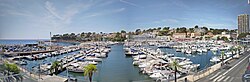
- Natural Harbors: Formed by naturally occurring land that protects the water from open sea conditions.
- Artificial Harbors: Man-made structures using breakwaters, sea walls, or dredging to create shelter.
- Oldest Known: The artificial harbor at Wadi al-Jarf in Egypt dates back at least 4,500 years.
- Largest Artificial: Jebel Ali in Dubai is the largest artificially created harbor in the world.
- Strategic Value: Natural harbors are often the foundation for major global cities due to their economic and naval importance.
Natural Harbors
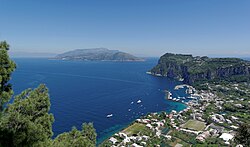
A natural harbor is a landform where a section of water is naturally protected and deep enough to allow ships to anchor. Many of these are rias (coastal inlets formed by the partial submergence of river valleys). Because the surrounding land provides a natural barrier, these harbors often eliminate the need for man-made breakwaters, resulting in calmer waters for vessels.
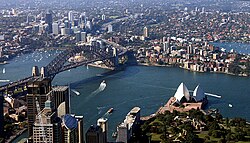
Numerous global cities have flourished around natural harbors, including Sydney, Hong Kong, and New York. Other notable examples include the Bali Strait in Indonesia, Guantánamo Bay in Cuba, and the Rías Altas and Rías Baixas in Spain.
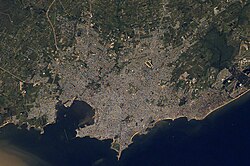
Other significant natural harbors include Tanjung Perak in Indonesia, the Port of Messina in Italy, and various harbors across New Zealand, such as Waitematā and Wellington.
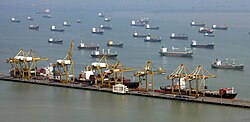
Artificial Harbors
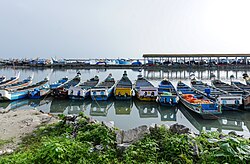
Artificial harbors are constructed when natural shelter is unavailable but a port is required. These are created using breakwaters (barriers built out into the sea to protect a coast or harbor from waves), sea walls, or jetties. Some are created through dredging—the removal of sediments from the bottom of a water body to increase depth—which requires periodic maintenance to remain functional.
A prime example of this is the Long Beach Harbor in California. Before the early 20th century, this area consisted of tidal flats and salt marshes that were too shallow for merchant ships until dredging transformed the landscape.
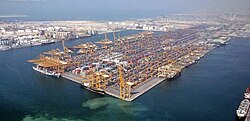
Historically, the Ancient Carthaginians developed fortified artificial harbors known as cothons. Today, large-scale artificial harbors like the Port of Casablanca in Morocco and the Port of Koper in Slovenia facilitate global trade.
Ice-Free Harbors
In polar regions, the ability of a harbor to remain ice-free year-round is a critical strategic and economic advantage. These harbors allow for continuous shipping regardless of the season.
Key ice-free harbors include Murmansk and Pechenga in Russia, Hammerfest and Vardø in Norway, and Prince Rupert in Canada. In the extreme south, Winter Quarters Bay in Antarctica is the world's southernmost harbor and is occasionally ice-free depending on summertime pack ice conditions.
Global Importance and Trade
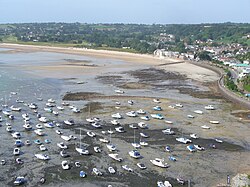
Harbors are the lifelines of international commerce. While the title of the world's busiest port is often debated, the Port of Ningbo-Zhoushan was the busiest harbor by cargo tonnage in 2017.
| Feature | Natural Harbor | Artificial Harbor |
|---|---|---|
| Formation | Naturally occurring landforms | Man-made construction |
| Protection | Natural land barriers | Breakwaters, sea walls, jetties |
| Maintenance | Low (natural depth) | High (periodic dredging) |
| Examples | Sydney Harbour, Victoria Harbour | Jebel Ali, Long Beach Harbor |
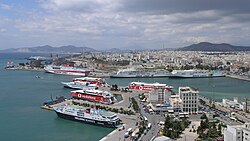
From the historic harbor of Piraeus in Greece to the modern hubs of Rotterdam and Singapore, these maritime gateways continue to shape global geopolitics and economy.
Frequently Asked Questions
![Punta del Este's harbor – nicknamed the Monte Carlo of South America[4][5][6]](/images/28/9b/289b85940633c82cd30605b8bb903950c3b273622fa102061d36c69f84586e7e.jpg)
What is the difference between a harbor and a port?
A harbor is a sheltered body of water where ships can seek safety from the open sea. A port is a specific location within or adjacent to a harbor that provides the infrastructure (docks, cranes, warehouses) necessary for loading and unloading ships.
How is an artificial harbor created?
Artificial harbors are created by building physical barriers like breakwaters and sea walls to block waves, or by dredging the sea floor to create deep enough channels and basins for ships to enter and anchor.
What is a ria?
A ria is a coastal inlet formed by the partial submergence of a river valley, often creating a deep, sheltered natural harbor.
Why are ice-free harbors important?
Ice-free harbors are vital in Arctic and Antarctic regions because they allow ships to access ports year-round without being blocked by seasonal sea ice, ensuring uninterrupted trade and military logistics.
Which is the largest artificial harbor in the world?
The Port of Jebel Ali in Dubai is recognized as the largest artificially created harbor in the world.