Hamburg: The Free and Hanseatic City of Germany
Hamburg is a powerhouse of culture, commerce, and maritime history. As a city-state, it serves as both a municipality and one of Germany's federal states. Known as the Free and Hanseatic City of Hamburg, it is the second-largest city in Germany, blending a rich mercantile past with a cutting-edge modern economy. From its world-renowned port to its vibrant arts scene, Hamburg stands as Germany's primary window to the world.
The city is defined by its relationship with water, situated on the Elbe River and characterized by an intricate network of canals and lakes, including the Inner and Outer Alster.
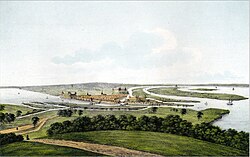
Key Facts
- Population: Approximately 1,973,896 (City) and 5,425,628 (Metro area) as of late 2024.
- Economic Power: A city GDP of €168.300 billion with a per capita GDP of €90,359 (2025).
- Global Logistics: Home to one of the world's most significant ports on the Elbe.
- Human Development: Ranked 1st out of 16 regions in Germany for its Human Development Index (0.975 in 2022).
- Governance: Led by First Mayor Peter Tschentscher and Second Mayor Katharina Fegebank.
Geography and Climate
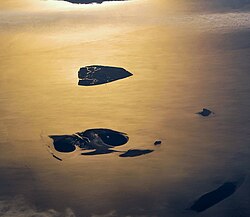
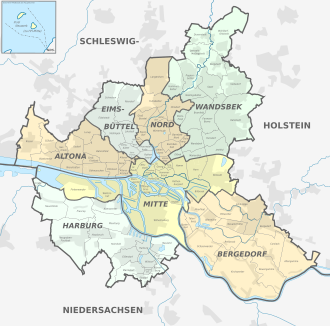
Hamburg covers an area of 755.09 km². Its geography is diverse, ranging from the urban center to the Hamburg Wadden Sea National Park, which includes the island of Neuwerk where roughly 50 people reside.
The climate is temperate, with an average annual precipitation of 770.5 mm. Summers are mild, with mean maximums reaching 31.1°C in July, while winters are cool, with mean minimums around -0.5°C in January. The city experiences significant humidity, averaging 78.7% throughout the year.
History and Urban Evolution
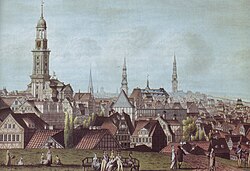
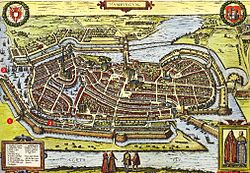
Hamburg's journey from a medieval settlement to a global metropolis is marked by its membership in the Hanseatic League, a powerful medieval commercial and defensive confederation of merchant guilds and market towns.
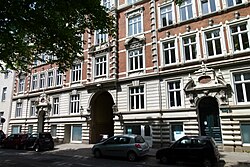
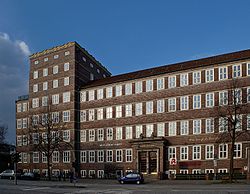
The city faced immense challenges during the Second World War. Bombing raids in 1943 caused widespread destruction, particularly in areas like Eilbek. Today, only about 25% of Hamburg's buildings date from before the war, though the city has meticulously preserved and restored its historic identity.
![Hamburg Eilbek after the 1943 bombing; today around 25% of Hamburg's buildings are from before the Second World War[29]](/images/96/41/9641595864e831bc9d41eae86443461d5c1165423880c4cf68e62a57908e3668.jpg)
Architectural Landmarks
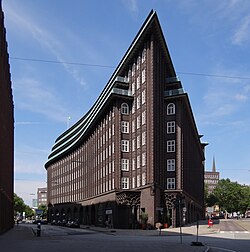
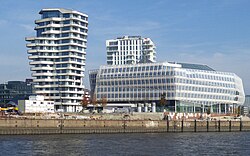
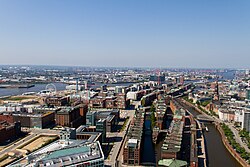
The cityscape is a mix of historicist styles and modern expressionism. The Chilehaus is a prime example of brick expressionism, while the Speicherstadt (Warehouse District) remains one of the world's largest warehouse districts.
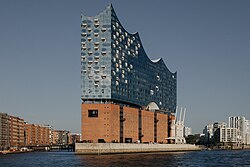
Modern development is epitomized by HafenCity, a massive urban regeneration project, and the Elbphilharmonie, a 110-metre-high concert hall that has become a global architectural icon.
Economy and Infrastructure
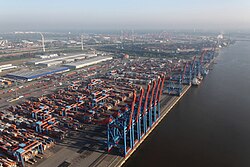
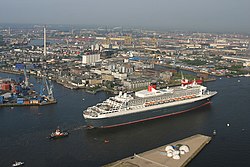
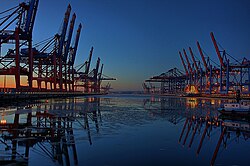
Hamburg's economy is driven by its port, banking, and industrial production. The Port of Hamburg is a critical hub for international trade, utilizing massive container terminals to move goods across the globe.
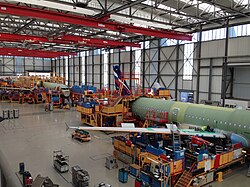
Industrial strength is further bolstered by the aerospace sector, specifically the Airbus plant in Finkenwerder, where aircraft like the A321 are assembled.
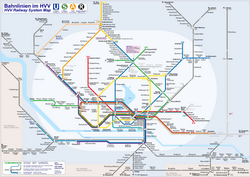
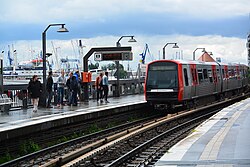
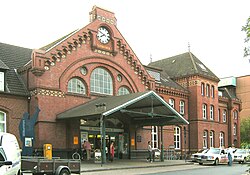
The city boasts a comprehensive transport network, including the U-Bahn (underground rail), S-Bahn, and a busy central railway station (Hauptbahnhof), which is the busiest in Germany.
Culture and Society
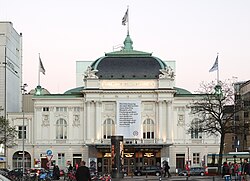
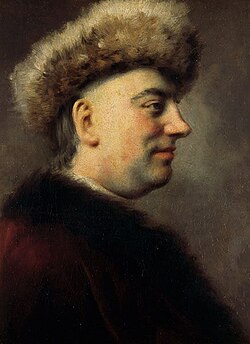
Hamburg is a center for theatrical and musical innovation. This legacy began in the 1760s with Abel Seyler and continues today through institutions like the Deutsches Schauspielhaus and the English Theatre of Hamburg.
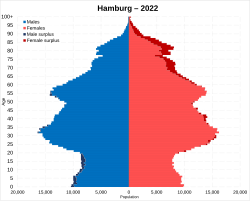
The city's social fabric is highly diverse. As of 2022, foreign residents make up a significant portion of the population, with large communities from Turkey, Ukraine, and Afghanistan. Religiously, the majority of the population (65.2%) identify as having no religion or other beliefs, followed by EKD Protestants (24.9%) and Roman Catholics (9.9%).
Notable Figures
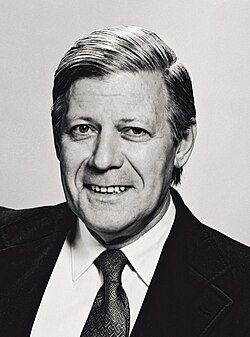
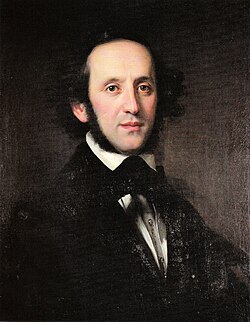
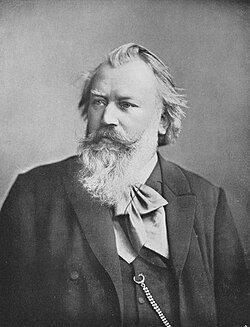
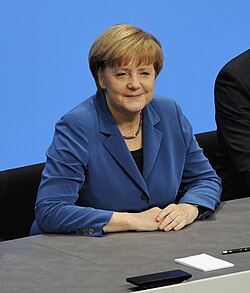
Hamburg has been home to many influential figures, including composers Johannes Brahms and Felix Mendelssohn, physicist Heinrich Hertz, and political leaders such as former Chancellor Helmut Schmidt and former Chancellor Angela Merkel.
City Overview Summary
| Category | Detail |
|---|---|
| City Population | 1,973,896 (2024) |
| Metro Population | 5,425,628 |
| City Area | 755.09 km² |
| GDP (City) | €168.300 billion (2025) |
| HDI Rank | 1st in Germany (2022) |
| Primary Industry | Maritime Trade, Logistics, Aerospace |
Frequently Asked Questions





What is the significance of the term "Hanseatic" in Hamburg's name?
It refers to the Hanseatic League, a medieval commercial and defensive confederation of merchant guilds and market towns that allowed Hamburg to grow into a dominant trading power in Northern Europe.
How much of the city was destroyed during World War II?
The city suffered heavy bombing, particularly in 1943. Currently, only about 25% of the buildings in Hamburg date from before the Second World War.
What are the most famous architectural sites in Hamburg?
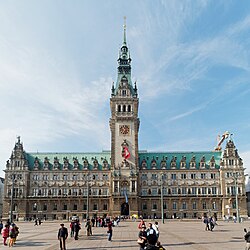
Key sites include the Elbphilharmonie concert hall, the historic Speicherstadt warehouse district, the Chilehaus, and the Hamburg City Hall.
What is the economic importance of the Port of Hamburg?
The port is one of the most important in Europe, serving as a primary gateway for international trade and contributing significantly to the city's high GDP and industrial output.
Who are some of the most famous people from Hamburg?
Notable figures include composers Johannes Brahms and Felix Mendelssohn, physicist Heinrich Hertz, and political leaders Helmut Schmidt and Angela Merkel.