Blaustein: A Blend of Prehistoric Heritage and Modern German Life
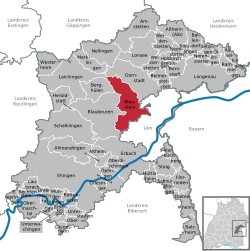
Nestled in the scenic landscapes of Baden-Württemberg, Blaustein is a town that seamlessly bridges the gap between ancient history and contemporary German living. Situated on the banks of the Blau River, just 6 kilometers west of Ulm, this municipality serves as a gateway to the Swabian Jura plateau, offering a rich tapestry of cultural landmarks and natural beauty.
Originally known as Herrlingen before 1968, the town was formed through a series of strategic mergers. It began with the union of Ehrenstein and Klingenstein, eventually expanding throughout the 1970s to incorporate several surrounding municipalities. On October 1, 2014, Blaustein officially achieved town status, marking its growth into a significant regional hub.
Key Facts
- Location: Alb-Donau-Kreis district, Baden-Württemberg, Germany.
- Population: 16,581 (as of December 31, 2024).
- Geography: Situated between the Blau and Lauter rivers at an altitude of 490–690 meters.
- UNESCO Status: Home to prehistoric pile-dwelling settlements.
- Administration: Led by Mayor Konrad Peter Menz (CDU).
Geography and Administration
Blaustein is strategically positioned between Hochsträß, Blautal, and Lautertal. The town's landscape is defined by the flow of the Blau River and the Lauter, the latter of which originates within the district of Lautern. The town is bordered by Dornstadt to the northeast, Ulm to the southeast, Blaubeuren to the west, and Berghülen to the northwest.
The municipality is organized into 10 distinct districts, each contributing to the town's unique character: Arnegg, Bermaringen, Dietingen, Ehrenstein, Herrlingen, Klingenstein, Lautern, Markbronn, Weidach, and Wippingen.
A Journey Through History
Human habitation in Blaustein dates back to the Neolithic period (the New Stone Age). Evidence of a Neolithic temporal village near Ehrenstein is so significant that it was included in the UNESCO World Heritage Site for Prehistoric Pile dwellings around the Alps in 2011.
The 20th century brought both tragedy and transformation. In 1926, the Jewish educator Anna Essinger founded the Landschulheim Herrlingen, a boarding school for Jewish children. Following the rise of Nazism in 1933, Essinger courageously moved the school and 66 pupils to England to ensure their safety.
The Legacy of Erwin Rommel
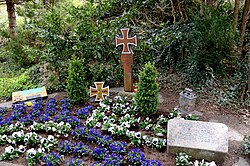
The district of Herrlingen is notably the final resting place of Field Marshal Erwin Rommel, the former commander of the Afrika Korps. Rommel lived in Herrlingen from mid-1943 in a house that was once part of the Jewish Landschulheim complex. After falling out of favor with Adolf Hitler due to his critical views on the Western Front and suspected involvement in the July 20 plot, Rommel was forced to commit suicide via potassium cyanide on October 14, 1944.
Today, a memorial stone marks the site of his death, and his ashes are interred in the Herrlingen cemetery. The Lindenhof Villa in Herrlingen now serves as a museum and was once the childhood home of his son, Manfred Rommel, who later became the Lord Mayor of Stuttgart.
Exploring the Districts
Each district of Blaustein offers a glimpse into different eras of German history:
- Arnegg: First mentioned in 1292, it features a 17th-century tithe barn, the Marienkirche (1737), and a town hall built in 1783.
- Klingenstein: Dominated by the Klingenstein Palace and castle ruins (first mentioned in 1215), now owned by the Leube Foundation. It also hosts the expressionist Kreuzkirche.
- Wippingen: Documented since 1085, this area is home to the historic Castle Lauterstein.
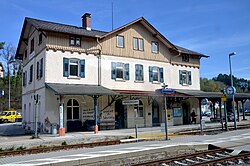
- Herrlingen: A central hub featuring its own railway station and the Rommel memorial sites.
- Weidach: Known for its two Catholic churches, St. Wendelin and Nicholas of Flue.
Town Overview Summary
| Category | Details |
|---|---|
| Total Area | 55.61 km² |
| Elevation | 495 m |
| Population Density | 298.2/km² |
| Postal Code | 89134 |
| Vehicle Registration | UL |
Notable Residents
Blaustein has been home to several distinguished individuals across various fields:
- Lucy Christalnigg: A pioneering female racing driver in the Austro-Hungarian Empire.
- Wolfgang Fahrian: A goalkeeper for the German national football team during the 1962 World Cup.
- Dieter Baumann: A renowned Olympic athlete.
- Lucca Staiger: A professional national basketball player.
Frequently Asked Questions
What was Blaustein called before 1968?
Before the municipal mergers of 1968, the area was known as Herrlingen.
Why is Blaustein a UNESCO World Heritage Site?
Blaustein is home to prehistoric pile-dwelling (stilt house) settlements that are part of the broader "Prehistoric Pile dwellings around the Alps" UNESCO site.
Who is buried in Herrlingen?
Field Marshal Erwin Rommel, the commander of the Afrika Korps, is buried in the cemetery of Herrlingen.
What is the significance of the Landschulheim Herrlingen?
Founded in 1926 by Anna Essinger, it was a boarding school for Jewish children that was relocated to England in 1933 to escape Nazi persecution.
Which rivers flow through the town?
The Blau River and the Lauter River flow through the municipality.