Erbach: A Historic Town on the Danube
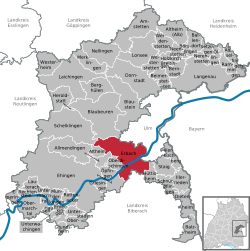
Nestled on the southern edge of the Swabian Jura, Erbach is a picturesque town located along the banks of the Danube River in Baden-Württemberg, Germany. Situated within the Alb-Donau District between the cities of Ulm and Ehingen an der Donau, Erbach blends a rich historical legacy with modern infrastructure, making it a notable point of interest in the region.
Key Facts
- Location: Alb-Donau-Kreis, Baden-Württemberg, Germany.
- Population: 14,140 (as of December 31, 2024).
- Total Area: 63.29 km².
- Elevation: 529 meters above sea level.
- Key Landmarks: Erbach Castle and the Baroque Church of St. Martin.
- Connectivity: Located on Bundesstraße 311 and the Southern Railway (Württemberg).
History and Development
While the first official written mention of Erbach appears in the Konstanz Tithe Book of 1275—where it was recorded as a parish named Irlebach—archaeological evidence suggests the area was inhabited as far back as the Neolithic Age (the New Stone Age). The settlement evolved over centuries, eventually receiving official town privileges on August 1, 2002.
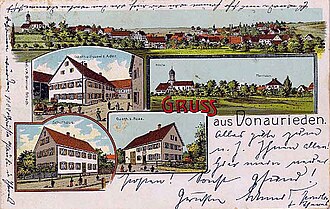
The modern boundaries of the town were shaped by several administrative mergers. In 1972, the community of Ringingen was incorporated. This was followed by further expansions in 1974, when the communities of Bach, Dellmensingen, Donaurieden, and Ersingen were integrated into Erbach.
Governance and Politics
Erbach is led by a mayor elected to an eight-year term. Following the term of Paul Roth, which ended in November 2010, Achim Gaus was elected on October 24, 2010, and officially assumed office on January 1, 2011.
The local legislative body, the Gemeinderat (town council), represents various political interests. According to the 2014 elections, the council composition was led by the CDU (42%) and Free Voters (36.7%), with the SPD (12.5%) and the Green Party (8.8%) also holding seats.
Infrastructure and Connectivity
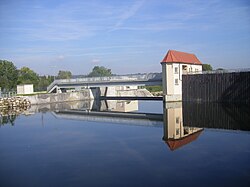
Erbach serves as a strategic transit point, lying on the Bundesstraße 311. It is well-connected by the Southern Railway (Württemberg) between Ulm and Lindau and is integrated into the Danube-Iller Traffic Network. For aviation enthusiasts, the town features an airfield frequently utilized by private pilots from nearby Ulm.
Cultural Sights and Tourism
The town is a destination for those following the Way of St. James and the Upper Swabian Baroque Route. Its architectural highlights include:
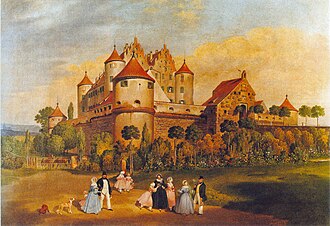
- Erbach Castle: A Renaissance-style castle from the early 16th century that once served as the residence for the Freiherren (Barons) of Ulm.
- Church of St. Martin: A stunning Baroque church completed in 1767, located adjacent to the castle.
- Dellmensingen Castle: An early Baroque castle located in the district of Dellmensingen.
Notable Personalities
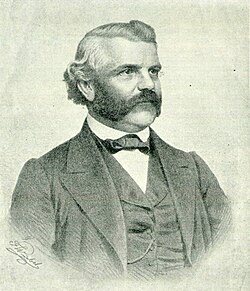
Erbach has been home to several influential figures, including Joseph von Egle (1818–1899), the architect responsible for the Church of St. Mary and the polytechnic school in Stuttgart. Other notable residents include the missionary Joseph Eberle, the high-ranking cleric Franz Ignaz Albert of Werdenstein, and the German-Brazilian engineer Manfred Albert von Richthofen.
Town Overview Summary
| Category | Details |
|---|---|
| State | Baden-Württemberg |
| Administrative Region | Tübingen |
| Postal Code | 89155 |
| Twinning Partners | Wolkersdorf im Weinviertel (Austria), Thorigny sur Marne (France) |
| Vehicle Registration | UL |
Frequently Asked Questions
When did Erbach officially become a town?
Erbach was granted town privileges on August 1, 2002.
What are the main tourist attractions in Erbach?
The most prominent sights are the Renaissance Erbach Castle, the Baroque Church of St. Martin, and Dellmensingen Castle.
Which historical routes pass through the town?
Erbach is located on both the Way of St. James and the Upper Swabian Baroque Route.
Who is the current mayor of Erbach?
Achim Gaus has served as mayor since taking office on January 1, 2011.
Which communities were incorporated into Erbach?
The town incorporated Ringingen in 1972, followed by Bach, Dellmensingen, Donaurieden, and Ersingen in 1974.