Guided-Missile Destroyers: The Multi-Purpose Backbone of Modern Naval Warfare
In the complex landscape of modern maritime strategy, the guided-missile destroyer (DDG) serves as a critical multi-role asset. Unlike older vessel types that focused on a single specialty, these advanced warships are designed to provide comprehensive protection for a fleet, primarily through sophisticated anti-aircraft warfare screening. As navies transition away from larger cruisers, the destroyer has stepped into a vital role, often serving as the primary platform for missile defense and fleet protection.
Modern destroyers are defined by their versatility. While their primary armament consists of guided missiles, they are frequently equipped for a wide array of combat scenarios, including anti-surface operations using naval guns and surface-to-surface missiles, as well as anti-submarine warfare (ASW) utilizing torpedoes and onboard helicopters.
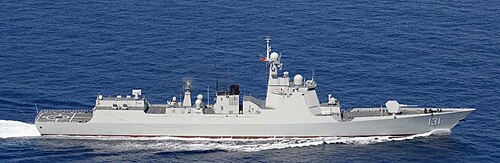
Taiyuan (131), a Type 052D (Luyang III-class) guided-missile destroyer
Core Capabilities and Technology
The effectiveness of a DDG lies in its ability to manage high-intensity combat environments. Most contemporary destroyers utilize vertical-launching systems (VLS)—specialized cells that allow missiles to be fired vertically for rapid deployment. This technology enables the vessel to carry large missile magazines, providing the capacity for sustained engagement.
Many advanced destroyers integrate highly sophisticated combat management systems. A prominent example is the United States' Aegis Combat System, which allows these vessels to perform critical anti-missile and ballistic-missile defense roles. This capability is essential for protecting both the individual ship and the larger carrier strike groups from aerial threats.
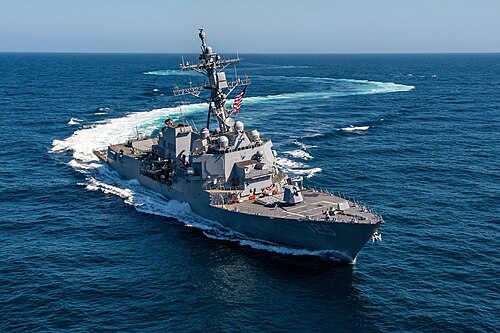
USS Jack H. Lucas, an Arleigh-Burke-class Flight III guided-missile destroyer
NATO Designations and Classifications
Naval terminology can vary by nation, but NATO provides standardized designations to ensure clarity during international operations. Under these standards:
- DDG refers to a guided-missile destroyer.
- DD refers to a destroyer with primary gun armament or limited anti-aircraft capabilities intended only for point-defense (protecting the ship itself rather than a wider fleet).
It is important to note that some nations use different hull pennant numbering systems, sometimes prefixing or omitting the "D" designation entirely. For instance, while the French Navy classifies certain large vessels as frigates, they are often assigned "D" pennant numbers, designating them as destroyers under NATO classification.
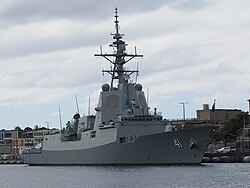
Australian HMAS Brisbane
Global Destroyer Fleets
Major naval powers maintain diverse fleets of destroyers, ranging from massive multi-role platforms to specialized defensive vessels. The United States Navy relies heavily on the Arleigh Burke-class, which stands as the most numerous class of warship in their fleet. Similarly, the Chinese People's Liberation Army Navy (PLAN) operates a significant number of destroyers, most notably the Type 055 and Type 052D classes.
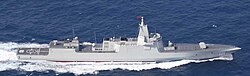
Type 055 destroyer is the largest destroyer class of the People's Liberation Army Navy
Major Destroyer Classes by Nation
Below is a summary of notable active and planned destroyer classes across various global navies:
| Nation | Notable Class(es) | Key Characteristics |
|---|---|---|
| United States | Arleigh Burke-class, Zumwalt-class | High-volume missile capacity; Aegis integration |
| China (PLAN) | Type 055, Type 052D | Large-scale multi-role capability |
| Japan (JMSDF) | Maya-class, Atago-class | Advanced guided-missile capabilities |
| United Kingdom | Type 45 | Specialized air defense |
| India | Visakhapatnam-class, Kolkata-class | Modern multi-role platforms |
| South Korea | Sejong the Great-class | Heavy missile armament |
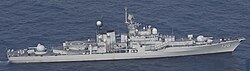
Chinese modernized Sovremenny-class (Project 956E) PLAN destroyer Hangzhou equipped with vertical launching system (VLS)
Regional Variations and Specialized Roles
Different regions prioritize different capabilities based on their strategic needs. The Japanese Maritime Self-Defense Force utilizes the Maya and Atago classes for advanced defense, while the Republic of Korea Navy operates the powerful Sejong the Great-class. In the Indian Navy, the Visakhapatnam and Kolkata classes represent the modern standard for multi-role operations.
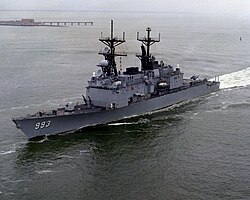
ROCS Tso Ying
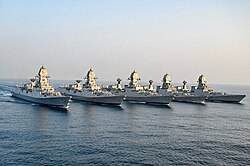
Indian Navy destroyers sailing in unison
In Europe, the Italian Navy employs the Horizon class (including the Caio Duilio) and the Durand de la Penne class. Meanwhile, the Russian Navy continues to operate various classes, including the Udaloy-class and the Sovremenny-class, though some vessels have faced decommissioning or modernization.
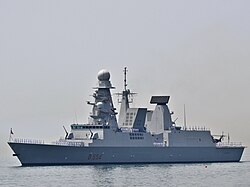
Destroyer Caio Duilio of the Italian Navy
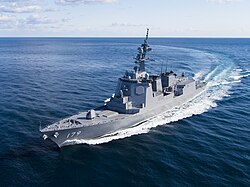
The Japanese guided-missile destroyer Maya
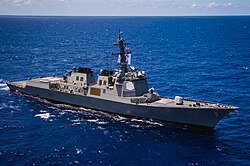
ROKS Yulgok Yi I
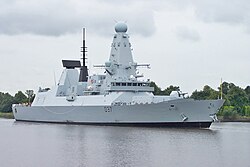
HMS Duncan
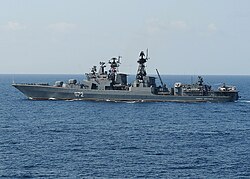
Admiral Vinogradov, an Udaloy-class destroyer
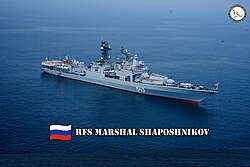
The "Marshal Shaposhnikov" was originally classified as a destroyer, but after a modernization, (visible in the image) it became classified as a frigate.
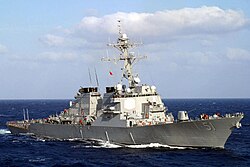
Arleigh Burke-class destroyer
Key Facts
- Primary Role: Providing anti-aircraft warfare screening and multi-role combat support.
- Key Technology: Vertical Launching Systems (VLS) for rapid missile deployment.
- Most Numerous Class: The Arleigh Burke-class in the United States Navy.
- NATO Designation: DDG (Guided-Missile Destroyer) vs. DD (Destroyer).
- Multi-Role Capabilities: Anti-surface, anti-submarine, and ballistic-missile defense.
Frequently Asked Questions
What is the difference between a DDG and a DD?
A DDG is a guided-missile destroyer, meaning its primary armament is guided missiles used for fleet defense. A DD is a destroyer that primarily uses guns or has limited missile capabilities intended only for point-defense.
Why are some frigates classified as destroyers?
Classification can depend on national standards versus NATO standards. For example, some French and Spanish vessels are classed as frigates by their own navies but are designated as destroyers under NATO classification due to their size and capability.
What is the Aegis Combat System?
The Aegis Combat System is an integrated weapons system used by many modern destroyers to manage complex combat environments, specifically for anti-missile and ballistic-missile defense.
Can destroyers fight submarines?
Yes. Most modern multi-purpose destroyers are equipped for anti-submarine warfare using torpedoes and onboard helicopters.
What is a Vertical Launching System (VLS)?
A VLS is a system of cells that allows a ship to store and launch missiles vertically, providing a faster and more efficient way to deploy various types of weaponry compared to traditional launchers.