Battleships: The Evolution of Naval Supremacy and Heavy Armament
For decades, the battleship stood as the ultimate symbol of national power. As a massive, heavily armored capital ship—a vessel designed to lead a fleet—the battleship was defined by its primary armament: large-caliber guns capable of devastating enemy formations. From their emergence in the late 1880s until they were eclipsed by aircraft carriers in the 1940s, these formidable machines shaped the course of global history and naval doctrine.
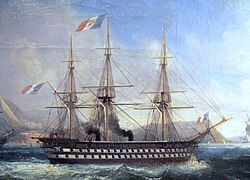
The lineage of the modern battleship is a story of rapid technological transformation. It began with the sailing ship of the line, which evolved into steam-powered vessels and eventually into the ironclad—warships protected by iron plating. Following a period of intense experimentation during the 1870s and 1880s, design standards began to solidify, setting the stage for the era of modern naval combat.
Key Facts
- Origin: Evolved from sailing ships of the line to steam-powered ironclads.
- Pre-Dreadnought Era: Characterized by a mix of large, medium, and small-caliber guns.
- The Dreadnought Revolution: Introduced the "all-big-gun" concept, discarding medium batteries for uniform heavy armament.
- Peak Era: The 1930s saw the rise of the fast battleship concept.
- Obsolescence: The rise of the aircraft carrier during World War II relegated battleships to secondary roles.
The Era of Pre-Dreadnoughts
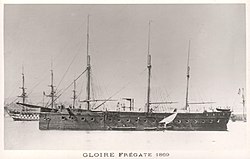
By the late 19th century, naval powers were racing to build the most effective ironclad fleets. The British Royal Sovereign class helped standardize design, leading to what historians call pre-dreadnought battleships. These ships typically featured a standardized armament: four large guns for heavy combat, several medium-caliber guns for close-range engagements, and numerous small guns for self-defense against light craft like torpedo boats.
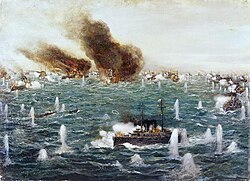
While many nations built these vessels, they saw limited combat during the 1890s and early 1900s, with the notable exceptions of the Spanish–American War and the Russo-Japanese War. The latter conflict provided a crucial lesson in naval combat: during the Battle of Tsushima, long-range engagements proved that only the largest guns were truly effective, suggesting that medium-caliber batteries might be redundant.
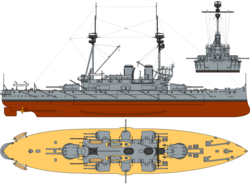
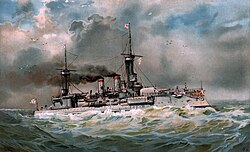
Global designs varied significantly. While most followed the four-heavy-gun pattern, the German Brandenburg class carried six heavy guns, and the American Indiana class utilized a heavier secondary battery of 8-inch guns. Even the Austro-Hungarian vessels differed, being smaller and carrying only 9.4-inch guns.
The Dreadnought Revolution and the Arms Race
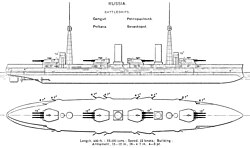
In 1906, the British launched HMS Dreadnought, a ship that fundamentally changed naval warfare. By discarding medium-caliber guns in favor of a uniform armament of ten large guns, the British rendered all existing battleships obsolete overnight. This "all-big-gun" approach triggered a massive global naval arms race as other major powers scrambled to build their own dreadnoughts.
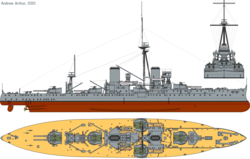
The concept of the all-big-gun ship had been theorized by figures like Vittorio Cuniberti and championed by British Admiral Sir John "Jackie" Fisher. While Japan was the first to order such ships with the Satsuma class, the dreadnought era would define the naval tensions leading into World War I.
World War I and the Interwar Treaties
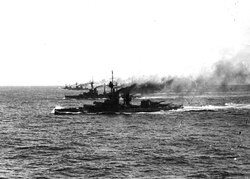
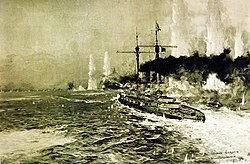
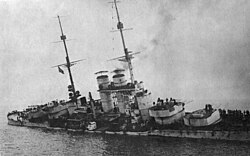
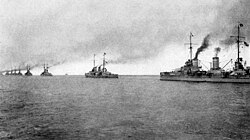
During World War I, the battleship's role was highlighted in the Battle of Jutland in 1916. Despite being the largest fleet engagement of the war, neither side achieved a decisive victory. Following the war, the international community sought to prevent a renewed arms race through a series of naval agreements, most notably the Washington Naval Treaty.
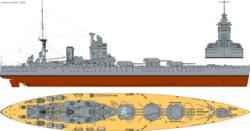
These treaties imposed strict limits on battleship construction and weight, leading to the era of the treaty battleship. While these restrictions inhibited the development of massive new designs, they also coincided with the maturation of the fast battleship concept. However, the treaty system eventually collapsed when Japan refused to sign the Second London Naval Treaty in 1936, paving the way for the massive naval expansions of the late 1930s.
The Final Flourish: World War II
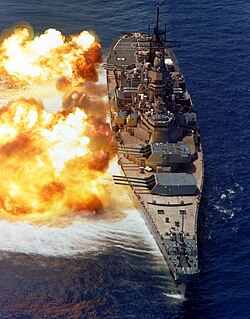
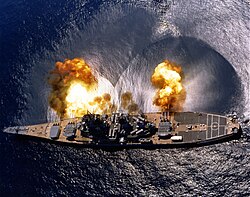
As World War II approached, naval powers developed increasingly powerful vessels. The United States produced the North Carolina and Iowa classes, while Japan embarked on the ambitious Yamato class, featuring massive 18-inch guns. Despite their power, the rise of air power meant that battleships often had to defend against aerial attacks rather than just engaging other surface fleets.
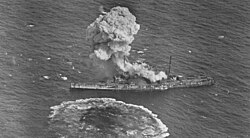
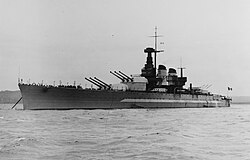
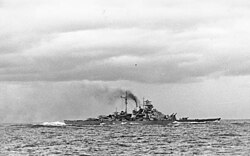
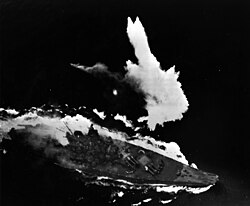
Battleships saw significant action in both the European and Pacific theaters, participating in notable engagements such as the Battle of Leyte Gulf and the sortie of the Bismarck. However, by the end of the conflict, the aircraft carrier had firmly established itself as the new dominant force on the seas.
Summary of Battleship Evolution
| Era/Class | Primary Characteristic | Key Armament Trend |
|---|---|---|
| Ironclads | Steam power and iron plating | Experimental mixed batteries |
| Pre-Dreadnought | Standardized capital ships | Four large guns + medium secondary guns |
| Dreadnought | All-big-gun armament | Uniform heavy-caliber batteries |
| Fast Battleship | High speed and heavy armor | Large-caliber guns (up to 18-inch) |
Frequently Asked Questions
What made a ship a "dreadnought"?
A dreadnought was characterized by an "all-big-gun" armament, meaning it relied on a uniform battery of large-caliber guns rather than a mix of large and medium-sized guns.
Why did battleships lose dominance to aircraft carriers?
The rise of air power during World War II demonstrated that aircraft could strike targets from distances far beyond the range of even the largest battleship guns, making the carrier the primary offensive tool of the fleet.
What was the purpose of naval treaties in the interwar period?
Treaties like the Washington Naval Treaty were designed to limit the size and number of battleships built by major powers to prevent an expensive and destabilizing naval arms race.
Did all battleships carry the same types of guns?
No. While many followed a standard pattern, designs varied widely. For example, some carried six heavy guns instead of four, and others utilized different secondary battery sizes for defense or close-range combat.
What happened to battleships after World War II?
After the war, most battleships were placed in reserve, broken up for scrap, or used as target ships. A few, such as the American Iowa-class, were reactivated for limited service during the Cold War.