Grumman HU-16 Albatross: The Legendary Air-Sea Rescue Amphibian
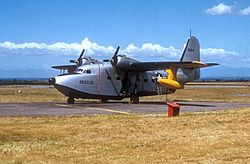
The Grumman HU-16 Albatross stands as one of the most iconic air-sea rescue aircraft in aviation history. Designed as a versatile flying boat—an aircraft capable of taking off and landing on water—the Albatross provided a critical lifeline for downed pilots and sailors across the globe for decades. Developed from the Grumman Mallard, this rugged amphibian bridged the gap between land-based operations and deep-sea rescue missions.
From its first flight on October 24, 1947, to its final military retirement by the Hellenic Navy in 1995, the Albatross served a diverse array of international operators. With 466 units built between 1949 and 1961, it became a staple of maritime patrol and search and rescue (SAR) operations.
Key Facts
- Primary Role: Air-sea rescue and maritime patrol.
- Production Years: 1949–1961.
- Total Built: 466 aircraft.
- Notable Record: Reached an altitude record of 32,883 feet in July 1973.
- Versatility: Some models featured a "triphibian" system with skis and a retractable keel for land, water, and snow operations.
- Global Reach: Operated by the US Navy, USAF, US Coast Guard, RCAF, and numerous other nations.
Design and Development
The Albatross was an evolution of the Grumman Mallard, refined to meet the demanding needs of military rescue operations. Its design emphasized durability and the ability to operate in harsh marine environments. The aircraft featured a deep hull for water stability and powerful engines to handle heavy takeoff weights from the sea.
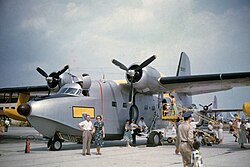
One of the most innovative adaptations was the "triphibian" configuration. By equipping the pontoons with skis and adding a retractable keel to the hull, the aircraft could operate seamlessly across land, water, and snow, making it invaluable for polar and remote region missions.
Operational History
United States Services
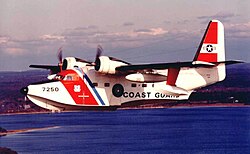
The Albatross was a cornerstone of the United States Air Force (USAF), Navy, and Coast Guard. It was extensively used during the Korean War and subsequent Cold War operations. The USAF's tenure with the aircraft ended in July 1973 with the delivery of AF Serial No. 51-5282 to the National Museum of the United States Air Force, shortly after the aircraft set a twin-engined amphibian altitude record of 32,883 feet.
International and Civil Use
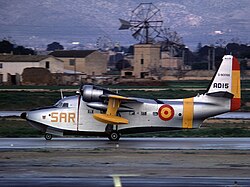
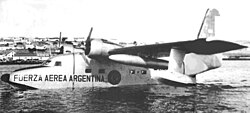
Beyond the US, the Albatross saw significant service with the Royal Canadian Air Force (RCAF) as the CSR-110 and with the Hellenic Navy. Other operators included the air forces of Argentina, Brazil, Chile, Indonesia, Japan, and Spain. In the civil sector, the G-111 variant was derived from military originals to serve commercial airline needs.
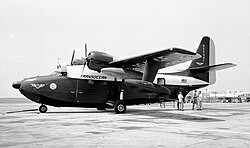
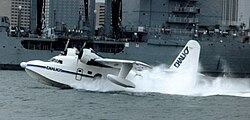
Even into the late 20th century, the Albatross remained active. For example, Chalk's International Airlines operated the aircraft in Miami and the Bahamas as late as 1987, and a specific Albatross (N44RD) successfully flew around the world in 1997.
Technical Specifications and Variants
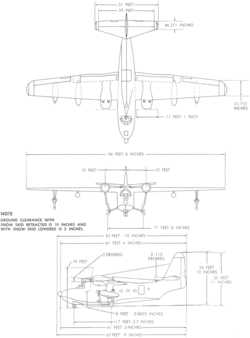
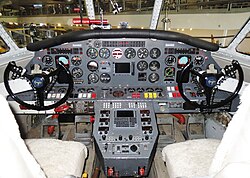
The HU-16B variant represents the standard for the aircraft's capabilities, featuring a crew of 4 to 6 and the capacity to carry 10 passengers. It was powered by two 1,275 hp engines driving 3-bladed Hamilton Standard constant-speed propellers.
| Feature | Specification |
|---|---|
| Length | 62 ft 10 in (19.15 m) |
| Wingspan | 96 ft 8 in (29.46 m) |
| Max Takeoff Weight | 37,500 lb (17,010 kg) |
| Maximum Speed | 236 mph (380 km/h) |
| Cruise Speed | 124 mph (200 km/h) |
| Range | 2,850 mi (4,590 km) |
| Service Ceiling | 21,500 ft (6,600 m) |
Notable Variants
- XJR2F-1: The early prototype developed in the 1940s.
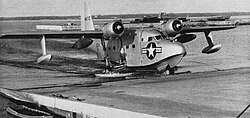
An XJR2F-1 prototype at NAS Patuxent River in the 1940s - SHU-16B: An export version modified for Anti-Submarine Warfare (ASW), featuring an AN/APS-88 radar in the nose and a MAD (Magnetic Anomaly Detector) boom in the tail.
- CSR-110: The specialized version used by the Royal Canadian Air Force.
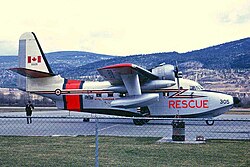
A Grumman Albatross of the RCAF - PF-1: A dedicated maritime patrol version.
Preservation and Legacy
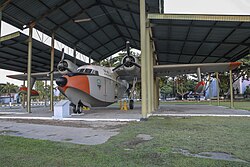
Today, the Albatross is preserved in museums worldwide, serving as a testament to the golden age of amphibious aviation. Notable examples include aircraft at the National Museum of the US Air Force in Ohio, the Hiller Aviation Museum in California, and the Museo Nacional de Aeronáutica in Argentina.
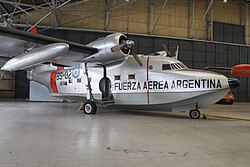
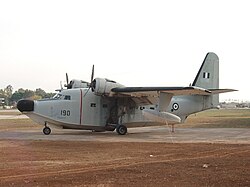
From the Hellenic Air Force Museum at Dekelia AB to the Dirgantara Mandala Museum in Indonesia, these aircraft remind us of the critical role the Albatross played in saving lives across the world's oceans.
Frequently Asked Questions
What was the primary purpose of the HU-16 Albatross?
The HU-16 Albatross was primarily designed as an air-sea rescue flying boat, used to locate and recover personnel from the ocean, as well as for maritime patrol and anti-submarine warfare.
How did the "triphibian" system work?
The triphibian system allowed the aircraft to operate from three different surfaces: land, water, and snow. This was achieved by adding skis to the pontoons and utilizing a retractable keel in the hull.
Which country was the last to retire the Albatross from military service?
The Hellenic Navy (Greece) was the last primary military operator, retiring the aircraft in 1995.
What was the Albatross's highest recorded altitude?
In July 1973, a USAF HU-16B set a world record for twin-engined amphibians by reaching an altitude of 32,883 feet (10,023 m).
What aircraft was the Albatross based on?
The HU-16 Albatross was developed from the Grumman Mallard, a civilian amphibious aircraft.