Royal Flying Corps: The Pioneers of British Military Aviation
The Royal Flying Corps (RFC) served as the aviation arm of the British Army from April 13, 1912, until April 1, 1918. Born in an era of rapid technological experimentation, the RFC evolved from a small group of officers and balloons into a massive aerial force that fundamentally changed the nature of warfare during the First World War. Operating under the allegiance of King George V, the Corps eventually merged with the Royal Naval Air Service (RNAS) to create the Royal Air Force (RAF).
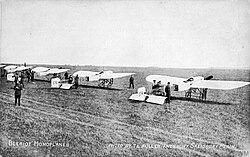
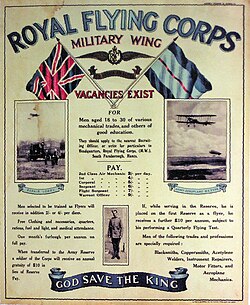
At its inception, the RFC was a modest organization. Its initial allowed strength was just 133 officers, and by the end of its first year, it operated 36 aeroplanes and 12 manned balloons. The organization was originally split into a Military Wing and a Naval Wing, though the Royal Navy formally separated its branch to create the RNAS on July 1, 1914, to maintain greater control over its specific maritime priorities.
Key Facts
- Active Period: 13 April 1912 – 1 April 1918.
- Motto: Per Ardua ad Astra ("Through Adversity to the Stars").
- Peak Strength: Approximately 3,300 aircraft by 1918.
- Primary Role: Aerial spotting, reconnaissance, and bombardment during WWI.
- Legacy: Merged with the RNAS to form the Royal Air Force (RAF).
Evolution of Aerial Warfare
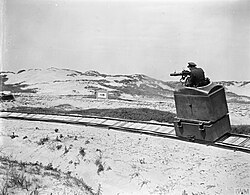
When World War I began, the RFC consisted of only five squadrons. While they were used for aerial spotting as early as September 1914, the service only became truly efficient after perfecting wireless communication (the use of radio signals) at Aubers Ridge on May 9, 1915. Similarly, aerial photography, which was attempted in 1914, only became an effective intelligence tool the following year.
By 1918, the RFC's capabilities had expanded exponentially. Photographic images could be captured from altitudes of 15,000 feet (4,600 m), with a dedicated staff of over 3,000 personnel interpreting the imagery to provide critical intelligence to ground commanders.

The Danger of Flight
One of the most harrowing aspects of service in the RFC was the lack of safety equipment. Parachutes were not available to pilots of heavier-than-air craft throughout the war. While balloonists had used parachutes for three years, the Calthrop Guardian Angel parachute was only officially adopted just as the conflict ended in 1918.
Organizational Structure and Growth
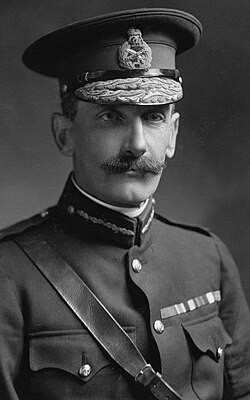
The RFC grew from a handful of squadrons into a complex hierarchy of wings, brigades, and divisions. By November 1914, the expansion necessitated the creation of wings (commanded by lieutenant-colonels), followed by brigades (commanded by brigadier-generals) in October 1915. By 1917, the force had expanded further into divisions, including a dedicated Training Division and the RFC Middle East.
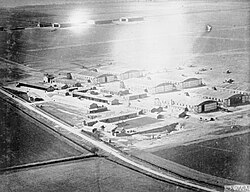
The growth was not limited to Europe. The RFC established a significant presence in Canada between 1917 and 1918, with training centers at Camp Borden, Armour Heights Field, and Leaside Aerodrome. In Egypt, training bases were established at Ismailia, Aboukir, and Abu Sueir to support operations in the region.
RFC Rank Hierarchy
The RFC utilized a structured rank system to manage its expanding personnel, ranging from high-level commanders to specialized ground crew.
| Rank Group | Example Rank | Typical Appointment |
|---|---|---|
| General Officers | Major-General | Division Commander |
| Senior Officers | Lieutenant-Colonel | Wing Commander |
| Junior Officers | Lieutenant | Pilot, Observer, Wireless Officer |
| Senior NCOs | Warrant Officer I | Sergeant Major |
| Junior NCOs | Sergeant | Armourer, Fitter, Rigger |
| Enlisted | Air Mechanic | Ground Support / Driver |
Aircraft and Operations
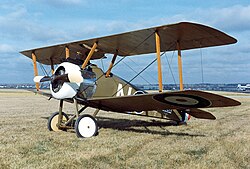
The RFC employed a vast array of aircraft, evolving from fragile reconnaissance planes to deadly fighters and heavy bombers. Notable aircraft included the Sopwith Camel, the S.E.5a, and the Bristol Fighter.
Operational roles expanded rapidly to include:
- Artillery Observation: By May 1916, 306 aircraft were equipped with wireless telegraphy to coordinate ground fire.
- Home Defence: Officially taken over in December 1915, with 11 dedicated squadrons protecting the UK by late 1916.
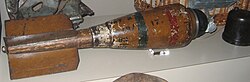
- Aerial Bombardment: Using specialized munitions, such as the 20-pound Cooper bomb.
Notable Figures
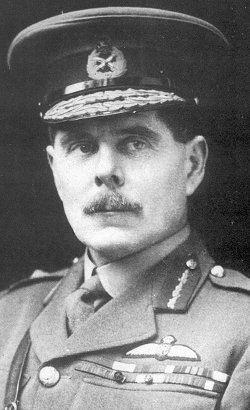
The RFC was led by influential figures such as Sir David Henderson and Hugh Trenchard. The ranks also produced legendary "aces" like Albert Ball (44 victories) and James McCudden (57 victories), as well as future leaders like Air Chief Marshal Lord Dowding and "Bomber" Harris.
The Path to the Royal Air Force
The First World War took a heavy toll on the RFC. Between 1914 and 1918, the combined RFC/RNAS/RAF casualties totaled 9,378 killed or missing and 7,245 wounded. Despite these losses, the force logged 900,000 flying hours and claimed over 7,000 German aircraft and balloons destroyed or driven down.
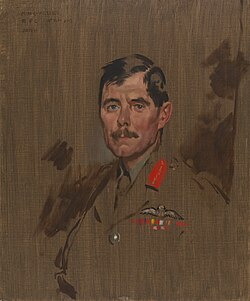
On April 1, 1918, the RFC and RNAS were amalgamated to form the Royal Air Force (RAF). This merger created a unified air ministry and a powerhouse of aviation, which by the start of 1919 boasted 114,000 personnel and 4,000 combat aircraft.
Frequently Asked Questions
Did RFC pilots use parachutes during World War I?
No, parachutes were not available to pilots of heavier-than-air craft in the RFC during the war. They were only used by balloonists. The Calthrop Guardian Angel parachute was officially adopted only as the war ended.
What was the primary purpose of the RFC at the start of the war?
Initially, the RFC focused on aerial spotting and reconnaissance to assist ground forces, though it later expanded into fighter combat and strategic bombardment.
When did the RFC become the RAF?
The Royal Flying Corps merged with the Royal Naval Air Service (RNAS) on April 1, 1918, to form the Royal Air Force.
Who were some of the most successful RFC pilots?
Some of the most prominent "aces" included James McCudden with 57 victories and Albert Ball with 44 victories.
Where did the RFC conduct training outside of the UK?
The RFC had significant training operations in Canada (such as Camp Borden) and Egypt (including bases at Ismailia and Abu Sueir).