GreeksGreek historyMycenaean GreeceHellenistic periodByzantine Empire

Greeks: A Comprehensive History of Culture, Identity, and Diaspora

Greeks: A Comprehensive History of Culture, Identity, and Diaspora The Greeks are an ethnic group with a legacy spanning several millennia, characterized by a profound influence on Wester...

Greeks: A Comprehensive History of Culture, Identity, and Diaspora

The Greeks are an ethnic group with a legacy spanning several millennia, characterized by a profound influence on Western civilization. From the early Bronze Age civilizations to the modern global diaspora, the Greek identity has been forged through a combination of shared descent (hómaimon, meaning "of the same blood") and a shared language (homóglōsson, meaning "speaking the same tongue").

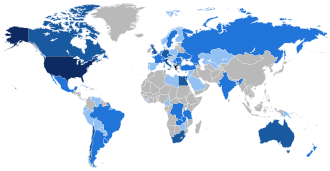
Today, the global Greek population is estimated between 14 and 17 million people, with significant communities residing not only in Greece and Cyprus but across the Americas, Europe, and Australia.
ภาพประกอบบทความ
ภาพประกอบจากบทความต้นฉบับ

Key Facts

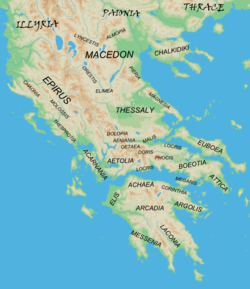
Map showing the major regions of mainland ancient Greece, and adjacent "barbarian" lands
  • Total Population: Approximately 14–17 million worldwide.
  • Primary Language: Greek, recognized as the world's oldest recorded living language.
  • Dominant Religion: Greek Orthodox Christianity.
  • Core Regions: Greece and Cyprus, with a massive diaspora in the United States, Germany, and Australia.
  • Historical Legacy: Spans from the Mycenaean era through the Hellenistic and Byzantine periods to the modern era.

Historical Evolution
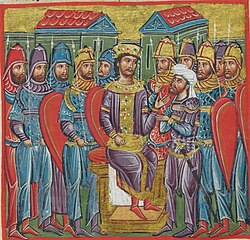
Alexander the Great in Byzantine Emperor's clothes, by a manuscript depicting scenes from his life (between 1204 and 1453)

Origins and Mycenaean Greece

The roots of Greek civilization trace back to the 3rd millennium BC. The Mycenaean period (16th–11th century BC) represented the first advanced civilization in mainland Greece, known for its palatial centers and the use of Linear B script.
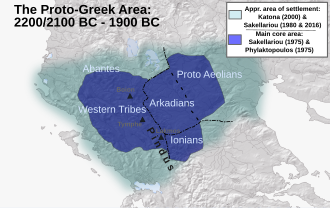
Proto-Greek area of settlement (2200/2100–1900 BC) suggested by Katona (2000), Sakelariou (2016, 1980, 1975) and Phylaktopoulos (1975)
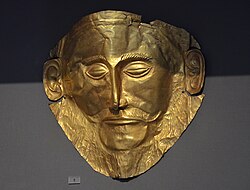
Mycenaean funeral mask known as "Mask of Agamemnon", 16th century BC

Ancient Greece and the Hellenistic Age

Following the Mycenaean collapse, the Archaic and Classical periods saw the rise of the city-state (polis) and the birth of philosophy, democracy, and advanced science. Figures like Aristarchus of Samos proposed the first heliocentric system in the 3rd century BC, marking a milestone in human astronomy.
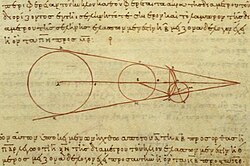
Aristarchus of Samos was the first known individual to propose a heliocentric system, in the 3rd century BC.

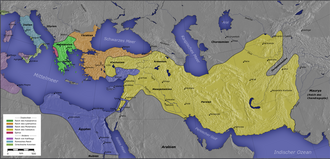
The conquests of Alexander the Great ushered in the Hellenistic Age, spreading Greek culture, language, and administration across vast territories from Egypt to Central Asia.
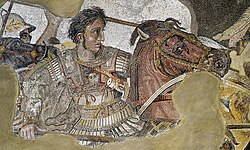
Alexander the Great, whose conquests led to the Hellenistic Age
The Hellenistic realms c. 300 BC as divided by the Diadochi; the Μacedonian Kingdom of Cassander (green), the Ptolemaic Kingdom (dark blue), the Seleucid Empire (yellow), the areas controlled by Lysimachus (orange) and Epirus (red)

The Roman and Byzantine Eras

After the Roman conquest, Greek culture continued to thrive, eventually becoming the cultural bedrock of the Byzantine Empire. The Byzantines preserved classical knowledge and integrated it with Orthodox Christianity. By the 14th century, the Byzantine emperor was frequently referred to as the "Emperor of the Hellenes." Scholars like Gemistos Plethon and Basilios Bessarion were instrumental in transmitting this classical knowledge to Western Europe, fueling the Renaissance.
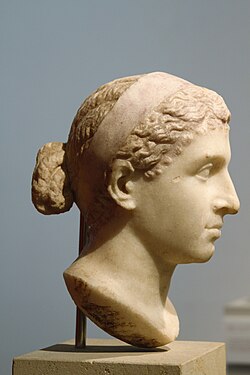
Bust of Cleopatra VII (Altes Museum, Berlin), the last ruler of a Hellenistic kingdom (apart from the Indo-Greek Kingdom)
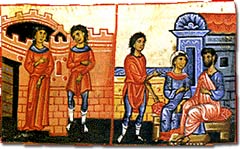
Scenes of marriage and family life in Constantinople
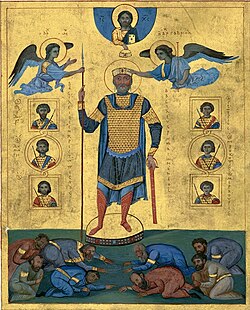
Emperor Basil II (11th century) is credited with reviving the Byzantine Empire.
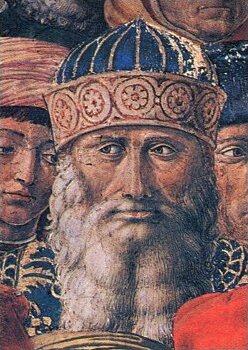
Gemistos Plethon, one of the most renowned philosophers of the late Byzantine era, a chief pioneer of the revival of Greek scholarship in Western Europe
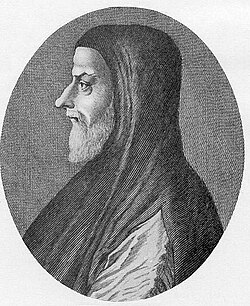
The Byzantine scholar and cardinal Basilios Bessarion (1395/1403–1472) played a key role in transmitting classical knowledge to Western Europe, contributing to the Renaissance.

Ottoman Rule and Modern Greece

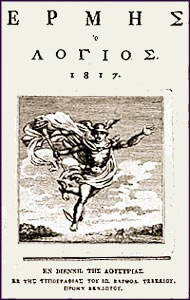
Following the fall of Constantinople, Greeks lived under Ottoman rule for centuries. The Modern Greek Enlightenment, led by figures such as Adamantios Korais and publications like Hermes o Logios, helped revive national consciousness, leading to the independence movements of the 19th century.
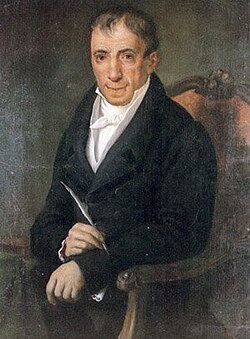
Adamantios Korais, leading figure of the Modern Greek Enlightenment
The cover of Hermes o Logios, a Greek literary publication of the late 18th and early 19th centuries in Vienna with major contribution to the Modern Greek Enlightenment

Demographics and Global Distribution
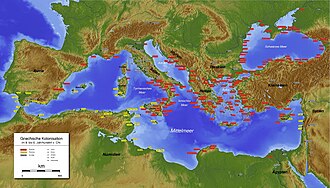
Greek colonization in antiquity

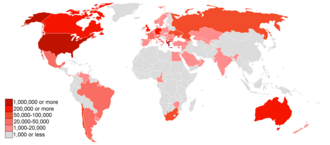
While the heart of the Greek population remains in the Mediterranean, the 20th century saw a significant expansion of the Greek diaspora due to economic migration and political upheavals.

Significant Greek Populations by Region
Region/Country Estimated Population Data Source/Year
Greece 9,903,268 2011 Census
United States 1,279,000 – 3,000,000 2016 Estimate
Cyprus 659,115 – 721,000 2011 Census
Germany 449,000 2021 Estimate
Australia 424,744 2021 Census
United Kingdom 290,000 – 345,000 2011 Estimate
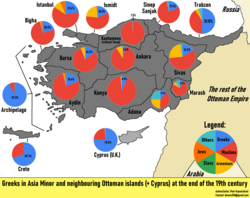
Distribution of ethnic Greek population in Anatolia at the end of the 19th century
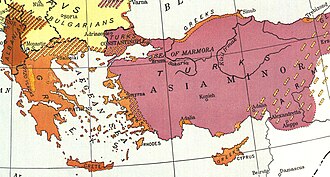
Distribution of ethnic groups in 1918, National Geographic
Greek diaspora (20th century)

Culture, Science, and Identity

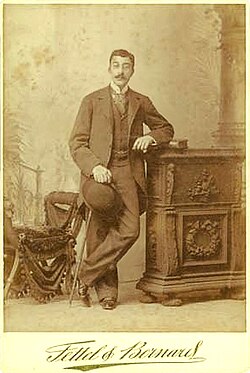
Poet Constantine P. Cavafy, a native of Alexandria, Egypt

Language and Religion

The Greek language has evolved from the early alphabets of the 8th century BC to its modern form, maintaining a continuous literary tradition. Religion remains a central pillar of identity, with the Greek Orthodox Church serving as a primary cultural institution.
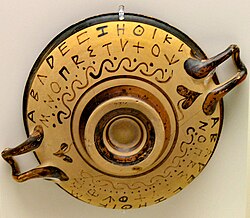
Early Greek alphabet, c. 8th century BC
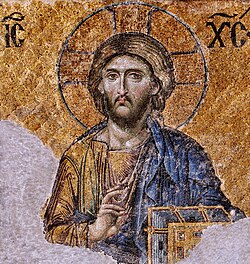
Christ Pantocrator mosaic in Hagia Sophia, Istanbul
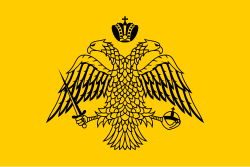
The flag of the Greek Orthodox Church is based on the coat of arms of the Palaiologoi, the last dynasty of the Byzantine Empire.

Arts and Global Contributions

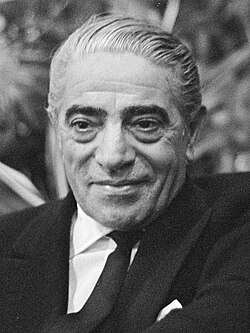
Greeks have made enduring contributions to the arts and sciences. In the modern era, this is evident in the global success of artists such as soprano Maria Callas and composers like Mikis Theodorakis and Vangelis. In commerce, the Greek shipping industry became world-renowned, exemplified by figures like Aristotle Onassis.
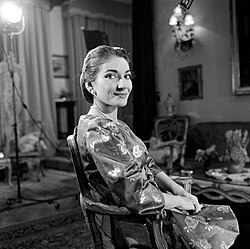
Renowned Greek soprano Maria Callas
Aristotle Onassis, the best-known Greek shipping magnate worldwide

Genetics and Physicality

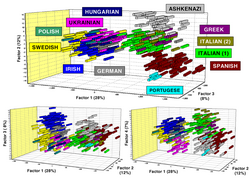
Modern genetic research, including autosomal SNP analysis, shows that Greek populations share ancestral components with other Balkan and Mediterranean groups, reflecting a history of migration and admixture in the region.
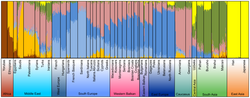
Admixture analysis of autosomal SNPs of the Balkan region in a global context on the resolution level of 7 assumed ancestral populations: African (brown), South/West European (light blue), Asian (yellow), Middle Eastern (orange), South Asian (green), North/East European (dark blue) and Caucasian/Anatolian component (beige).
Factor correspondence analysis comparing different individuals from European ancestry groups

Frequently Asked Questions

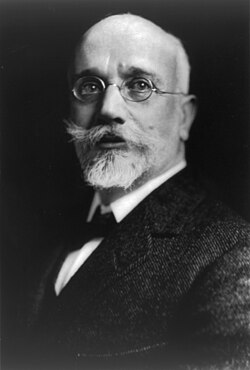
Eleftherios Venizelos was the leading political figure of 20th century Greece.
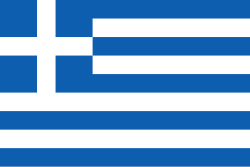
The national flag of Greece is commonly used as a symbol for Greeks worldwide.

What is the total global population of Greeks?

The total population is estimated to be between 14 and 17 million people, including those in Greece, Cyprus, and the global diaspora.

What is the significance of the Greek language?

Greek is recognized as the world's oldest recorded living language, providing a direct linguistic link to the foundations of Western philosophy and science.

Who were the Diadochi?

The Diadochi were the successors of Alexander the Great who divided his vast empire into several Hellenistic kingdoms, including the Ptolemaic and Seleucid empires, around 300 BC.

How did the Byzantine Empire influence the Renaissance?

Byzantine scholars, such as Basilios Bessarion, transmitted classical Greek texts and knowledge to Western Europe, which played a key role in sparking the intellectual revival known as the Renaissance.

What defines Greek identity?

Greek identity is traditionally based on shared descent (hómaimon) and a shared language (homóglōsson), further reinforced by the Greek Orthodox faith and a common historical narrative.