German Reich: The Evolution of the German Nation State (1871–1945)
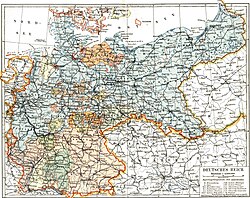
The German Reich (from the German Deutsches Reich) served as the official constitutional name for the German nation state from 1871 until its collapse in 1945. While frequently translated into English as the "German Empire," the term Reich more accurately denotes a "realm" or territorial "reach," as it does not inherently imply a monarchy.
The state was founded on the principle that its authority and sovereignty derived from a unitary Volk (national people), exercised over a state territory with boundaries that shifted over time. This political entity transitioned through three distinct eras: a monarchy, a democratic republic, and a totalitarian dictatorship.
Key Facts
- Official Duration: 1871 to 1945.
- Founding Date: Proclaimed on January 18, 1871, at the Palace of Versailles.
- Founding Figures: Otto von Bismarck and Wilhelm I of Prussia.
- Three Main Periods: The German Empire (1871–1918), the Weimar Republic (1918–1933), and Nazi Germany (1933–1945).
- Greater German Reich: A term made mandatory in official documents in 1943 following the 1938 annexation of Austria.
- Legal End: De facto collapse on April 30, 1945, with the death of Adolf Hitler.
The Distinction Between "Reich" and "Empire"
In English historiography, a critical distinction is made between the terms "German Empire" and "German Reich." The German Empire refers specifically to the period between 1871 and 1918, when the state was ruled by an emperor (Kaiser). During this time, the Hohenzollern dynasty led a federation of monarchies, including Prussia, Bavaria, and Saxony.
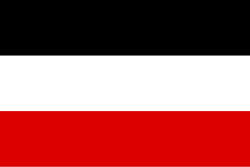
After the monarchy was abolished during the German Revolution of 1918–1919, the state continued to be called the Deutsches Reich, but it was no longer an empire. In international treaties and legal documents, such as the Geneva Conventions, the term "German Reich" was used to denote the "Realm" or "State" rather than a monarchical empire.
Evolution of the State: From Territory to People
Initially, the 1871 constitution defined the Reich in territorial terms—the combined lands of the participating monarchies. However, this shifted toward a definition based on jus sanguinis (right of blood), where the state was identified with the German national people regardless of specific borders.
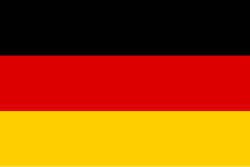
This transition was formalized in the Weimar Republic's constitution, which stated that the Reich derived its authority from the German people. This concept of the "national people" as the primary source of legitimacy persisted through the Nazi era, though the Nazis viewed the Weimar period as a historical aberration, often dismissively calling it "the System" or the "Republic of Weimar."
The Third Reich and the Greater German Reich
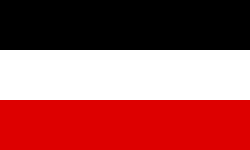
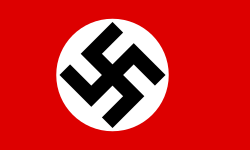
The term "Third Reich" was popularized by Arthur Moeller van den Bruck in 1923, who envisioned a reinvigorated state following the Holy Roman Empire (the first) and the 1871 monarchy (the second). The Nazi regime later adopted this identity.
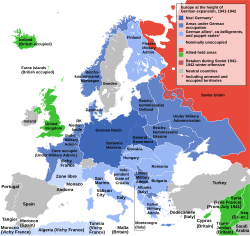
Following the Anschluss (annexation) of Austria in March 1938, the state began using the name Greater German Reich (Großdeutsches Reich). By June 26, 1943, a decree by Hans Lammers made this name mandatory for all official documentation.
Collapse and Post-War Transition
The German Reich effectively ceased to exist on April 30, 1945. The Allies refused to recognize the legitimacy of the Flensburg Government formed by Karl Dönitz. On June 5, 1945, the Berlin Declaration established the Allied Control Council, granting the four powers supreme authority over German territory.
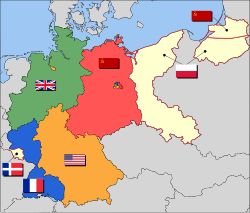
When the Federal Republic of Germany (West Germany) was established in 1949, it claimed to be a continuation of the German Reich rather than a mere successor state. However, it replaced the prefix Reichs- with Bundes- (Federal) in all official titles. For example, the Reichskanzler became the Bundeskanzler.
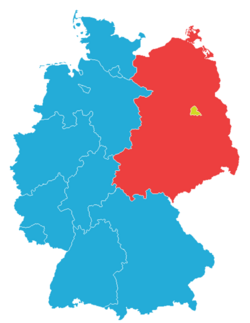
Reunification and Final Territorial Settlement
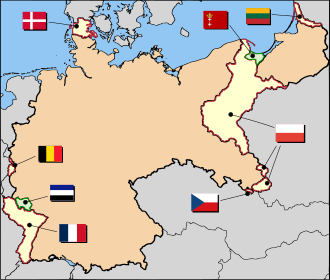
With the reunification of Germany on October 3, 1990, the new state described itself as "United Germany." Under the Treaty on Final Settlement, Germany renounced all territorial claims beyond the borders of East Germany, West Germany, and Berlin.
Amendments to the Basic Law (the German constitution) explicitly stated that unification was complete. This permanently excluded former eastern territories in Poland and Russia, as well as western territories like Alsace-Lorraine, from ever being part of the German state again.
| Period | Official/Common Name | Government Type | Key Characteristic |
|---|---|---|---|
| 1871–1918 | German Empire | Constitutional Monarchy | Unification under Prussian leadership |
| 1918–1933 | Weimar Republic | Parliamentary Republic | Sovereignty derived from the people |
| 1933–1945 | Nazi Germany / Third Reich | Totalitarian Dictatorship | Expansion into Greater German Reich |
Frequently Asked Questions
What is the difference between the German Reich and the German Empire?
The "German Reich" is the overarching constitutional name for the German state from 1871 to 1945. The "German Empire" refers specifically to the first phase of this period (1871–1918) when the state was a monarchy ruled by a Kaiser.
Why was the term "Greater German Reich" adopted?
The term was introduced after the annexation of Austria in 1938 to reflect the expanded territorial reach of the state, eventually becoming the mandatory official name in 1943.
Did the Federal Republic of Germany continue the German Reich?
The Federal Republic asserted that it was a continuation of the German Reich within its boundaries, but it replaced all "Reich" terminology with "Federal" (Bundes) to distance itself from the previous regime's titles.
How did the 1990 reunification affect territorial claims?
The Treaty on Final Settlement and amendments to the Basic Law forced the unified German state to renounce all claims to territories outside its 1990 borders, permanently excluding former territories in Russia and Poland.
Who were the primary architects of the 1871 unification?
The unification was led by Otto von Bismarck, the Chancellor, and Wilhelm I of Prussia, who was proclaimed German Emperor at the Palace of Versailles.