German Empire: The Rise and Fall of the Second Reich (1871–1918)
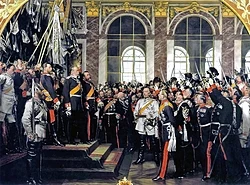
The German Empire, often referred to as the Second Reich, was a formidable federal semi-constitutional monarchy that existed from 1871 until 1918. Emerging from a series of conflicts and diplomatic maneuvers, it unified various German states into a single nation-state, fundamentally altering the balance of power in Europe. From its proclamation at the Palace of Versailles to its collapse following the First World War, the Empire was characterized by rapid industrialization, complex internal social tensions, and an ambitious pursuit of global influence.
Key Facts
- Duration: 1871 to 1918.
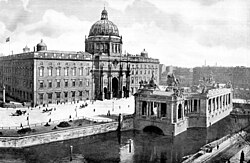
- Capital: Berlin.
- Government: Federal semi-constitutional monarchy.
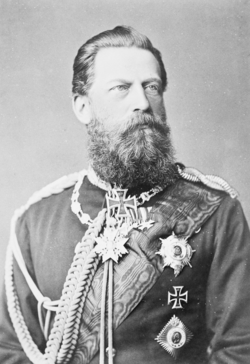
- Key Leaders: Emperors Wilhelm I, Frederick III, and Wilhelm II; Chancellor Otto von Bismarck.
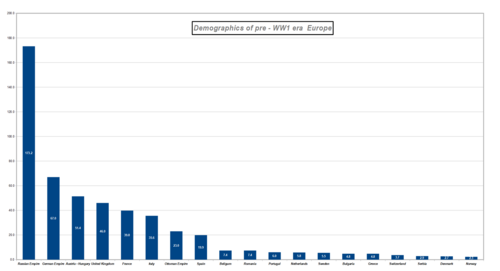
- Population: Grew from approximately 41 million in 1871 to nearly 65 million by 1910.
- Demise: Ended with the German Revolution and the abdication of Wilhelm II in November 1918.
The Foundation and the Bismarck Era
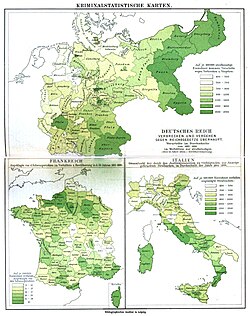
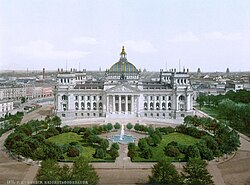
The Empire was officially founded on January 18, 1871, following the unification of German states under the leadership of Prussia. The early decades were dominated by Otto von Bismarck, the first Chancellor, whose strategic diplomacy and domestic policies shaped the new state. The government structure consisted of the Bundesrat (Federal Council) and the Reichstag (Imperial Diet), the latter being the legislative body.
Domestic Consolidation and Social Tension
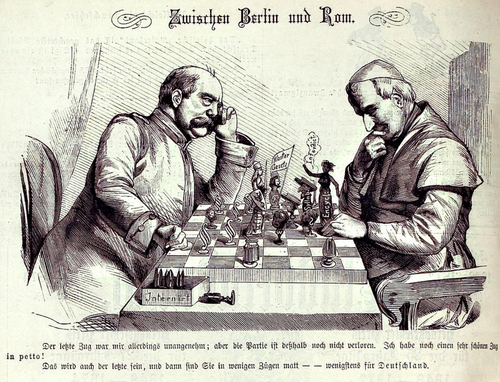
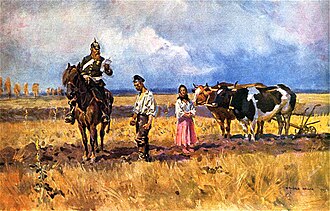
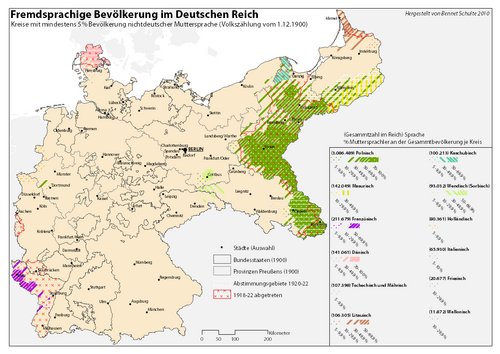
Bismarck sought to unify the empire not just politically, but culturally. This led to the Kulturkampf (Culture Struggle), a period of tension between the state and the Catholic Church hierarchy. Additionally, the era saw efforts toward Germanization—the forced assimilation of linguistic minorities—and the rise of antisemitism. In the eastern territories, this manifested in the deportation of ethnic Poles.
Economic and Industrial Power
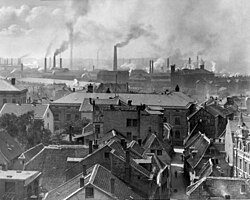
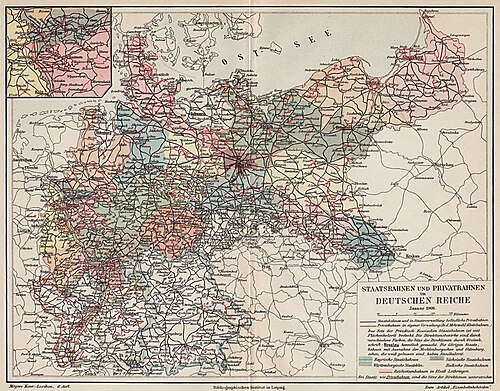
The German Empire underwent a massive industrial transformation, becoming a global leader in steel, chemicals, and manufacturing. The Krupp works in Essen became a symbol of this industrial might. This growth was supported by a rapidly expanding railway network that connected the far reaches of the empire, facilitating both trade and military mobilization.
Global Ambitions and Colonialism
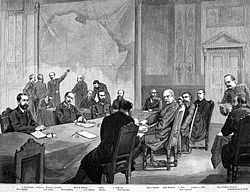
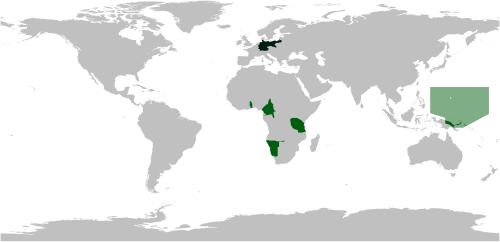
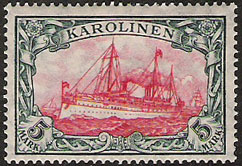
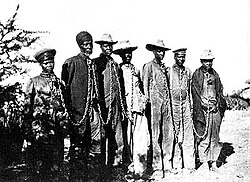
Under Bismarck and later Kaiser Wilhelm II, Germany sought its "place in the sun" through colonial expansion. The Berlin Conference of 1884 was a pivotal event where European powers partitioned Africa. Germany established protectorates and colonies across Africa and the Pacific, including the Caroline Islands. However, this expansion was often brutal, as seen in the suppression of the Herero revolt between 1904 and 1908.
The Wilhelmine Era and the Path to War
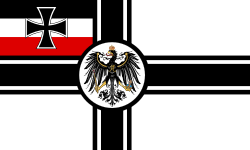
![Flag of the German colonial empire[citation needed]](/images/34/de/34ded6fa69d8745b3b4d6985e24786679e291806ebf550df6f726cee2e9cb2b0.webp)
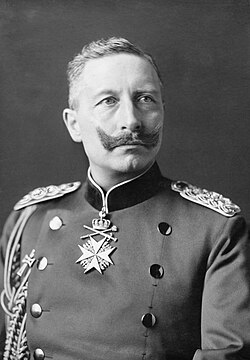
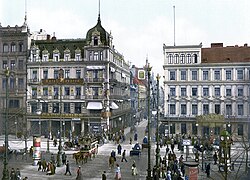
Following Bismarck's resignation in 1890, Kaiser Wilhelm II took a more active role in governing. His reign was marked by a more aggressive foreign policy and a naval arms race with Great Britain. While Berlin grew into a modern metropolis, the political climate became increasingly volatile.
World War I and Collapse
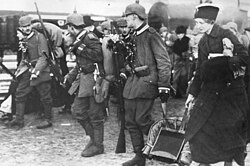
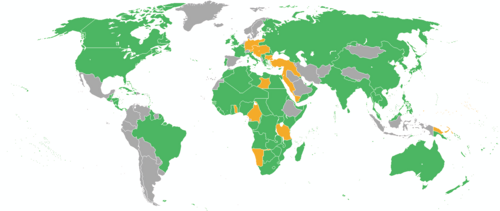
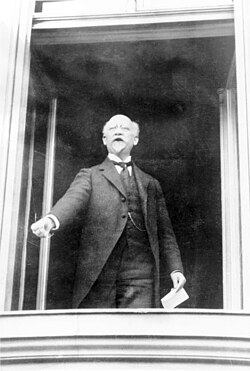
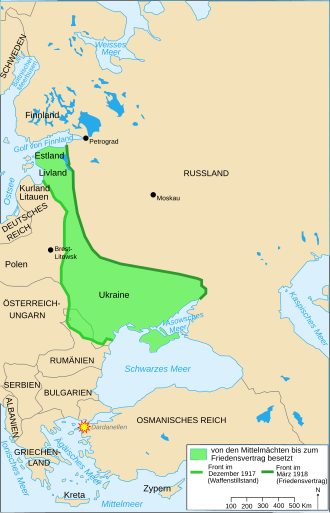
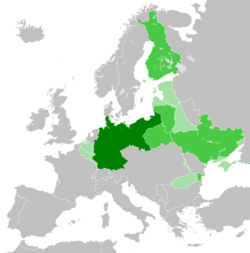
Germany entered World War I on August 1, 1914, fighting as part of the Central Powers. The conflict was fought on two primary fronts: the Western Front and the Eastern Front. Despite early gains and the occupation of various territories, the strain of total war and the Allied blockade led to internal collapse. By 1918, the German Revolution erupted, leading to the abdication of the Kaiser on November 9, 1918, and the proclamation of a republic.
Imperial Structure and Demographics
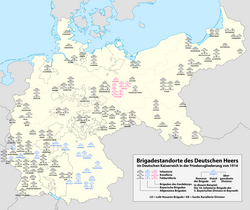
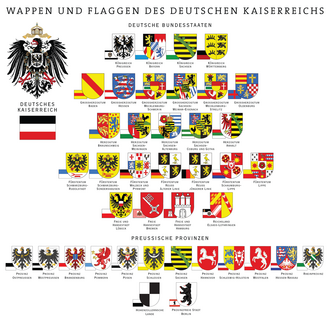
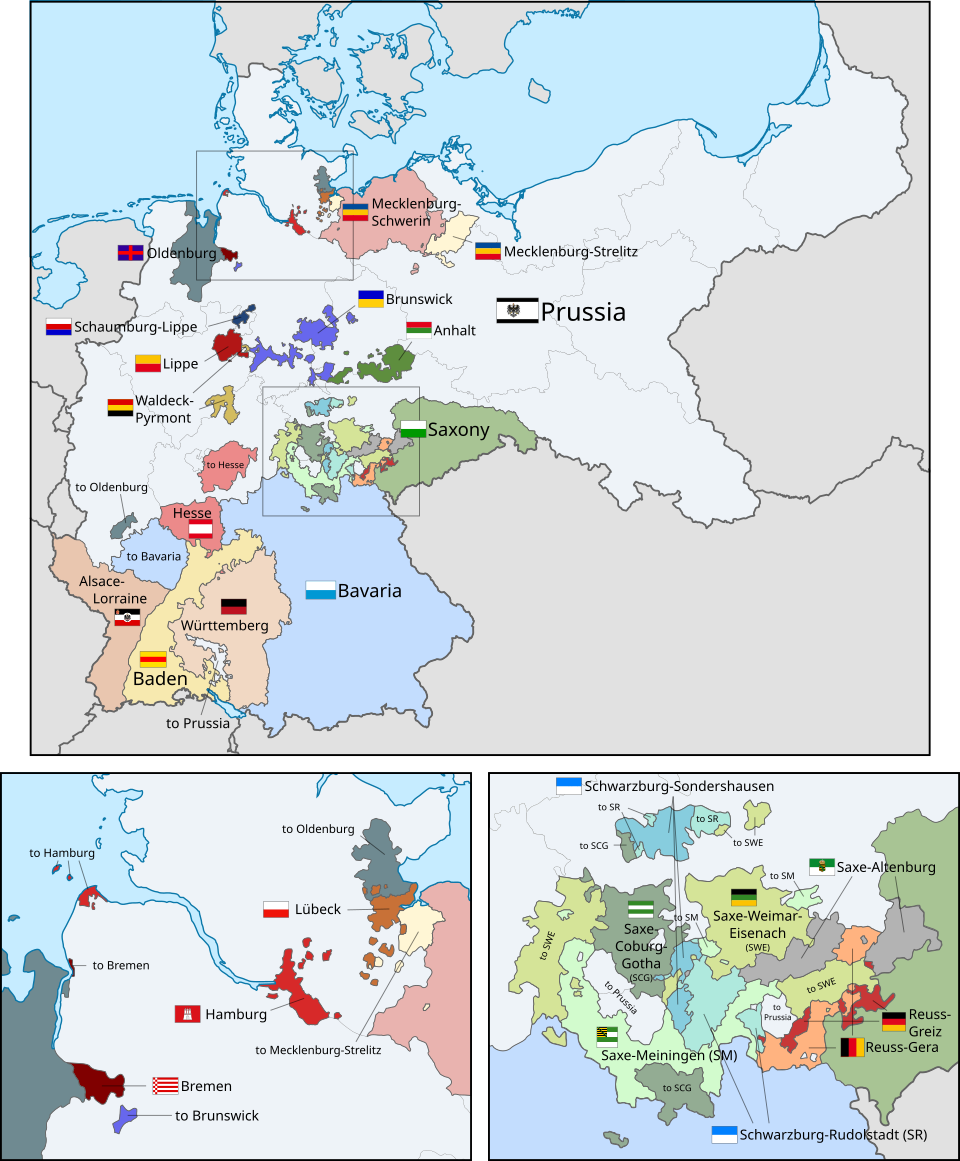
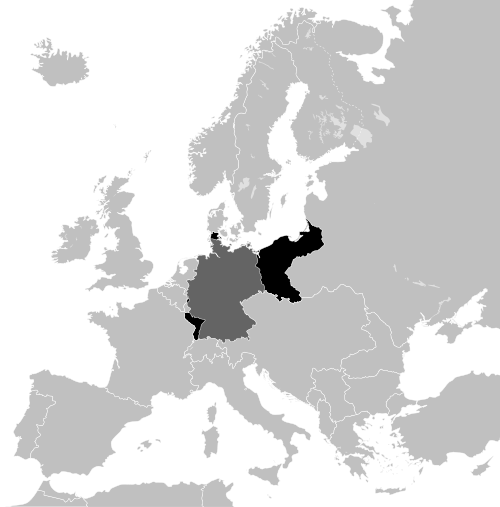
The Empire was a federation of various kingdoms, grand duchies, and free cities, with Prussia being the most dominant state. The population was predominantly Protestant, though significant Catholic and Jewish minorities existed, with regional concentrations varying by state.
| Category | Details |
|---|---|
| Official Language | German |
| Major Religions (1880) | Protestant (62.63%), Catholic (35.89%), Jewish (1.24%) |
| Area (1910) | 540,858 km² (excluding colonies) |
| Population (1910) | 64,925,993 |
| Successor State | Weimar Republic |
Frequently Asked Questions
Who was the primary architect of the German Empire?
Otto von Bismarck, the first Chancellor, was the primary architect. He utilized a combination of diplomacy and "blood and iron" (military force) to unify the German states under Prussian leadership.
What was the Kulturkampf?
The Kulturkampf was a domestic conflict initiated by Bismarck to reduce the influence of the Catholic Church in the newly formed German Empire, aiming to consolidate state power over religious authority.
How did the German Empire end?
The Empire collapsed in November 1918 due to the pressures of World War I and the subsequent German Revolution. This led to the abdication of Kaiser Wilhelm II and the proclamation of the Weimar Republic.
Which territories were lost after the Empire's fall?
Germany lost significant territories, including Alsace-Lorraine to France, Northern Schleswig to Denmark, and various eastern territories to Poland, Lithuania, and Russia.
What was the role of the Reichstag?
The Reichstag served as the legislative body of the Empire, though the Emperor and the Chancellor held the most significant executive power, making it a semi-constitutional monarchy.