The Eternal Allure of the Rose: A Comprehensive Guide to the Genus Rosa
Few flowers are as globally recognized or culturally cherished as the rose. Whether appearing as a wild shrub in a coastal dune or a meticulously bred hybrid in a royal garden, the rose is more than just a flower; it is a woody perennial plant of the genus Rosa within the family Rosaceae. With over three hundred species and tens of thousands of cultivars, roses exhibit a stunning diversity in form, ranging from trailing shrubs to climbing vines that can reach heights of up to 7 metres (23 ft).
Key Facts
- Scientific Name: Genus Rosa, Family Rosaceae.
- Diversity: Over 300 species and tens of thousands of cultivars.
- Global Reach: Native primarily to Asia, with presence in Europe, North America, and Northwest Africa.
- Botanical Feature: Possesses "prickles" (epidermal outgrowths) rather than true botanical thorns.
- Nutritional Value: Rose hips are exceptionally rich in vitamin C.
- National Symbol: The rose is the floral emblem of the United States.
Botanical Characteristics
The anatomy of a rose is designed for resilience and attraction. Their leaves are arranged alternately on the stem and are typically pinnate—meaning they consist of a central axis with 5 to 13 leaflets. Most roses are deciduous, though some species from Southeast Asia remain evergreen. The leaflets usually feature serrated margins and may have small prickles on the underside of the stem.
The Truth About "Thorns"
While commonly referred to as thorns, the sharp growths on a rose stem are technically prickles. Unlike true thorns, which are modified stems, prickles are outgrowths of the epidermis (the outer layer of tissue). These sickle-shaped hooks help the plant cling to other vegetation as it grows. In species like Rosa rugosa, densely packed straight prickles may serve to deter browsing animals or trap wind-blown sand to protect roots in coastal environments. Research has shown that these structures are controlled by the LOG gene.
Flower Anatomy and Color
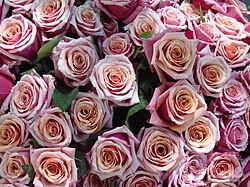
Most rose species produce flowers with five petals and five sepals, though some, such as Rosa omeiensis and Rosa sericea, typically have four. The petals are often divided into two lobes and appear in a spectrum of colors, including white, pink, red, orange, and yellow. These petals form a cup or disc that surrounds the gynoecium, with multiple superior ovaries that eventually develop into fruits.
Reproduction and Evolution
Roses rely on insects for pollination. Once fertilized, the ovary develops into a berry-like aggregate fruit known as a hip. These hips are generally red, though some species produce dark purple or black fruit. Each hip consists of a fleshy outer layer called the hypanthium, which houses 5 to 160 achenes (dry, single-seeded fruits). Because they are highly nutritious and rich in vitamin C, hips are often eaten by birds, which aids in seed dispersal.
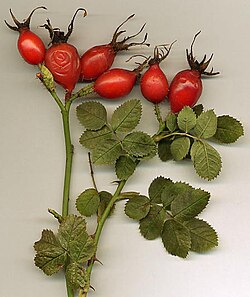
The evolutionary history of the rose is ancient, with the oldest remains dating back to the Late Eocene in Colorado. By the early Oligocene, roses had spread to Europe. Modern garden roses owe much of their diversity to 18th-century China, specifically the introduction of Rosa chinensis. Recent genomic studies suggest that roses have evolved rapidly to adapt to stress and DNA damage, likely a result of frequent hybridization between species.
Classification of the Genus Rosa
The genus Rosa is divided into four distinct subgenera based on their physical characteristics:
- Hulthemia: Contains two species from Southwest Asia (R. persica and R. berberifolia) that lack compound leaves.
- Hesperrhodos: Includes North American species R. minutifolia and R. stellata.
- Platyrhodon: Consists of the East Asian chestnut rose (R. roxburghii), known for its flaky bark.
- Rosa: The largest subgenus, further divided into 11 sections including Banksianae, Caninae, and Chinensis.
Practical Uses of the Rose
Ornamental Gardening and Cut Flowers
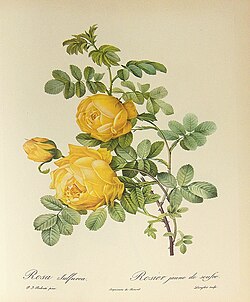
Roses are among the most popular ornamental plants in the world. Cultivation dates back to at least 500 BC in China, Persia, and the Mediterranean. Today, thousands of hybrids exist, many of which are "double-flowered," where stamens have evolved into extra petals. In the commercial cut-flower industry, roses are harvested in the bud stage and refrigerated to maintain freshness. Some are even artificially colored using dyed water to create "rainbow roses."
Perfumery and Essential Oils
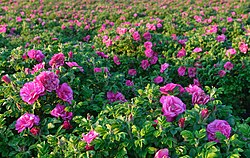
The fragrance of the rose is captured through steam distillation of crushed petals to create attar of roses (rose oil). A more concentrated version, "Rose Absolute," is produced using solvent extraction with hexane. The production is labor-intensive; it can take up to 2,000 flowers to produce a single gram of oil. The primary chemical constituents responsible for the scent include the alcohols geraniol and L-citronellol, along with rose camphor and $\beta$-Damascenone.

Culinary Applications
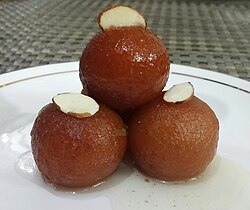
Roses are utilized in various cuisines, particularly in South Asian, Persian, and Middle Eastern cooking. Rose water is a staple in sweets such as baklava, Turkish delight, and gulab jamun. In the Indian subcontinent, a sweet preserve called gulkand is common, as is the rose-flavored squash Rooh Afza. Additionally, rose hips are processed into jams, jellies, syrups, and teas due to their high vitamin C content.
Art, Symbolism, and Culture
The rose has served as a powerful symbol across diverse civilizations. In ancient Greece, it was linked to Aphrodite, the goddess of love. In Christianity, the rose became associated with the Virgin Mary, eventually inspiring the creation of the rosary. In 15th-century England, the red and white roses symbolized the rival Houses of Lancaster and York during the Wars of the Roses, later merging into the Tudor rose.

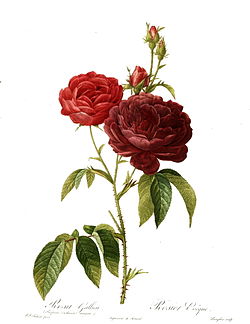
In art, the rose has been a favorite subject for masters such as Pierre-Joseph Redouté, Henri Fantin-Latour, and Claude Monet. Beyond Western culture, the term bara (rose) in Japan has been reappropriated since the 1960s as a symbol within gay media, referencing the Greek myth of King Laius and the god Eros.
Summary of Rose Characteristics
| Feature | Description |
|---|---|
| Plant Type | Woody perennial (shrubs or climbers) |
| Flower Colors | White, pink, red, orange, yellow |
| Fruit Type | Hip (aggregate fruit containing achenes) |
| Key Chemical Compounds | Geraniol, L-citronellol, $\beta$-Damascenone |
| Primary Native Regions | Asia, Europe, North America, Northwest Africa |
| Key Nutritional Component | Vitamin C (found in hips) |
Frequently Asked Questions
Are the spikes on a rose actually thorns?
No. Botanically, they are called prickles. While true thorns are modified stems, prickles are outgrowths of the epidermis, the plant's outer layer of tissue.
What is a rose hip?
A rose hip is the fruit of the rose plant. It is a berry-like aggregate fruit that develops from a fertilized ovary and is known for being a rich source of vitamin C.
How is rose oil produced?
Rose oil, or attar of roses, is produced by steam distilling crushed petals. A darker version called "Rose Absolute" is created using solvent extraction with hexane.
Which species are the primary sources for rose oil?
The damask rose (Rosa × damascena 'Trigintipetala') is commonly used in Bulgaria, Iran, and Germany, while Rosa × centifolia is used in other parts of the world.
What is the significance of the Tudor rose?
The Tudor rose is a heraldic emblem that combines the red rose of the House of Lancaster and the white rose of the House of York, symbolizing the end of the Wars of the Roses and the unification of England under the Tudor dynasty.