Hypanthium: The Specialized Floral Cup of Angiosperms
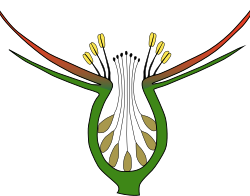
In the diverse world of angiosperms (flowering plants), nature has developed intricate structures to ensure successful reproduction. One such specialized feature is the hypanthium, also known as a floral cup. This structure serves as a foundational hub where the basal portions of the calyx (sepals), the corolla (petals), and the stamens fuse to form a cup-shaped tube.
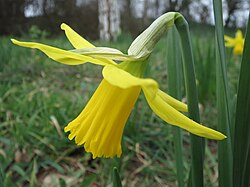
While it is sometimes referred to as a floral tube—a term that can also describe a corolla or calyx tube—the hypanthium is a distinct anatomical feature. Because its shape and dimensions vary significantly between species, botanists often use it as a diagnostic tool for plant identification.
Key Facts
- Definition: A cup-shaped tube formed by the fusion of the bases of the sepals, petals, and stamens.
- Primary Function: Often houses nectaries to attract pollinators and provides structural support for the flower.
- Common Names: Known as a "hip" in roses and a "gum nut" in eucalypts.
- Diagnostic Value: Its presence and shape help identify families such as Rosaceae, Grossulariaceae, and Fabaceae.
- Reproductive Role: Protects pollen from weather and facilitates cross-pollination by animals and wind.
Structural Variations and Identification
The hypanthium is not uniform across the plant kingdom. Its geometry can range from obconic (inverted cone) shapes, as seen in toyon (Heteromeles), to saucer-like forms found in Mitella caulescens. In some species, the hypanthium is so deep and narrow that the flower appears to have an inferior ovary, meaning the ovary is positioned below the other attached floral parts.
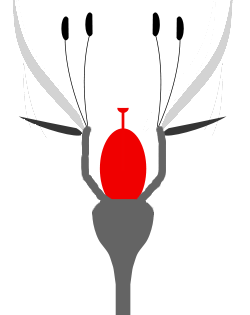
In the myrtle family, the relationship between the hypanthium and the ovary varies; it may surround the ovary loosely, fit tightly, or even fuse directly to the ovary walls. The outer rims of the hypanthium serve as the attachment points for the calyx lobes, petals, and stamens.
The Hypanthium in Specific Families
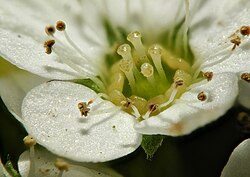
The Rosaceae (rose family) is a prime example where a floral cup is always present. In these plants, the hypanthium is lined with nectaries—specialized tissues that produce nectar. This sweet substance attracts bees and birds, which pick up pollen from the hypanthium lining and transfer it to other flowers, facilitating essential cross-pollination.
Other examples include the pomegranate (Punica granatum), where the petals fall away early, leaving the hypanthium, sepal lobes, and stamens to develop into the outer layer of the resulting fruit.
Biological Importance and Adaptation
Beyond attracting pollinators, the hypanthium provides critical adaptive advantages. By acting as a protective vessel, it shields pollen from harsh weather, increasing the likelihood of fertility. It serves as a medium to sustain pollen until it can be collected by pollinators such as moths, beetles, bats, butterflies, birds, and bees, or dispersed by the wind.
Additionally, the hypanthium provides vital structural integrity. It strengthens the bond between the stem and the flower, ensuring the flower remains stable and intact during the pollination process.
Summary of Hypanthium Characteristics
| Plant/Family | Common Name/Form | Key Characteristic |
|---|---|---|
| Roses (Rosaceae) | Hip | Lined with nectar-producing tissues |
| Eucalypts | Gum nut | Distinctive woody fruit structure |
| Toyon (Heteromeles) | Obconic | Inverted cone shape |
| Mitella caulescens | Saucer-shaped | Flat, wide floral cup |
| Pomegranate | Fruit outer layer | Develops into the fruit's exterior |
Frequently Asked Questions
What is the main purpose of a hypanthium?
The hypanthium primarily serves to house nectaries that attract pollinators, protect pollen from environmental damage, and provide structural support to the flower's connection to the stem.
How does a hypanthium differ from a corolla tube?
While both are tube-like, a corolla tube is formed specifically by the fusion of petals. A hypanthium is a broader structure formed by the fusion of the bases of the sepals, petals, and stamens together.
Which plant families are characterized by a hypanthium?
It is a diagnostic feature for several families, most notably the Rosaceae, Grossulariaceae, and Fabaceae.
Can a hypanthium change the appearance of the ovary?
Yes. In some species, the hypanthium is so deep and narrow that it makes the ovary appear inferior, meaning it seems to be located below the other floral parts.
What happens to the hypanthium after pollination?
In some plants, it becomes part of the fruit. For example, in pomegranates, the hypanthium develops into the outer layer of the fruit, and in roses, it becomes the "hip."