Geertruida de Haas-Lorentz: Pioneer of Electrical Noise and Superconductivity
In the early 20th century, the landscape of theoretical physics was being reshaped by new understandings of atomic motion and electromagnetism. Among the figures contributing to this evolution was Geertruida Luberta de Haas-Lorentz (known as Berta or Ber), a Dutch physicist whose work laid the groundwork for modern electrical noise theory and the study of superconductivity.
A professor at the Technical University of Delft, de Haas-Lorentz was a trailblazer in applying the concepts of statistical mechanics to electrical circuits. By treating electrons as particles subject to random motion, she provided a theoretical framework for phenomena that would not be experimentally confirmed for years.
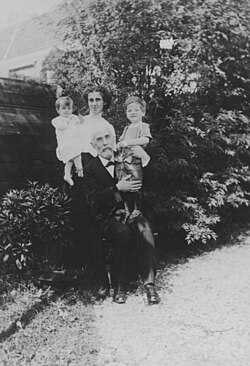
Key Facts
- First to theoretically study thermal fluctuations in electric circuits.
- Postulated electrons as Brownian particles in 1912, pioneering electrical noise theory.
- Predicted the London penetration depth for superconductivity in 1925, a decade before the formal London equations.
- Daughter and doctoral student of Nobel laureate Hendrik Lorentz.
- Academic career spent as a professor at the Technical University of Delft.
Early Life and Academic Foundation
Born on October 20, 1885, in Leiden, Netherlands, Geertruida Luberta Lorentz grew up in an environment of immense intellectual rigor. She was the eldest child of Hendrik Lorentz, a renowned Professor of Theoretical Physics at Leiden University, and Aletta Lorentz-Kaiser, who was active in the local women's suffrage movement.
Following in her father's footsteps, she studied physics at Leiden University. Under the guidance of Hendrik Lorentz, she completed her Ph.D. in 1912. Her doctoral thesis, titled Over de theorie van de Brown'sche beweging en daarmede verwante verschijnselen (On the theory of Brownian motion and related phenomena), served as the launchpad for her research into thermal fluctuations.
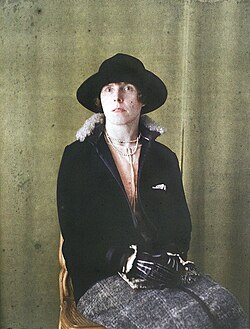
Scientific Contributions and Research
The Theory of Electrical Noise
De Haas-Lorentz was one of the first scientists to apply Albert Einstein's theory of Brownian motion—the random motion of particles suspended in a medium—to the behavior of electrons in electrical circuits. She proposed that electrons act as Brownian particles, leading to thermal fluctuations in current.
She analyzed a circuit with resistance (R) and inductance (L), determining that the energy stored (E = LI²/2) would be related to thermal energy (kT) via the equipartition theorem, where k is the Boltzmann constant and T is the temperature. This theoretical analysis predated the experimental discovery of Johnson–Nyquist noise. Furthermore, she was the first to suggest that these thermal fluctuations create a fundamental limit for the detection of electromagnetic radiation.
Superconductivity and Magnetism
Beyond noise theory, de Haas-Lorentz made a significant prediction in 1925 regarding superconductivity. She postulated the existence of the London penetration depth—the distance a magnetic field can penetrate into a superconductor—ten years before the development of the formal London equations in 1935.
In collaboration with her husband, Wander de Haas, she also conducted research into magnetism. Together, they demonstrated that experiments performed by James Clerk Maxwell failed to support André-Marie Ampère's hypothesis that magnetism in matter is caused by microscopic current loops.
Professional Life and Legacy
After her doctoral studies, de Haas-Lorentz joined the faculty of the Technical University of Delft. Beyond her original research, she was dedicated to preserving the scientific legacy of her father, translating several of his works into German and authoring a comprehensive biography of him.
She married Wander de Haas, a Professor of Experimental Physics at Leiden University, in 1910. The couple had four children. Geertruida de Haas-Lorentz passed away on January 2, 1973, in Leiden at the age of 87.
| Category | Details |
|---|---|
| Born | October 20, 1885 (Leiden, Netherlands) |
| Died | January 2, 1973 (Leiden, Netherlands) |
| Alma Mater | Leiden University |
| Primary Field | Condensed Matter Physics |
| Key Prediction | London penetration depth (1925) |
| Major Theory | Electrons as Brownian particles (1912) |
Frequently Asked Questions
What was Geertruida de Haas-Lorentz's most significant contribution to physics?
She is most recognized for being a pioneer of electrical noise theory, specifically for her 1912 work treating electrons as Brownian particles to theoretically analyze thermal fluctuations in electric circuits.
How did her work relate to the London equations?
In 1925, she predicted the London penetration depth for superconductivity, which describes how magnetic fields behave in superconducting materials. This prediction occurred a decade before the London equations were formally developed in 1935.
Who was her doctoral advisor?
Her doctoral advisor was her father, the Nobel laureate physicist Hendrik Lorentz.
What was her role at the Technical University of Delft?
She served as a professor of physics at the Technical University of Delft following the defense of her doctoral thesis.
Did she collaborate with other scientists?
Yes, she collaborated extensively with her husband, Wander de Haas, particularly on research regarding Maxwell's experiments and Ampère's hypothesis on microscopic current loops.