Annus Mirabilis: The Four Papers That Revolutionized Modern Physics
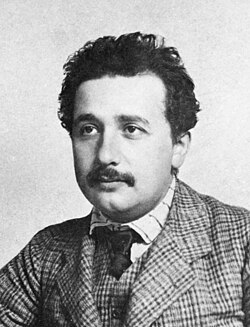
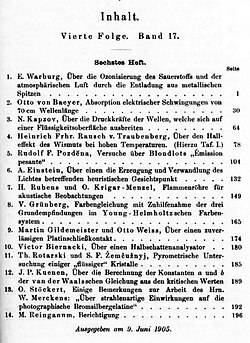
In 1905, a young Albert Einstein published four groundbreaking papers in the scientific journal Annalen der Physik (Annals of Physics). This period became known as his annus mirabilis, Latin for "miraculous year." These publications fundamentally altered the scientific community's understanding of space, time, mass, and energy, laying the essential groundwork for modern physics.
At the turn of the 20th century, physics faced significant challenges. Lord Kelvin had famously noted "clouds" over the dynamical theory of heat and light, specifically citing the lack of satisfactory explanations for black body radiation and the results of the Michelson–Morley experiment. Einstein's work addressed these gaps, bridging the divide between classical mechanics and the emerging field of electromagnetism.
Key Facts
- Four Papers: Published in 1905, covering the photoelectric effect, Brownian motion, special relativity, and mass-energy equivalence.
- Nobel Prize: Although famous for relativity, Einstein won the 1921 Nobel Prize in Physics specifically for his discovery of the law of the photoelectric effect.
- Fundamental Shift: These works established the existence of atoms and the constancy of the speed of light.
- Legacy: Together with quantum mechanics and general relativity, these papers form the bedrock of contemporary physics.

The Photoelectric Effect and Light Quanta
Published on June 9, Einstein's first paper proposed that light is not just a continuous wave, but consists of discrete packets of energy called quanta. This hypothesis extended the quantum theory developed by Max Planck to explain how light interacts with matter.
Einstein observed that the production of electrons from a material's surface depended on the frequency of the light, not its intensity. He postulated that light travels in packets whose energy is determined by the formula hf (where h is the Planck constant and f is the frequency). This insight introduced the concept of wave-particle duality—the idea that light exhibits properties of both waves and particles.
Brownian Motion and the Reality of Atoms
In his second paper, published on July 18, Einstein provided a stochastic (randomly determined) model of Brownian motion—the erratic movement of small particles suspended in a liquid. By establishing the Einstein relation, he provided the theoretical evidence necessary for physicists to accept the physical existence of atoms.
The Special Theory of Relativity
The third paper, published on September 26, reconciled Maxwell's equations of electromagnetism with the laws of mechanics. This work introduced the special theory of relativity, based on two primary axioms:
- The Principle of Relativity: The laws of physics are the same for all observers moving at a constant speed relative to each other (inertial reference frames).
- Constancy of Light Speed: The speed of light in a vacuum is the same for all observers, regardless of the motion of the light source.
This theory explained the results of the Michelson–Morley experiment, which had failed to detect the "aether" (the hypothesized medium for light waves). To maintain a constant speed of light, Einstein utilized Lorentz transformations, implying that time and space are not absolute but relative to the observer's motion.
Mass-Energy Equivalence
The final paper of 1905, published on November 21, derived a consequence of special relativity: the principle of mass-energy equivalence. This is expressed in the world's most famous equation: E = mc2.
Einstein demonstrated that a body's mass is a measure of its energy content. He showed that if a body emits energy in the form of radiation, its mass decreases proportionally. This discovery revealed that massive particles possess "rest energy," a concept that eventually led to the development of nuclear power.
![Einstein's mass–energy equation in a 1912 manuscript. He originally used to represent energy instead of , and instead of for the speed of light.[15]: 139](/images/32/5a/325a10cae9fc45becd9736520d7ffa93db275133d1c764eb2bebd04060258d2a.jpg)
Summary of the 1905 Miraculous Papers
| Paper Topic | Key Contribution | Major Impact |
|---|---|---|
| Photoelectric Effect | Proposed light quanta | Foundation of quantum mechanics; 1921 Nobel Prize |
| Brownian Motion | Stochastic model of particle motion | Proven existence of atoms |
| Special Relativity | Constancy of light speed | Redefined space and time |
| Mass-Energy Equivalence | E = mc2 | Discovery of nuclear energy |
Frequently Asked Questions
Why did Einstein win the Nobel Prize for the photoelectric effect instead of relativity?
The Nobel committee required experimental confirmation for the special theory of relativity. While the photoelectric effect was widely accepted, experimental proof for time dilation (a key part of relativity) did not emerge until the work of Ives, Stilwell, Rossi, and Hall between 1938 and 1941.
What is the difference between special and general relativity?
Special relativity focuses on observers in uniform motion (non-accelerating frames) and excludes gravity. General relativity, developed later, expands these concepts to include all observers and explains gravity as the curvature of spacetime.
What are light quanta?
Light quanta are discrete, finite packets of energy. Einstein proposed that light is not just a continuous wave but is emitted and absorbed in these individual units, which we now call photons.
How did the 1905 papers affect our understanding of atoms?
Through his work on Brownian motion, Einstein provided a mathematical model that explained the random movement of particles in a fluid, which served as definitive evidence that matter is composed of individual atoms.
What does E = mc2 actually mean?
It means that energy (E) and mass (m) are interchangeable; mass is essentially a highly concentrated form of energy. The speed of light squared (c2) acts as the conversion factor, showing that a small amount of mass can be converted into a vast amount of energy.