Gavrilo Princip and the Assassination that Sparked World War I
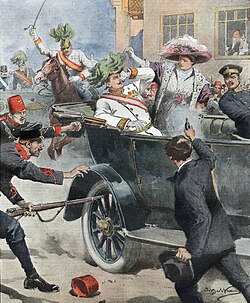
On June 28, 1914, a nineteen-year-old Bosnian Serb student named Gavrilo Princip changed the course of global history. By assassinating Archduke Franz Ferdinand, the heir presumptive to the Austro-Hungarian throne, and his wife, Sophie, Duchess of Hohenberg, Princip triggered a diplomatic collapse known as the July Crisis. This sequence of events led directly to the outbreak of World War I within a single month.
Princip's actions were not random acts of violence but the result of deep-seated Yugoslav nationalism—the desire to unify South Slavic peoples into a single, independent state free from the control of the Austro-Hungarian Empire.
Key Facts
- Assassination Date: June 28, 1914, in Sarajevo.
- Targets: Archduke Franz Ferdinand and Sophie, Duchess of Hohenberg.
- Motive: Yugoslav nationalism and liberation from Austrian rule.
- Sentence: 20 years' imprisonment (spared the death penalty due to his age).
- Death: Died of tuberculosis and malnutrition on April 28, 1918, in Terezín Fortress.
Early Life and Political Awakening
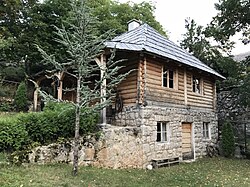
Born on July 25, 1894, in Obljaj, Bosnia and Herzegovina, Princip grew up during a period of intense ethnic and political tension. His path toward radicalism began in earnest on February 18, 1912, when he participated in a demonstration against Habsburg authority in Sarajevo. During the clash, Princip was injured by a sabre, and his subsequent activism led to his expulsion from school.
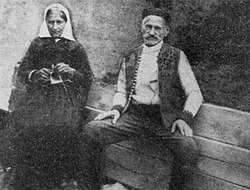
Driven by a desire for action, Princip traveled 280 kilometers on foot to Belgrade, Serbia. His early attempts to join the military were met with rejection; both the komite (irregular Serbian units) and Major Vojislav Tankosić rejected him because of his small, frail build. Historians suggest that this humiliation served as a primary motivator for Princip to prove his bravery through a high-stakes political act.
The Path to Assassination
In early 1914, while studying in Belgrade, Princip learned of Archduke Franz Ferdinand's upcoming visit to Sarajevo. He recruited two friends, Nedeljko Čabrinović and Trifko Grabež, to join a plot to kill the Archduke and the provincial governor, Oskar Potiorek, as a protest against the emergency regime imposed by the Austro-Hungarian government.
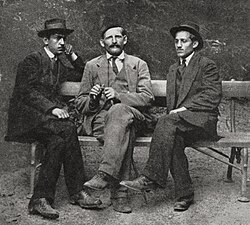
The group obtained weapons through Milan Ciganović, an associate of the Black Hand—a secretive, ultra-nationalist Serbian society. On May 27, 1914, Ciganović provided the assassins with five Browning pistols, six grenades, and cyanide capsules, while also providing training in the Topčider forest.
![An FN Model 1910 pistol of the type used by Princip in the assassination.[48]](/images/8d/f3/8df3c82d6979159cd7202993f2e85354aafd4d9a24bae5a891d280b47112bc71.jpg)
Upon arriving in Sarajevo, Princip coordinated with Danilo Ilić to recruit additional members, including Muhamed Mehmedbašić, Cvetko Popović, and Vaso Čubrilović. On the day of the visit, Princip fired the fatal shots into the royal couple's convertible car.
Trial, Imprisonment, and Death
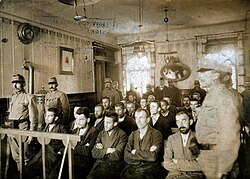
Princip was arrested immediately and tried alongside 24 other Bosnian subjects. During the proceedings, he clearly stated his objective: "I am a Yugoslav nationalist, aiming for the unification of all Yugoslavs... it must be free from Austria." Because he was only 19 at the time of the crime, he was sentenced to 20 years in prison rather than death.
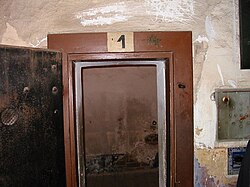
He spent the remainder of his life in the Terezín Fortress. The conditions of his captivity were brutal; weakened by prolonged malnutrition and tuberculosis, Princip weighed only about 40 kilograms by the time of his death on April 28, 1918.
Legacy and Commemoration
Gavrilo Princip remains a polarizing figure. To many Serbs, he is a hero and a symbol of liberation from colonial slavery. Conversely, many Croats and Bosniaks view him as a terrorist whose actions destroyed a stable era of Austrian rule.
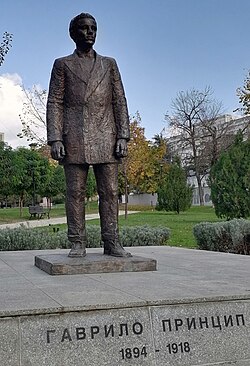
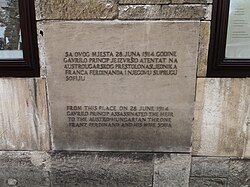
His memory is reflected in various memorials, though many have been destroyed and rebuilt throughout the 20th century due to shifting political regimes. Today, a statue of Princip stands in Belgrade, and another in East Sarajevo, while a plaque marks the exact site of the assassination.
| Category | Details |
|---|---|
| Born | July 25, 1894 (Obljaj, Bosnia and Herzegovina) |
| Died | April 28, 1918 (Terezín, Bohemia) |
| Primary Goal | Unification of Yugoslavs / Independence from Austria |
| Weapon Used | FN Model 1910 pistol |
| Historical Result | Triggered the July Crisis and World War I |
Frequently Asked Questions
Why was Gavrilo Princip not executed?
Princip was spared the death penalty because he was under the age of 20 at the time of the assassination. Under the laws of the time, he was sentenced to a maximum of 20 years in prison instead.
What was the 'Black Hand'?
The Black Hand was a secretive, ultra-nationalist Serbian military society that sought to unify South Slavic territories. They provided the weapons and training used by Princip and his co-conspirators.
Did the Serbian government order the assassination?
The source indicates that the Serbian government itself did not inspire the assassination, although the Austrian Foreign Office and Army used the event as a justification for a preventive war.
Where is Gavrilo Princip buried?
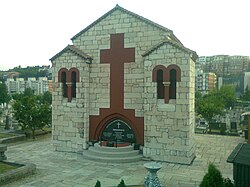
Princip is buried at the Vidovdan Heroes Chapel at the Holy Archangels Cemetery outside Sarajevo, alongside his co-conspirators.
How did Princip die?
Princip died in custody at the Terezín Fortress due to complications from tuberculosis and severe malnutrition.