Franz Joseph I: The Long Reign of the Last Great Habsburg Emperor
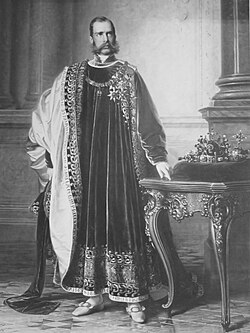
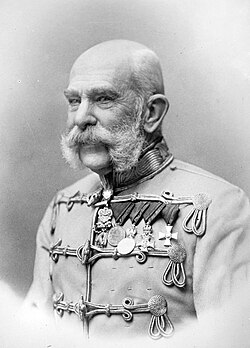
Franz Joseph I was the defining figure of the 19th-century Habsburg monarchy, serving as the Emperor of Austria and King of Hungary from 1848 until his death in 1916. His tenure spanned a period of immense geopolitical volatility, witnessing the transition of his realms from the centralized Austrian Empire to the dual monarchy of Austria-Hungary. Known for his diligence and devotion to duty, Franz Joseph navigated the rising tides of nationalism that threatened to dismantle one of Europe's most storied dynasties.
Throughout his 68-year reign, he balanced the complex demands of various ethnic groups and political factions, most notably through the Austro-Hungarian Compromise of 1867. Despite his political longevity, his private life was marked by profound tragedy, including the loss of his only son and the assassination of his wife and heir.
Key Facts
- Reign: December 2, 1848 – November 21, 1916.
- Titles: Emperor of Austria and Apostolic King of Hungary.
- Major Political Shift: Established the dual monarchy of Austria-Hungary in 1867.
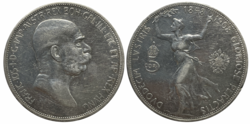
- Personal Motto: "Viribus Unitis" (With united forces).
- Residence: Born and died at the Schönbrunn Palace in Vienna.
Early Life and Education
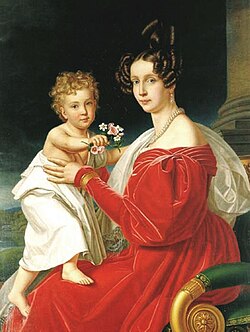
Born on August 18, 1830, at the Schönbrunn Palace, Franz Joseph was the eldest son of Archduke Franz Karl and Princess Sophie of Bavaria. Because his uncle, Emperor Ferdinand, suffered from seizures and his father lacked political ambition, Princess Sophie took a direct role in "Franzi's" upbringing. She raised him with a strict emphasis on responsibility, diligence, and devotion to the state.
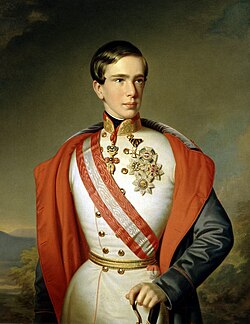
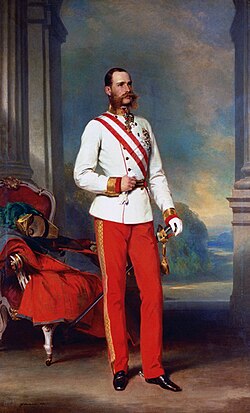
His military training began early; on his 13th birthday, he was appointed Colonel-Inhaber of Dragoon Regiment No. 3. This early immersion in military life left a permanent mark on his identity; for the remainder of his life, he almost exclusively wore military uniforms.
Ascension and the Revolutions of 1848
Franz Joseph ascended to the throne on December 2, 1848, following the abdication of Emperor Ferdinand and the renunciation of his father's claims. The choice of the name "Franz Joseph" was a deliberate nod to his great-granduncle, Emperor Joseph II, who was remembered as a modernizing reformer.
His early years were dominated by the struggle to maintain order amidst the Revolutions of 1848, particularly in Hungary. To stabilize the empire, his government implemented neoabsolutism—a system designed to transform the Austrian Empire into a unitary, centralized state administered by a professional bureaucracy.
The Dual Monarchy and Domestic Policy

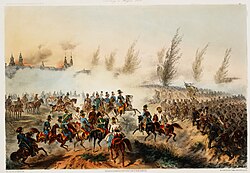
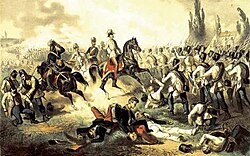
The mid-19th century brought significant challenges, including military defeats in Italy at Magenta and Solferino. These setbacks forced a return to constitutional rule and highlighted the unsustainable nature of centralized control over diverse territories.
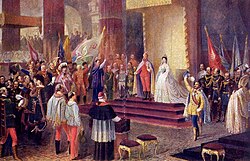
In 1867, Franz Joseph concluded the Austro-Hungarian Compromise. This landmark agreement granted greater autonomy to Hungary and reconstituted the state as the dual monarchy of Austria-Hungary. While this solved immediate political crises, the "Bohemian question" remained unresolved; despite negotiations and a successful visit to Prague in 1866, Franz Joseph was never separately crowned as King of Bohemia.
Foreign Policy and the Road to World War I
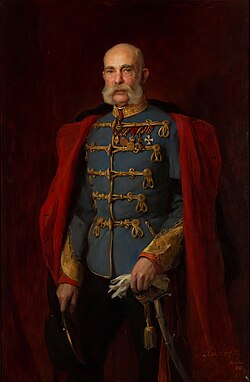
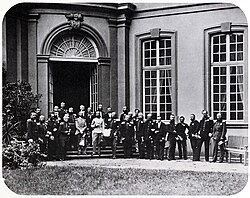
On the international stage, Franz Joseph sought to maintain the European balance of power. In 1873, he joined the League of Three Emperors (Dreikaiserbund) alongside Emperor Wilhelm I of Germany and Emperor Alexander II of Russia. This alliance, engineered by Otto von Bismarck, aimed to preserve peace among the great conservative powers of Europe.
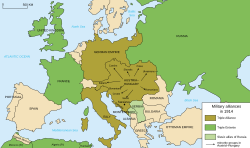
However, the 20th century brought escalating tensions. The relationship between the Emperor and his heir presumptive, Archduke Franz Ferdinand, was often contentious, particularly regarding Ferdinand's morganatic marriage to Countess Sophie Chotek, which the Emperor initially opposed due to her lack of dynastic rank.
Personal Life and Tragedies
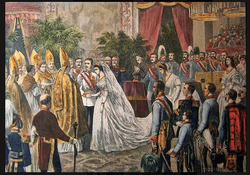
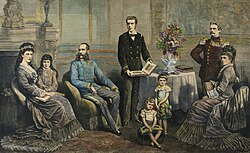
Franz Joseph's personal life was a stark contrast to his public stability. He married Duchess Elisabeth in Bavaria in 1854, but their marriage was fraught with difficulty. The Emperor suffered a series of devastating losses: the execution of his brother Maximilian I of Mexico in 1867, the suicide of his son, Crown Prince Rudolf, in 1889, and the assassination of Empress Elisabeth in 1898.
The final blow came in 1914 with the assassination of Archduke Franz Ferdinand, an event that served as the catalyst for World War I. Franz Joseph died on November 21, 1916, at the age of 86, ending an era of Habsburg rule.
Imperial Summary
| Category | Details |
|---|---|
| Full Name | Franz Joseph Karl |
| House | Habsburg-Lorraine |
| Reign Period | 1848–1916 |
| Key Spouse | Duchess Elisabeth in Bavaria |
| Successor | Charles I & IV |
| Burial Site | Imperial Crypt |
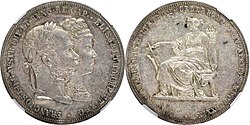
![Centennial stamp[111]](/images/00/8a/008a98cbe83c17aefff418385a6f48c294569870e81d0319803847d9752e4a83.jpg)
Frequently Asked Questions
![Imperial Standard (From 1867 to 1915)[110]](/images/34/ef/34ef7bfe8e21dee9d171d554b92494951cbb26368937885cce21e75a937dcccd.webp)
What was the Austro-Hungarian Compromise of 1867?
It was a political agreement that granted Hungary greater autonomy and transformed the Austrian Empire into the dual monarchy of Austria-Hungary, allowing the two entities to share a monarch and certain central functions while maintaining separate internal administrations.
Why did Franz Joseph always wear a military uniform?
His training shifted toward strategic and tactical knowledge from the age of 13 when he was appointed Colonel-Inhaber of Dragoon Regiment No. 3, and the army style dictated his personal fashion for the rest of his life.
Who was the heir to the throne before the outbreak of WWI?
Archduke Franz Ferdinand became the heir presumptive in 1896 following the deaths of Crown Prince Rudolf and Archduke Karl Ludwig.
What was the meaning of the motto "Viribus Unitis"?
The Latin phrase translates to "With united forces," reflecting the Emperor's goal of maintaining the cohesion of the diverse territories within his empire.
How did the Emperor view the marriage of Franz Ferdinand and Sophie Chotek?
The Emperor initially refused to bless the union because Sophie was of noble rank rather than dynastic rank. He eventually consented in 1900, but only on the condition that it be a morganatic marriage, meaning any children would be ineligible to succeed the throne.