Archduke Franz Ferdinand: The Heir Whose Death Sparked World War I
Archduke Franz Ferdinand was the heir presumptive—the person next in line to inherit the throne—of the Austro-Hungarian Empire. While he is primarily remembered as the catalyst for the First World War, his life was defined by a complex struggle between his personal desires and the rigid expectations of the Habsburg-Lorraine dynasty.
Born on December 18, 1863, in Graz, Austria, Franz Ferdinand was the eldest son of Archduke Karl Ludwig. His path to the throne was not immediate; it was paved by tragedy. Following the suicide of Crown Prince Rudolf in 1889 and the death of his father from typhoid fever in 1896, the responsibility of the empire's future fell upon him.
Key Facts
- Full Name: Franz Ferdinand Karl Ludwig Joseph Maria.
- Role: Heir presumptive to the throne of Austria-Hungary.
- Death: Assassinated on June 28, 1914, in Sarajevo.
- Immediate Impact: His death was the immediate cause of World War I.
- Marriage: A morganatic union with Sophie, Duchess of Hohenberg.
- Military Rank: Inspector General of the Austro-Hungarian Armed Forces (appointed 1913).
Personal Life and Passions
Beyond the confines of the imperial court, Franz Ferdinand was an avid traveler and a prolific hunter. Between 1892 and 1893, he embarked on a global circumnavigation, visiting India, Australia, New Guinea, Japan, and the United States, where he attended the World's Columbian Exposition in Chicago.
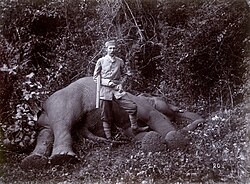
His passion for trophy hunting was legendary, even by the standards of the era's nobility. He meticulously recorded 272,511 game kills in his diaries, including 5,000 deer. At his castle in Konopiště, he displayed approximately 100,000 trophies alongside a vast collection of antiquities.
A Controversial Marriage
Franz Ferdinand's personal life was marked by a significant conflict with the imperial household. He fell in love with Sophie Chotek, a lady-in-waiting. Because she was not of royal birth, their union was a morganatic marriage—a legal marriage between people of unequal social rank that prevents the spouse and children from inheriting titles or privileges.
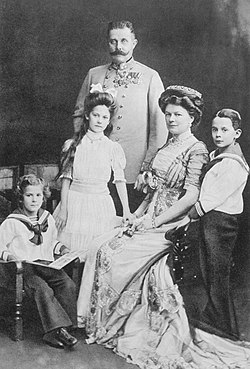
The marriage took place on July 1, 1900, but it came at a high price: Franz Ferdinand had to renounce his children's rights to the throne. Despite her titles as Princess and later Duchess of Hohenberg, Sophie was treated as an inferior at court, often forced to stand far behind other archduchesses during official functions.
Political Vision and Military Influence
Though he held absolutist inclinations, Franz Ferdinand was not a mere figurehead. He was deeply critical of the "dual system" established in 1867, which gave the Magyars (Hungarians) significant power over other nationalities. He believed this system was disastrous and intended to replace it with a supranational federation.
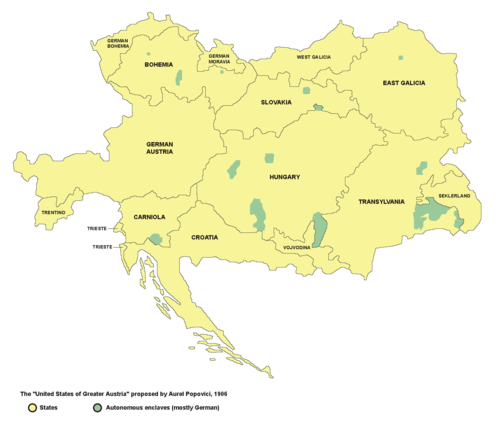
His goal was to grant far-reaching administrative autonomy to the various nationalities of the monarchy, including the Slavs and Romanians. He believed that providing a "comfortable, fair and good life" to these groups would end the irredentism—the desire to reclaim lost territory—that threatened the empire's stability.
The Assassination in Sarajevo
On June 28, 1914, the Archduke and his wife visited Sarajevo, the capital of the province of Bosnia and Herzegovina. The visit was fraught with tension, as nationalist groups sought to liberate the South Slavs from Austrian rule.
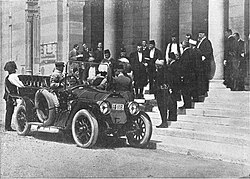
At approximately 10:45 am, Gavrilo Princip, a 19-year-old member of Young Bosnia and an operative of the Black Hand secret society, shot both Franz Ferdinand and Sophie. The couple died shortly after the attack.
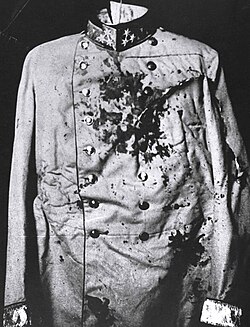
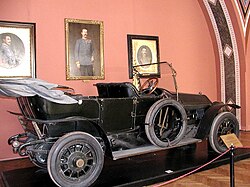
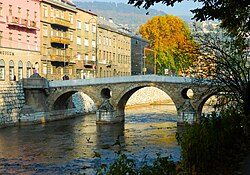
The assassination took place near the Latin Bridge, and the couple was traveling in a 1910 Gräf & Stift Bois de Boulogne phaeton automobile.
This event triggered a diplomatic crisis that rapidly escalated into a global conflict, as the complex web of European alliances was activated, leading directly to the outbreak of World War I.
Legacy and Commemoration
Franz Ferdinand was buried on July 4, 1914, at Artstetten Castle, where a family crypt is located under the forecourt of the castle church.
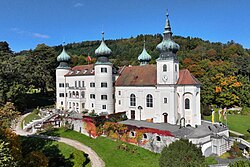
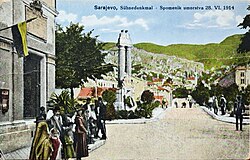
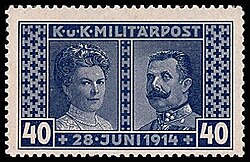
Today, he is remembered through various memorials in Sarajevo and commemorative stamps from the era of Austria-Hungary.
| Category | Details |
|---|---|
| Lifespan | December 18, 1863 – June 28, 1914 |
| House | Habsburg-Lorraine |
| Spouse | Sophie, Duchess of Hohenberg |
| Children | Princess Sophie, Maximilian, Prince Ernst (and one stillborn son) |
| Key Political Goal | Replacing the dual system with a supranational federation |
| Cause of Death | Assassination by gunshot |
Frequently Asked Questions
Why was Franz Ferdinand's marriage considered controversial?
His marriage to Sophie Chotek was morganatic because she was not from a royal house. This meant she could not share his rank, and their children were barred from inheriting the throne, which caused significant friction within the imperial family.
Who killed Archduke Franz Ferdinand?
He was assassinated by Gavrilo Princip, a 19-year-old Serbian nationalist and member of the group Young Bosnia, who was supported by the secret organization known as the Black Hand.
How did his death lead to World War I?
The assassination created a geopolitical crisis. Austria-Hungary declared war on Serbia, which triggered a chain reaction of alliances: Russia mobilized to support Serbia, Germany supported Austria-Hungary, and France and Britain were subsequently drawn into the conflict.
What were his plans for the Austro-Hungarian Empire?
He intended to abolish the dominance of the Magyars and establish a strong central government that granted administrative autonomy to all the different nationalities within the empire to reduce ethnic tension.
Where is Franz Ferdinand buried?
He is buried in the family crypt at Artstetten Castle, near the castle church.