The Garden Strawberry: A Deep Dive into the World's Favorite "Berry"
Loved for its vibrant red color, juicy texture, and sweet aroma, the garden strawberry (Fragaria × ananassa) is one of the most widely cultivated fruits globally. Whether enjoyed fresh, stirred into jam, or used in gourmet desserts, this fruit is a staple of modern cuisine. However, beyond its culinary appeal lies a fascinating botanical history and a complex genetic makeup that challenges our common understanding of what a "berry" actually is.
Botanical Structure: Why It Isn't Actually a Berry
Despite its common name, the strawberry is not a botanical berry. Instead, it is classified as an aggregate accessory fruit. In a true berry, the fleshy part is derived from the ovary of a single flower. In the case of the strawberry, the fleshy, edible part is actually a swollen receptacle (the part of the stem that holds the flower organs).
The small, seed-like dots scattered across the surface are not seeds at all. Each one is an achene, which is the actual botanical fruit containing a single seed inside it.
![Botanical structure of a strawberry, compared to a peapod. The strawberry is a swollen receptacle, covered with many small achenes, the botanical fruits.[9]](/images/e6/99/e6996180e83b1b4059c23a5bc43515d368ab04d18f2de7a63ee61b3725377891.webp)
Origin and Evolution
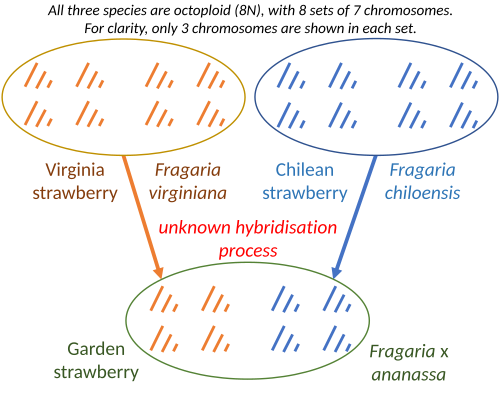
The modern garden strawberry is a hybrid created through human intervention. It was first bred in Brittany, France, during the 1750s. This occurred when the F. virginiana (Virginia strawberry) from eastern North America was crossed with F. chiloensis (Chilean strawberry), which had been brought to Europe from Chile in 1714.
Early French gardeners discovered that the Chilean plants produced only female flowers and required pollen from the wild woodland strawberry (F. vesca) to bear fruit. Eventually, the hybrid F. × ananassa emerged, replacing the musk strawberry (F. moschata) in commercial production. The name "ananassa" is derived from the word for pineapple, reflecting the fruit's distinct flavor profile.
Genetically, the garden strawberry and its parent species are octoploid, meaning they possess eight sets of chromosomes (8N). This complex genetic structure contributes to the plant's vigor and diversity.
Nutritional Composition and Phytochemicals
Strawberries are highly nutritious and low in calories. They are composed of approximately 91% water, with the remainder consisting primarily of carbohydrates and a small amount of protein. They are particularly renowned for their high concentration of Vitamin C and manganese.
The fruit's striking red color comes from anthocyanin pigments, primarily pelargonidin-3-glucoside. Strawberries also contain various polyphenols, including flavonoids and ellagitannins. Interestingly, while the achenes make up only 1% of the fruit's weight, they provide about 11% of the total polyphenols.
Flavor and Fragrance
The complex taste of a strawberry is the result of a combination of sugars, acids, and volatile compounds. Specifically, esters, terpenes, and furans are the chemical compounds most strongly linked to the desired sweetness and fragrance of the ripe fruit.

Cultivation and Global Production
In 2024, global strawberry production exceeded 10 million tons. China is the leading producer, accounting for 38% of the world's total, followed by the United States.
Commercial growers use several methods to optimize yield:
- Plasticulture: Using plastic-covered raised beds to prevent erosion and weed growth.
- Matted Rows: A perennial system often used in colder regions.
- Compost Socks: A method that has been shown to increase the levels of fructose, glucose, and anthocyanins in the fruit.
Cultivars are generally categorized by their flowering habits: short-day, long-day, and day-neutral (which produce flowers regardless of the photoperiod). To protect crops, farmers must manage over 200 species of pest arthropods and various fungal diseases, such as gray mold (Botrytis cinerea).
Cultural Significance and Art
Strawberries have long held symbolic meaning in literature and art. In Roman times, the poet Virgil used the image of a snake lurking beneath a strawberry to represent hidden danger or risky pleasure—a theme later echoed by William Shakespeare.
In medieval and Renaissance art, the strawberry often appeared in religious contexts, such as in depictions of the Virgin Mary. In Hieronymus Bosch's The Garden of Earthly Delights, the fruit has been interpreted as a symbol of the ephemerality of earthly joys or an allegory of death and resurrection. By the late 20th century, the symbolism shifted toward representing female sexuality.
Key Facts
- Botanical Status: An aggregate accessory fruit, not a true berry.
- Genetic Makeup: Octoploid (8 sets of chromosomes).
- Origin: A hybrid of F. virginiana and F. chiloensis bred in 18th-century France.
- Top Producer: China (38% of global production in 2024).
- Primary Nutrient: Exceptionally rich in Vitamin C (65% DV per 100g).
- Key Pigment: Pelargonidin-3-glucoside provides the red color.
Nutritional and Production Summary
| Category | Metric/Value | Details |
|---|---|---|
| Energy (per 100g) | 33 kcal | Low-calorie fruit |
| Vitamin C (per 100g) | 65% DV | Rich source |
| Manganese (per 100g) | 17% DV | Good source |
| World Production | 10.7 Million Tonnes | Total global output |
| Leading Producer | China | 38% of total production |
Frequently Asked Questions
Why are some people allergic to strawberries?
Allergies are often linked to a specific protein called Fra a1, which is involved in the biosynthesis of red anthocyanins during ripening. People with this allergy may experience oral allergy syndrome, hives, or in severe cases, breathing problems.
Are there strawberries that don't cause allergic reactions?
Yes. White-fruited strawberry cultivars lack the Fra a1 protein and may be a safer option. A virtually allergen-free cultivar known as 'Sofar' is available.
What is the difference between a garden strawberry and a wild strawberry?
The garden strawberry (F. × ananassa) is a larger, octoploid hybrid bred for commercial production. Wild strawberries, such as F. vesca, are typically much smaller and were the primary source of the fruit before the 18th century.
How do growers increase the nutrient content of strawberries?
Research indicates that using compost socks for cultivation can significantly increase the levels of flavonoids, anthocyanins, and various sugars (fructose, glucose, and sucrose) compared to plastic mulch or matted row systems.
What does "octoploid" mean in the context of strawberries?
Octoploid refers to the plant's ploidy level, meaning it has eight complete sets of chromosomes. This is a result of the hybridization process and is common to both the garden strawberry and its parent species.