Frugivores and the Vital Role of Seed Dispersal
A frugivore is an animal that thrives primarily on a diet of fruits. While fruit consumption is common across the animal kingdom, approximately 20% of mammalian herbivores are classified as frugivores. These animals are deeply dependent on the availability and nutritional quality of fruits, creating a complex biological relationship with the plants they consume.
This interaction often takes the form of mutualism—a biological relationship where both species benefit. The plant provides nutrition to the animal, and in return, the frugivore assists the plant by dispersing its seeds. However, this relationship is not always helpful; some frugivores may destroy seeds during digestion, hindering the plant's reproduction.
Key Facts
- About 20% of mammalian herbivores are frugivores.
- Seed dispersal allows plant offspring to move away from parent plants, reducing competition.
- Tropical forests generally possess a higher density of frugivore seed dispersers than temperate zones.
- Some seeds require digestion by an animal to germinate successfully.
- Plants use chemical defenses, such as capsaicin, to deter non-dispersing predators.
The Mechanics of Seed Dispersal
Seed dispersal is critical for plant survival as it prevents progeny from competing with the parent plant for resources. To encourage this, many plants evolved fleshy fruits to entice animals. While most seeds can germinate if they simply fall to the ground, many species rely on frugivores to travel significant distances.
A wide variety of animals act as seed dispersers. While birds and mammals are the most prominent, frugivorous tortoises, lizards, amphibians, and even certain fish contribute to this process. Some animals, such as cassowaries, are considered keystone species because certain seeds cannot grow unless they have first passed through the animal's digestive tract.
Ecological Significance and Specialization
Frugivore interactions are generally not highly specific. A single bird species might eat fruits from many different plants, or one plant species might be serviced by several different birds. This lack of specialization is an evolutionary strategy; because fruit availability fluctuates by season and year, animals cannot afford to rely on a single plant source.
Different dispersers also impact the environment differently. Depending on their movement patterns and population numbers, different animals deposit seeds in varying habitats and at different distances from the source.
Plant Adaptations to Attract and Protect
Plants have developed several strategies to ensure their seeds are dispersed by the right animals. Many use mimetic fruits—fruits with bright colors and attractive smells—to signal palatability. Typically, fruit pulp is rich in water and carbohydrates but low in lipids and protein.
To survive the journey, seeds are often adapted to withstand digestion. In some cases, the gut environment makes the seed more permeable to water, increasing germination rates. Some mistletoe seeds are so specialized that they germinate while still inside the animal's intestine.
However, plants must also protect their fruits from predators that eat the seeds rather than dispersing them. They employ physical deterrents like cryptic coloration (green fruits that blend with leaves), thick skins, resins, saps, spines, or thorns. They also use chemical defenses known as secondary metabolites—compounds not essential for basic growth but used for protection.
Types of Chemical Defenses
- Carbon-based phenolics: Examples include capsaicin (found in the Capsicum genus), which creates a pungent heat to inhibit microbes and invertebrates, and emodin (found in rhubarb), which deters birds and mice.
- Nitrogen-based compounds: Cyanogenic glycosides are found in 130 plant families and can cause vomiting or diarrhea in animals.
- Carbon-based terpenes: Another category of secondary chemical defenses used to deter consumption.
Frugivore Adaptations for Consumption
Animals have evolved specialized digestive systems to handle fruit. Some birds possess shorter intestines to pass seeds quickly, while certain frugivorous bats have longer intestines. Some species can even alter their intestinal enzyme composition based on the type of fruit they are eating.
Diverse Frugivorous Species
Birds
Birds are central to frugivory research. Species such as toucans, hornbills, aracaris, cotingas, and some parrots are primary dispersers. In North America, the red mulberry (Morus rubra) is a major attractant, with up to 31 bird species recorded visiting a single tree. While many birds switch to protein-rich insects during nesting season, some facultatively-baccivorous birds eat bitter berries, like juniper, when other food is scarce.
Mammals
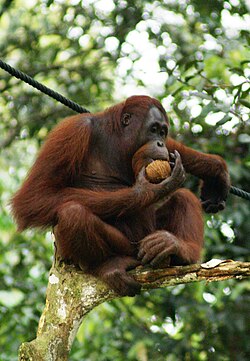
Mammalian frugivores vary widely in their diets. The maned wolf (Chrysocyon brachyurus) of South America derives between 22.5% and 54.3% of its diet from fruit. Bornean orangutans are even more dependent, with fruit making up 65% of their diet, including their preference for the custard-like durian fruit.
Other examples include fruit bats and the gray-bellied night monkey (owl monkey). Owl monkeys prefer small, ripe fruits found in large-crown trees (over ten meters tall). Their diet shifts based on environment; those in tropical forests eat fruit year-round, while those in dry forests rely more on leaves during the dry season.
Fish
Frugivory is not limited to land. Certain fish species, such as the tambaqui, are known to be frugivorous.
Conservation and Environmental Impact
The loss of frugivores can lead to a collapse in plant community dynamics. The extinction of large frugivores, such as monkeys, is particularly damaging because they are responsible for long-distance seed dispersal that birds cannot replicate. Conversely, some frugivores may actually facilitate the spread of invasive exotic plant species by dispersing non-native seeds.
| Animal Group | Example Species | Key Diet/Behavior Detail |
|---|---|---|
| Birds | Toucan, Hornbill | Often switch to insects during nesting season. |
| Mammals | Orangutan | Fruit comprises 65% of diet; prefers durian. |
| Mammals | Maned Wolf | Fruit makes up 22.5% to 54.3% of diet. |
| Mammals | Owl Monkey | Forages in trees taller than 10 meters. |
| Fish | Tambaqui | Specialized aquatic frugivore. |
| Birds | Cassowary | Keystone species; some seeds require its digestion. |
Frequently Asked Questions
What is a frugivore?
A frugivore is an animal that consumes primarily fruit. This diet makes them essential partners for many plant species that rely on animals to move their seeds.
How do plants protect their fruit from being eaten too early?
Plants use physical deterrents like green coloration to blend in with leaves, or chemical deterrents such as toxins and unpalatable textures to prevent consumption until the fruit is ripe.
Why is seed dispersal important for plants?
Seed dispersal allows a plant's offspring to grow away from the parent plant, which reduces competition for sunlight, water, and soil nutrients.
What are secondary metabolites in fruits?
Secondary metabolites are chemical compounds, such as capsaicin or cyanogenic glycosides, that are not needed for the plant's basic growth but serve as defenses against predators or microbes.
Can the loss of frugivores affect an entire forest?
Yes. The loss of frugivores, especially large mammals like monkeys, can reduce seed removal and viability, potentially leading to the local extinction of certain plant species and altering the forest's composition.