Frisian Languages: History, Dialects, and the Connection to English
The Frisian languages are a group of closely related West Germanic languages spoken by approximately 400,000 people along the southern fringes of the North Sea in the Netherlands and Germany. While they may seem obscure to the casual observer, they hold a unique place in linguistics as the closest living relatives to the Anglic languages (including English and Scots).
Together, Frisian and English form the Anglo-Frisian group, which, along with Low German dialects, constitutes the North Sea Germanic languages. Despite this deep genetic link, modern English and Frisian are not mutually intelligible due to centuries of geographical separation and distinct historical influences.
Key Facts
- Closest Relative: Frisian is the closest living language group to English.
- Speaker Population: Approximately 400,000 speakers across the Netherlands and Germany.
- Primary Branches: Divided into West Frisian, North Frisian, and East Frisian (including Saterland Frisian).
- Official Status: West Frisian is an official language in the Netherlands; Saterland and North Frisian are protected minority languages in Germany.
- Endangerment: Saterland and North Frisian are seriously endangered, while West Frisian is considered vulnerable.
Linguistic Classification and Distribution
Frisian belongs to the Indo-European family, specifically the West Germanic branch. Its distribution is split between two countries:
- Netherlands: Primarily in the province of Friesland (Fryslân) and the Westerkwartier.
- Germany: In the Saterland region of Lower Saxony and the Nordfriesland region of Schleswig-Holstein, including Heligoland.
While genealogically closer to English, Frisian has been heavily influenced by Dutch over many centuries. In practical terms, Dutch is often the most similar language to Frisian. Research on mutual intelligibility varies; a 2005 cloze test (a method where participants fill in masked words in a text) showed Dutch respondents scored 31.9% on West Frisian texts, while 2012 research suggested the distance between Dutch and Frisian is slightly smaller than that between various Scandinavian languages.
The Three Main Branches
West Frisian
Spoken mainly in the Netherlands, West Frisian is the most robust of the group. It includes various dialects such as Clay Frisian (Klaaifrysk), Wood Frisian (Wâldfrysk), and South Frisian (Súdhoeks), as well as island varieties like Hindeloopen and Schiermonnikoogs.
North Frisian
Located in Schleswig-Holstein, Germany, North Frisian is spoken on the mainland and on islands such as Sylt, Föhr, Amrum, and Heligoland. It consists of mainland dialects (like Bökingharde and Wiedingharde) and island dialects (such as Söl'ring and Fering-Öömrang).
East Frisian and Saterland Frisian
Most East Frisian dialects are now extinct, including those of Brokmerland and the Ommelanden. However, Saterland Frisian survives in the marshy Saterland region of Lower Saxony with about 2,000 speakers. It is important to distinguish Saterland Frisian from East Frisian Low Saxon, which is a West Low German dialect.
| Branch | Primary Location | Approx. Speakers | Status |
|---|---|---|---|
| West Frisian | Netherlands (Friesland) | 400,000 | Official / Vulnerable |
| North Frisian | Germany (Schleswig-Holstein) | 10,000 | Protected / Endangered |
| Saterland Frisian | Germany (Lower Saxony) | 2,000 | Protected / Endangered |
Historical Evolution
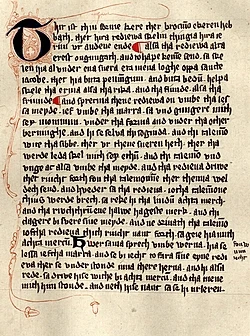
Old Frisian (c. 1150 – c. 1550)
Old Frisian was characterized by the use of grammatical cases. Most surviving texts from this era are legalistic writings from the 14th and 15th centuries, though runic inscriptions may be even older.
Middle West Frisian (c. 1550 – c. 1820)
The transition to Middle Frisian was marked by a sharp decline in written use. In 1498, Albert III, Duke of Saxony, occupied Friesland and replaced West Frisian with Dutch as the language of government. This trend continued under Habsburg rule and the subsequent rise of Holland, leaving Frisian as a primarily oral language used in rural areas.
Modern West Frisian (1820 – Present)
The modern era began around 1820, coinciding with the introduction of the "newer breaking system" (a specific grammatical feature). Key figures like Joost H. Halbertsma helped revitalize the language by translating the New Testament and writing for the middle and lower classes. The literary work Rimen en Teltsjes by the Halbertsma brothers remains a standard of Frisian literature.
Current Status and Preservation
Today, West Frisian is one of two official languages in the Netherlands. Organizations like the Ried fan de Fryske Beweging and the Fryske Academy (founded in 1938) work to preserve the language through research and dictionary compilation. However, the language faces challenges; it is often viewed sociologically as a dialect rather than a standard language due to its rural origins.
In Germany, Saterland and North Frisian are recognized as minority languages but remain seriously endangered due to small speaker populations and a lack of institutional support. In the Netherlands, there is a risk of West Frisian dissolving into Dutch, and only about 30% of the West Frisian population is competent in the written form of the language.
Frequently Asked Questions
Is Frisian the same as English?
No, but they are very closely related. They both belong to the Anglo-Frisian group of West Germanic languages. While they share a common ancestor, they are not mutually intelligible today.
Where is Frisian spoken today?
It is spoken in the province of Friesland in the Netherlands (West Frisian) and in parts of northern Germany, specifically in Saterland (Saterland Frisian) and Nordfriesland (North Frisian).
Why is Frisian so similar to Dutch?
Although it is genealogically closer to English, Frisian has been under the strong influence of Dutch for centuries due to political and geographical proximity, making Dutch the most similar language in practical usage.
Are the Frisian languages endangered?
Yes. Saterland Frisian and most North Frisian dialects are seriously endangered. West Frisian is more stable but is still considered vulnerable to being endangered as it competes with Dutch.
What is the difference between Saterland Frisian and East Frisian Low Saxon?
Saterland Frisian is a true Frisian language (part of the Anglo-Frisian group), whereas East Frisian Low Saxon is a dialect of Low German.