Free People of Color in the Colonial Americas
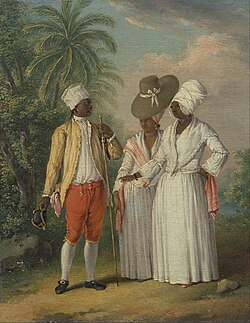
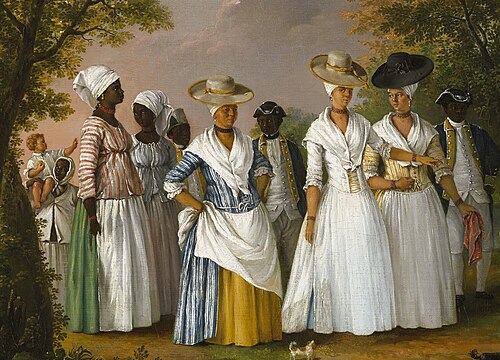
In the complex social landscapes of the colonial Americas, a distinct group emerged known as free people of color (French: gens de couleur libres; Spanish: gente de color libre). This population primarily consisted of individuals of mixed African, European, and Native American descent who were not enslaved. The term also encompassed individuals of predominantly black African descent who were born free.
These communities developed most prominently in French and Spanish territories, including Louisiana and various Caribbean islands such as Saint-Domingue (modern-day Haiti), Martinique, Guadeloupe, Dominica, and Saint Lucia. In major urban centers like New Orleans, they formed a substantial "third class," positioned socially between the white ruling class and the enslaved population.
Colonial societies utilized intricate racial classifications to categorize mixed-race individuals, often basing these labels on visible physical features and the perceived proportion of African ancestry. These classifications were particularly numerous and rigid in Latin America.
Key Facts
- Composition: Primarily mixed African, European, and Native American descent, or born-free individuals of African descent.
- Social Status: Formed a "third class" in colonial hierarchies, particularly in French and Spanish colonies.
- Economic Paths: Achieved mobility through skilled trades, contraband trade, and livestock farming.
- Legal Milestones: French citizenship was granted to free people of color in 1791 and 1792, before the general abolition of slavery in 1794.
- Military Role: Played critical roles in the defense of New Orleans, including the Battle of New Orleans in 1815.
The Social Structure of Saint-Domingue
Before the Haitian Revolution, Saint-Domingue was legally divided into three tiers: free whites (split between the wealthy grands blancs and working-class petits blancs), freedmen (affranchis), and enslaved people. The affranchis included both the gens de couleur libres and freed black people.
Beyond these categories, the colony housed maroons—runaway slaves who established independent mountain communities—and remnants of the native Taino people. By the late 18th century, approximately 5,000 "indiens esclaves" (enslaved Indians) supported the Haitian Revolution, while others, known as "indiens sauvages," lived in reclusive mountain settlements.
Following the French government's abolition of slavery in 1793, a distinction was made between those liberated by the decree and the anciens libres (those free before the decree). Of the 28,000 anciens libres, roughly 16,000 were gens de couleur libres and 12,000 were affranchis who had purchased or been granted their freedom.
Economic Mobility and Social Advancement
Free people of color often leveraged tangible skills and business acumen to climb the social ladder. Many engaged in contraband trade with Santo Domingo, specializing in the livestock trade and operating independent butcheries.
Professional Success
Skilled crafts provided a reliable path to wealth. For example, saddle-making was a highly lucrative profession. Julien Delaunay, a free colored saddle-maker, used his earnings to purchase a hillside farm in the mid-18th century, eventually transitioning from a craftsman to a recognized planter.
The Role of Women
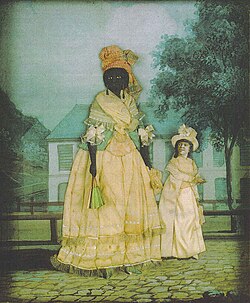
Women of color faced a unique social dynamic due to a severe gender imbalance in Saint-Domingue, where French men outnumbered women by as many as six to one. Some enslaved women utilized complex relationships with masters to secure their freedom. Others relied on white patrons for economic independence; Marie Bety, for instance, used the patronage of a former militia commander to employ white guards, doctors, and bailiffs.
Because women often had higher manumission (the act of granting freedom) rates, they frequently gained access to capital earlier than men, leading to a situation where free women of color often dominated the economy relative to free men of color.
Political Rights and Military Service
The struggle for legal equality saw significant shifts in the late 18th century. On May 15, 1791, the French Constituent Assembly granted full citizenship to free people of color born to two free parents. While this was briefly revoked, a more inclusive decree on April 4, 1792, extended citizenship to all free people regardless of skin color or parentage. This culminated in the 1794 proclamation abolishing slavery across all French colonies.
In Louisiana, free men of color served as armed members of the militia under both Spanish and French rule. Upon the U.S. acquisition of New Orleans, Governor Claiborne integrated these established "colored" militia units into the American military. These soldiers played a decisive role in the American victory at the Battle of New Orleans in 1815, though some who were promised freedom for their service were tragically returned to slavery after the conflict.
Legacy and Modern Identity
Today, the heritage of the gens de couleur is preserved through organizations like the Louisiana Creole Research Association (LA Créole). While the term "Creole" is not identical to "free people of color," many modern Louisiana Creoles—descendants of French, Spanish, African, and other ethnicities—trace their ancestry through these lines. In 2013, Louisiana recognized this contribution by creating the "I'm Creole" prestige license plate.
| Category | Key Characteristics | Primary Examples/Locations |
|---|---|---|
| Gens de couleur libres | Free, primarily mixed-race individuals | Saint-Domingue, New Orleans |
| Affranchis | Freedmen (former slaves) | French Caribbean colonies |
| Anciens libres | Those free prior to the 1793 emancipation | Saint-Domingue |
| Louisiana Creoles | Multiracial descendants of colonists and Africans | Louisiana, USA |
Notable Figures
- Chevalier de Saint-Georges: A renowned composer and swordsman in 18th-century France.
- Thomas-Alexandre Dumas: Military officer and father of author Alexandre Dumas.
- Mary Seacole: Jamaican nurse who served during the Crimean War.
- Norbert Rillieux: American-French engineer and inventor.
- John Mercer Langston: Abolitionist and the first black person elected to the US Congress from Virginia (1888).
Frequently Asked Questions
Who were the gens de couleur libres?
They were free people of color in the Americas, primarily of mixed African, European, and Native American descent, who occupied a social middle ground between white colonists and enslaved people.
How did free people of color achieve wealth?
Many achieved upward mobility through skilled trades such as saddle-making, livestock farming, and engaging in contraband trade between colonies.
What was the legal status of free people of color in France's colonies?
Their status evolved rapidly during the French Revolution, moving from limited rights to full French citizenship by 1792, followed by the general abolition of slavery in 1794.
What role did they play in the Battle of New Orleans?
Free men of color served in established militia units and played a critical role in the decisive American victory against the British in 1815.
Is "Creole" the same as "free person of color"?
Not exactly. While many Louisiana Creoles are descendants of the gens de couleur libres, the term "Creole" more broadly describes the multiracial descendants of French, Spanish, and African colonists in the region.