Free Black Americans: History and Legal Status Before 1865
Before the total abolition of slavery in 1865, the terms free Black, free Negro, and free colored defined a specific legal status for African Americans who were not enslaved. This diverse group included both freedmen (former slaves who had been granted their freedom) and free people of color (those born free), encompassing individuals of both full African and mixed descent.
While slavery was legal in every European colony in North America at various times, the presence of free Black people dates back to the earliest colonial years. Some Africans arrived in the 17th century as free sailors, while others served as indentured servants—individuals bound by a contract to work for a set period in exchange for passage to the Americas. Upon completing their term, these servants became free and, in the Chesapeake Bay region, were often eligible for headrights to claim land.
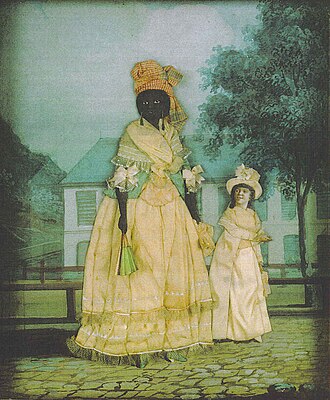
Key Facts
- A class of free Black people existed in North America as early as 1678.
- Between 1620 and 1780, approximately 287,000 enslaved Africans were imported into the Thirteen Colonies.
- By 1860, the U.S. census recorded 488,070 "free colored" persons.
- Vermont was the first state to abolish slavery, doing so in 1777.
- The free Black population grew significantly after the American Revolution due to northern abolition and private manumissions.
The Growth of the Free Black Population
The free Black community grew through several distinct channels. Children born to free women of color were born free, as were children born to white indentured or free women, and those born to free Native American women. Additionally, the population increased through manumission (the formal act of a slave owner freeing their slaves), the escape of Maroons (escaped slaves), and the descendants of those who had never been enslaved.
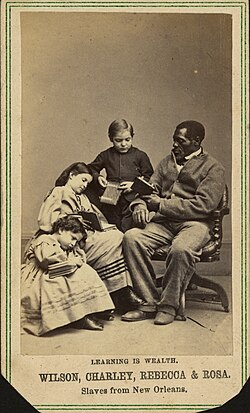
Economic demands drove the slave trade, particularly for tobacco in Virginia and Maryland, and rice and indigo in South Carolina. However, religious movements also played a role in emancipation. During the First Great Awakening (c. 1730–1755), Methodist and Baptist evangelists promoted the belief that all men were equal before God, encouraging owners to free their slaves and supporting Black leaders as preachers.
| Time Period | Number of People |
|---|---|
| 1620–1700 | 21,000 |
| 1701–1760 | 189,000 |
| 1761–1770 | 63,000 |
| 1771–1780 | 15,000 |
| Total | 287,000 |
![Number of free black people per County in Virginia and North Carolina, 1790.[37]](/images/27/4a/274a8e5a9a16b8360bd06b9abbfb666c4b8c977940da03992f858066c65932f0.webp)
Post-Revolutionary Shifts and Abolitionism
The American Revolutionary War (1775–1783) sparked a dramatic increase in the free Black population. Inspired by the war's ideals of liberty, many owners in the Upper South manumitted their slaves. Simultaneously, Northern states began abolishing slavery, often through gradual emancipation—laws that freed slaves over a period of time rather than all at once.
Vermont led the way in 1777, followed by Massachusetts in 1780. By 1804, New Jersey became the last original Northern state to begin the process. The Northwest Ordinance of 1787 further prohibited slavery in the federal Northwest Territory. Despite their legal freedom, Black people in the North faced systemic racism, segregation, and restrictions on voting rights.
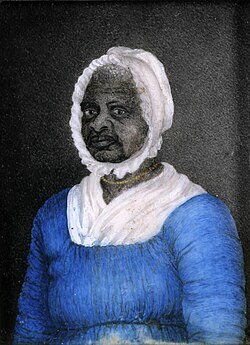
The Rise of Black Activism
In response to these challenges, the National Negro Convention movement began in 1830. Black men met to discuss the future of their community, while women like Sojourner Truth and Maria Stewart used public lecturing to advocate for rights. These activists often encouraged the boycott of goods produced by slave labor.
Regional Differences and Legal Restrictions
The experience of free Black people varied wildly by geography. In the Upper South (Maryland, Virginia, North Carolina), free Black populations were more numerous. In the Lower South, free Black people were more likely to live in cities, be wealthier, and be of mixed race.
![Jean Baptiste Point du Sable, the first permanent settler in 1780s Chicago and the "Father of Chicago" who traveled up the Mississippi River from New Orleans. There are no known portraits of Jean Baptiste Point du Sable made during his lifetime.[85] This depiction is taken from A.T. Andreas' book History of Chicago (1884).[86]](/images/39/9f/399f39dcd0e676bec03e0988be8527fd38f615f3393871fa249d6b2c69f816c2.jpg)
As the 19th century progressed, Southern states implemented Black codes—restrictive laws designed to regulate and control the lives of free Black people. For example, Florida passed legislation in 1847 requiring free Black people to have a white legal guardian. By 1861, Florida required registration with a probate judge; those who failed to register could be classified as slaves and claimed as property by any white person.
To escape these oppressive laws, many sought freedom in the North or Canada, often aided by the Underground Railroad, a clandestine network of abolitionists and former slaves.
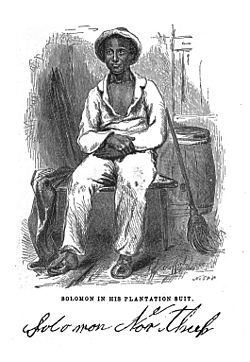
Notable Free Black Figures
Despite systemic barriers, many free Black individuals achieved significant prominence in medicine, literature, and activism:
- James Derham: The first African American to formally practice medicine in the U.S.
- Phillis Wheatley: The first published African-American female poet.
- Jean Baptiste Point du Sable: The founder of Chicago and a prominent trader.
- Frederick Douglass: A fugitive slave who became a world-renowned writer and statesman.
- Harriet Tubman: A fugitive slave and legendary "conductor" of the Underground Railroad.
Frequently Asked Questions
What is the difference between a freedman and a free person of color?
A freedman was a former slave who had been granted freedom through manumission or legal action, whereas a free person of color was someone born into a state of freedom.
How did the First Great Awakening affect slavery?
Methodist and Baptist evangelists during this period taught that all people were equal before God, which led some slave owners to manumit their slaves and encouraged the development of Black-led Christian communities.
What was gradual emancipation?
Gradual emancipation refers to laws passed primarily in Northern states that did not free all enslaved people immediately, but instead provided a path to freedom over time, often based on the age of the enslaved person at the time the law was passed.
What were Black codes?
Black codes were restrictive laws passed in Southern states to regulate the movement, labor, and legal rights of free Black people, often forcing them to have white guardians or register with local officials to avoid being re-enslaved.
Which state was the first to abolish slavery?
Vermont was the first state to abolish slavery, doing so in 1777 while it was still an independent republic before joining the Union in 1791.