Free and Hanseatic City of Lübeck
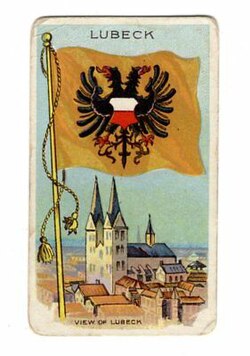
The Free and Hanseatic City of Lübeck (German: Freie und Hansestadt Lübeck) was a prominent German city-state that maintained its sovereignty for over seven centuries, from 1226 until 1937. Located in what is now the federal state of Schleswig-Holstein, Lübeck evolved from a strategic trading post into a powerful political entity that shaped the economic landscape of Northern Europe.
Key Facts
- Duration of Statehood: 1226 to 1937.
- Peak Influence: Known as the "Queen of the Hanseatic League" during the 14th century.
- Legal Legacy: Developed Lübeck law, a municipal government framework adopted by other cities to gain independence from royalty.
- End of Sovereignty: Abolished on April 1, 1937, via the Greater Hamburg Act.
- Current Status: Part of the German state of Schleswig-Holstein.
The Rise of an Imperial Free City
Lübeck's journey toward autonomy began in 1226 when Emperor Frederick II granted the city Imperial immediacy, designating it a Free Imperial City. This status allowed the city to be subject only to the Emperor, bypassing local lords. This political freedom coincided with the rise of the Hanseatic League, a medieval commercial and defensive confederation of merchant guilds and market towns.
By the 14th century, Lübeck had ascended to become the most powerful member of the League. To secure its economic interests, the city aggressively expanded its territorial control over vital trade routes. In 1359, Lübeck purchased the ducal Herrschaft of Mölln for 9,737.50 Lübeck marks to protect the salt trade between Scandinavia and the cities of Brunswick and Lunenburg.
Further expansion occurred in 1370 when the city acquired the Lordship of Bergedorf, the Vierlande, Geesthacht, and half of the Sachsenwald (Saxon Forest) as collateral for a loan from Duke Eric III. These acquisitions ensured a safe freight route between Lübeck and Hamburg.
The Beiderstädtischer Besitz
Territorial disputes with the House of Saxe-Lauenburg eventually led to the Peace of Perleberg on August 23, 1420. This treaty irrevocably ceded several pawned territories to both Hamburg and Lübeck. These areas became the Beiderstädtischer Besitz, a condominium (jointly owned territory) managed by alternating bailiffs from the two cities every four years.
Economic Dominance and Decline
Under Lübeck's leadership, the Hanseatic League engaged in various conflicts with Denmark. While the city saw victories in 1435 and 1512, its influence began to wane following its defeat in the Count's Feud (1534–1536), a Danish civil war. The subsequent devastation of the Thirty Years' War and a global shift toward transatlantic trade further eroded the city's importance.
By 1669, the Hanseatic League had effectively disbanded, though Lübeck remained a significant trading hub on the Baltic Sea.
From Napoleon to the German Empire
Lübeck's sovereignty faced severe challenges during the Napoleonic era. After being occupied in 1806, the city was formally annexed into the First French Empire from 1811 to 1813 as part of the department of Bouches-de-l'Elbe. Following Napoleon's fall, the 1815 Congress of Vienna restored Lübeck's independence, making it one of 39 sovereign states within the German Confederation.
The city's political status evolved through several German iterations:
- 1867: Joined the North German Confederation.
- 1871: Became an autonomous component state of the German Empire.
- Post-WWI: Joined the Weimar Republic as a constituent state, though its financial autonomy was reduced by central tax reforms.
The End of Statehood and Incorporation
The rise of the Nazi regime brought the process of Gleichschaltung (coordination), which systematically stripped states of their autonomy. In 1933, the democratically elected Bürgermeister Paul Löwigt was replaced by Otto-Heinrich Drechsler, and the city's popular assembly, the Bürgerschaft, was dissolved in 1934.
The final blow came on April 1, 1937, with the Greater Hamburg Act. This legislation ended Lübeck's 711-year history as a sovereign state, incorporating most of its territory into the province of Schleswig-Holstein. This move was partly attributed to Adolf Hitler's personal dislike for the city after it refused him a campaign venue in 1932.
Following World War II, the city was occupied by British and later Soviet forces. Despite attempts to restore its statehood via referendum, the West German Federal Constitutional Court upheld the city's incorporation into Schleswig-Holstein in 1956, citing its strategic position on the inner German border.
Summary of Lübeck's Political Evolution
| Period | Political Status | Key Event/Authority |
|---|---|---|
| 1226–1806 | Free Imperial City | Holy Roman Empire |
| 1811–1813 | Annexed Territory | First French Empire |
| 1815–1867 | Sovereign State | German Confederation |
| 1871–1918 | Component State | German Empire |
| 1919–1937 | Constituent State | Weimar Republic / Nazi Germany |
| 1937–Present | City in Schleswig-Holstein | Greater Hamburg Act / Federal Republic |
Notable Figures from Lübeck
- Thomas Mann: Nobel Prize laureate in Literature.
- Willy Brandt: Influential German politician.
- Godfrey Kneller: Renowned German-British court painter.
- Dieterich Buxtehude: Celebrated organist and composer.
Frequently Asked Questions
What was Lübeck law?
Lübeck law was a municipal constitution developed after the city became a Free Imperial City. It provided a framework for local government that, in theory, allowed cities that adopted it to remain independent of royal authority.
Why was Lübeck called the "Queen of the Hanseatic League"?
Lübeck earned this title in the 14th century because it was the largest and most powerful member of the Hanseatic League, serving as the primary hub for trade in the Baltic region.
How did the Greater Hamburg Act affect Lübeck?
The Greater Hamburg Act of 1937 formally abolished Lübeck's statehood after 711 years, incorporating its territory into the province of Schleswig-Holstein.
What was the Beiderstädtischer Besitz?
It was a condominium—a territory jointly ruled by the cities of Hamburg and Lübeck—established after the Peace of Perleberg in 1420 to secure trade routes.
Why wasn't Lübeck's statehood restored after World War II?
The West German Federal Constitutional Court ruled against restoration in 1956, largely because the city's location on the inner German border made its integration into Schleswig-Holstein more practical for administration.