Esslingen am Neckar: A Journey Through Germany's Historic Timber-Frame City
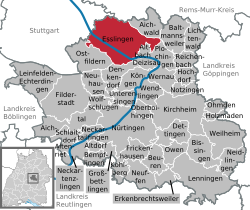
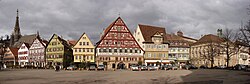
Nestled along the banks of the Neckar River in the Stuttgart region of Baden-Württemberg, Esslingen am Neckar is a city where medieval charm meets industrial innovation. Located just 14 kilometers southeast of Stuttgart, it stands as the 10th largest city in the state and serves as the administrative seat of the Esslingen district. Known for its remarkably preserved old town and its role as a former Free Imperial City, Esslingen offers a window into centuries of German history.
The city is a key stop on the German Timber-Frame Road, attracting visitors with its characteristic architecture and scenic riverside vistas.
Key Facts
- Status: Former Free Imperial City (from 1181 until 1803).
- Population: 96,182 (as of December 31, 2024).
- Geography: Situated on the Neckar River at an elevation of 241 meters.
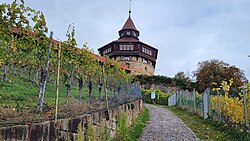
- Architecture: Famous for its half-timbered buildings and the "Fat Tower" (Der Dicke Turm).
- Education: Home to the Esslingen University of Applied Sciences, specializing in automotive and mechanical engineering.
- Transport: One of only three German towns still operating trolleybuses.
A Deep Dive into History
Prehistoric and Roman Foundations
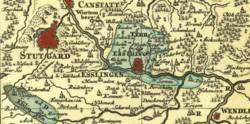
Human presence in Esslingen dates back to the Neolithic period, with archaeological evidence at the site of the city church suggesting settlement around 1000 B.C. By the 1st century AD, the region was integrated into the Roman Empire. A Roman warehouse once existed in Oberesslingen, supported by nearby garrisons in Cannstatt and Köngen.
The Migration Period and Early Origins
The city's name is derived from the Alemannic kinship group led by a patriarch named Azzilo, Hezzilo, or Hetsilo. The name originally meant "the people and land of Azzilo," appearing in records as "Ezlinga" in 856 and "Hetsilinga" in 866. During the 6th century, the Alemanni were subjugated by the Merovingians under King Clovis I, though they maintained administrative roles within the Duchy of Francia.
The Middle Ages and Imperial Status
Esslingen first appeared in written records in 777 in the will of Abbot Fulrad. The arrival of the bones of Saint Vitalis transformed the town into a pilgrimage destination, fueling its early growth. By 866, it was a certified market town, and in 1229, Emperor Frederick II granted it city rights.
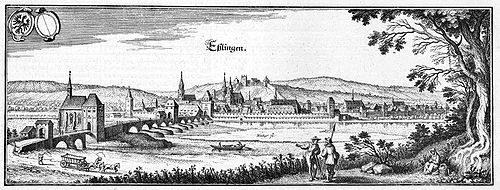
The construction of the Neckar bridge established Esslingen as a vital trade hub between Italy, Switzerland, and northern Germany. This economic boom was further supported by the export of high-quality regional wines. However, the city faced centuries of conflict with the Counts of Württemberg and suffered devastating losses during the Thirty Years' War (1618–1648), where famine and epidemics claimed nearly half the population.
Industrialization and Modern Era
Esslingen lost its independence in 1803, becoming part of the Duchy of Württemberg. The 19th century brought rapid industrialization, with growth in textiles, metalworking, food processing, and glove manufacturing. The arrival of the first train from Cannstatt on November 20, 1845, further accelerated this development.
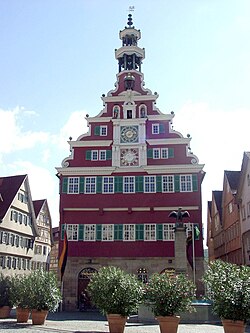
Remarkably, the city center survived World War II with minimal damage, as it was peaceably surrendered to U.S. troops in April 1945. This preservation allows today's visitors to experience the authentic medieval character of the city, including the Altes Rathaus (Old City Hall) and the marketplace.
City Profile and Infrastructure
Demographics and Climate
Esslingen is a multicultural hub. As of 2020, the largest immigrant groups include citizens from Turkey, Greece, Italy, and Croatia. The climate is temperate, with an annual average precipitation of 768.3 mm and a mean daily maximum temperature of 13.7°C throughout the year.
Transportation Network
The city is exceptionally well-connected. It is served by the B10 State Highway and is located near the Stuttgart Airport. Rail transport is provided by the Deutsche Bahn and the Stuttgart S-Bahn (Line S1). A unique feature of the city is its continued use of trolleybuses (electric buses powered by overhead wires), operating lines 101 and 118.
| Category | Details |
|---|---|
| State | Baden-Württemberg |
| Total Area | 46.43 km² |
| Population | 96,182 (2024) |
| Key Industries | Mechanical & Automotive Engineering |
| Notable Landmark | Der Dicke Turm (The Fat Tower) |
Notable Figures
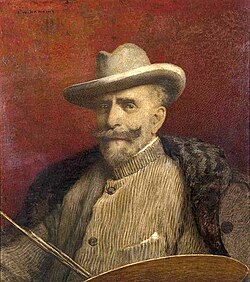
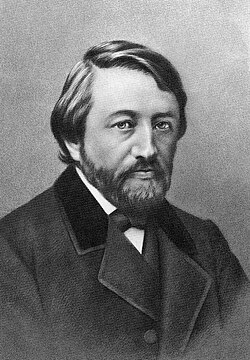
Esslingen has been home to many influential individuals across various fields:
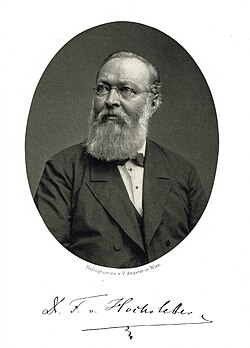
- Science & Exploration: Ferdinand von Hochstetter (geologist) and Tobias Mayer (astronomer).
- Arts & Music: Isabelle Faust (violinist) and Janina Baechle (mezzo-soprano).
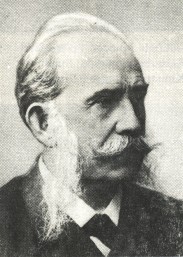
- Politics & Society: Julius Motteler (workers' movement leader) and Paula Rueß (resistance fighter).
- Academia: Michael Stifel (mathematician and reformer).
Frequently Asked Questions
What is the significance of the "Fat Tower"?
The "Fat Tower" (Der Dicke Turm) is a prominent landmark and part of the city's remaining defensive bastions, situated on the hill above the vineyards.
Why is Esslingen known for its timber-frame houses?
The city's center was largely spared from destruction during World War II, preserving its medieval architecture and making it a key destination on the German Timber-Frame Road.
What makes the transport system in Esslingen unique?
Esslingen is one of only three cities remaining in Germany that still operate a trolleybus system, providing an eco-friendly electric alternative to diesel buses.
What is the focus of the Esslingen University of Applied Sciences?
The university is highly regarded for its courses in mechanical and automotive engineering, offering specialized international master's programs taught in English.
How did Esslingen become a trade center in the Middle Ages?
The construction of the Neckar bridge and the granting of city rights in 1229 made it a strategic hub for trade between Italy, Switzerland, and northern Germany, supplemented by a thriving wine export industry.