Free Imperial Cities of the Holy Roman Empire: Autonomy and Power
In the complex political landscape of the Holy Roman Empire, a unique class of urban centers emerged known as Free Imperial Cities (Freie und Reichsstädte). From the 15th century onward, these cities functioned as self-ruling entities with a significant degree of autonomy, holding a prestigious position that allowed them to be represented in the Imperial Diet, the Empire's central deliberative body.
The defining characteristic of these cities was imperial immediacy. This meant they were subordinate only to the Holy Roman Emperor himself. This status stood in stark contrast to "territorial cities" (Landstadt), which were subject to the authority of local princes, such as dukes, counts, or prince-bishops.
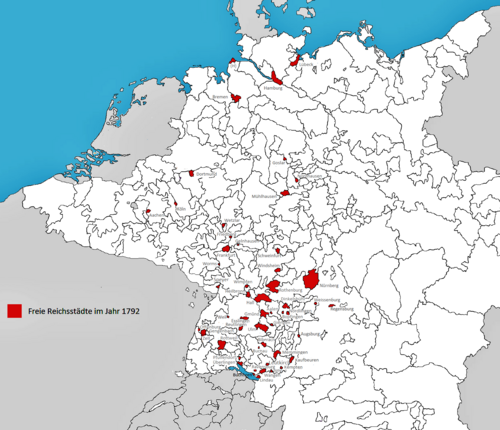
Key Facts
- Imperial Immediacy: Free Imperial Cities answered only to the Emperor, bypassing intermediate lords.
- Political Representation: They were organized into the Rhenish and Swabian benches within the Imperial Diet.
- Economic Power: Wealthy cities like Nuremberg and Cologne contributed financial sums equal to those of major Electors.
- Social Hierarchy: Governance was typically split between an oligarchic Small Council of patricians and the privileged burghers.
- Mediatisation: Most lost their independence during the reorganization of 1803 under Napoleonic influence.
The Origins of Urban Independence
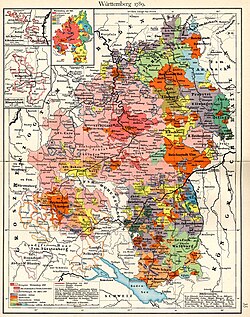
The path to autonomy varied depending on the city's origins. Some were promoted to Imperial Cities (Reichsstädte) by emperors during the 13th and 14th centuries, often for fiscal reasons. These cities, originally managed by royal stewards (Vögte), gradually saw their magistrates take over administration and justice. Examples include Memmingen and Ravensburg in upper Swabia, as well as Colmar, Haguenau, and Mulhouse in Alsace.
Conversely, Free Cities (Freie Städte)—such as Cologne, Strasbourg, and Augsburg—were originally under the control of prince-bishops. Over time, they fought for and won their independence from these ecclesiastical lords, though some, like Cologne, faced centuries of litigation over residual feudal privileges.
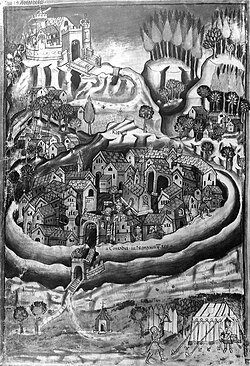
By the late 15th century, the distinction between "Free" and "Imperial" cities blurred, and the combined term "Free Imperial Cities" became standard. These entities possessed the right to wage war, negotiate peace, and control their own trade. To protect these interests, many joined City Leagues (Städtebünde), the most famous being the Hanseatic League.
Comparing City Types in the Empire
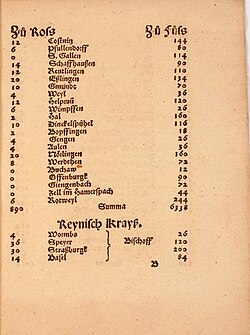
While the Holy Roman Empire contained approximately 4,000 towns, only a small fraction ever achieved the status of Free Imperial Cities. The Reichsmatrikel (Imperial military tax register) of 1521 listed 85 such cities, a number that fluctuated around 50 between the Peace of Westphalia (1648) and 1803.
| City Type | Primary Authority | Imperial Diet Representation | Autonomy Level |
|---|---|---|---|
| Free Imperial City | Holy Roman Emperor | Yes (Rhenish/Swabian Benches) | High (Self-ruling) |
| Territorial City | Secular or Ecclesiastical Prince | No (Represented in Territorial Diets) | Low to Moderate (Precarious) |
| Semi-Autonomous City | Weak Territorial Lord | No | Moderate (De facto independence) |
Governance and Social Structure
The internal organization of these cities evolved from republican forms toward oligarchies. Following the defeat of the Schmalkaldic League between 1548 and 1552, 28 cities saw their democratic structures replaced by a Small Council. These councils were dominated by patricians—wealthy burgher families who monopolized political power.
Below the patricians were the burghers (citizens), who held specific privileges and limited political say. At the bottom of the social ladder were the "residents" (Beisassen) or "guests," comprising artisans, day laborers, and the poor, who lacked political rights. This rigid hierarchy often led to class warfare and urban conflicts, particularly in the 17th century in cities like Hamburg and Frankfurt.
Territorial Reach and Military Obligations
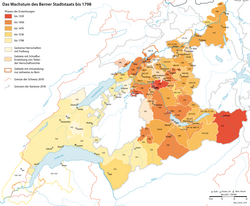
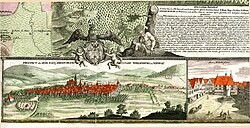
Territorial size varied wildly. While cities like Cologne and Regensburg had authority that barely extended beyond their walls, others grew significantly. In Switzerland, Bern, Zürich, and Luzern became major territorial powers. In Germany, Hamburg, Nuremberg, and Ulm controlled vast hinterlands and thousands of subject peasants.
The Reichsmatrikel of 1521 detailed the military and financial obligations of each city. A single unit of contribution, called a simplum, defined the number of horsemen, infantry, and gulden a city provided. For example, Cologne's simplum consisted of 30 horsemen, 322 footsoldiers, and 600 gulden. The Imperial Diet could vote to double or triple these contributions (second or third simplum) during major wars.
The Decline and Dissolution
The number of Free Imperial Cities dwindled due to external pressures. France annexed several cities in Alsace and the Three Bishoprics (Metz, Verdun, and Toul). The Swiss Confederacy's formal independence in 1648 also removed several cities from the Empire's fold.
The final blow came with the rise of Revolutionary France and Napoleon. The German Mediatisation of 1803 saw most free cities absorbed into larger neighboring states. By 1811, only a few remained, and all were eventually annexed or reorganized into Napoleonic puppet states.
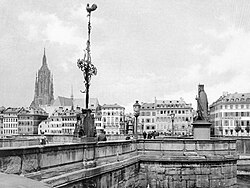
After the Congress of Vienna in 1815, Hamburg, Lübeck, Bremen, and Frankfurt were restored as Free Cities within the German Confederation. However, Frankfurt was annexed by Prussia in 1866. The remaining three became states of the German Empire in 1871. Today, only Hamburg and Bremen retain their status as constituent states of the Federal Republic of Germany.
Frequently Asked Questions
What was the difference between a Free Imperial City and a territorial city?
A Free Imperial City possessed imperial immediacy, meaning it was subordinate only to the Emperor and had a seat in the Imperial Diet. A territorial city was subject to a local prince or bishop and lacked direct representation at the imperial level.
What was the Reichsmatrikel?
The Reichsmatrikel was an imperial civil and military tax register used to assess the contributions (horsemen, infantry, and money) that each Imperial Estate, including the free cities, had to provide for the defense of the Empire.
Who actually governed the Free Imperial Cities?
While initially republican, many cities transitioned to oligarchic rule. Power was typically concentrated in a Small Council composed of patricians—the most economically powerful burgher families.
Why did most Free Imperial Cities disappear in 1803?
They were victims of the German Mediatisation, a process of territorial reorganization driven by Napoleon Bonaparte, which absorbed small independent entities into larger states to simplify the map of Europe.
Which Free Imperial Cities still exist as states today?
Hamburg and Bremen are the only former Free Imperial Cities that maintain the status of constituent states (Stadtstaaten) in the modern Federal Republic of Germany.